
‘I don’t think private equity will make healthcare expensive’: Manipal's Ranjan Pai
ADVERTISEMENT
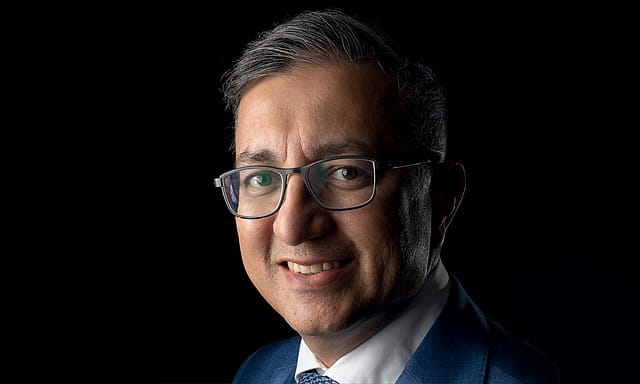
There’s no one quite like Ranjan Pai in India’s healthcare sector.
One after another, almost like an annual ritual, the doctor-turned-entrepreneur has bought hospitals across the country over the past few years. It didn’t matter where they were, as long as they could help scale Pai’s family-owned Manipal Hospitals into a national goliath. In the process, his Manipal Health Enterprises, which runs as many as 50 hospitals, became a darling among private equity funds before eventually becoming an investor favourite after a record IPO this year.
Today, Manipal Health Enterprises is a ₹1 lakh crore healthcare behemoth and the largest hospital group in the country by beds. In an interview with Fortune India, Pai talks about the last few years, the acquisition strategy, the IPO, and what’s to come in the years ahead—edited Excerpts.
Q: Quite a remarkable few years at Manipal. How have things changed in the last few years?
Ranjan Pai: It’s been an amazing journey. After we got Colombia, we were successful in a whole bunch of other acquisitions. That gave us the confidence to keep getting bigger and integrating. I think buying a hospital is okay. After that, how you integrate it and how well it does for you is what is important. I think that Dilip and his team have done a fabulous job.
Q: What goes into identifying these hospitals that you buy?
I think culture is a big thing when we buy a hospital. It's always people first, and how do we get them integrated? So, we focus on HR, value systems, integrating IT systems, and processes from a doctor's perspective. We see what specialties are missing, and what we can add. I think that's the kind of secret sauce that should work well for us. When we acquired Columbia, it was primarily doing secondary care and a little bit of tertiary. I think there are a lot more now, including liver transplants.
Q: Columbia then set off a series of acquisitions. How did that come about, especially during Covid?
We had been working on it in 2019 and signed in March 2020. Then Covid-19 came. So, it got delayed a little bit. We had been looking at it for the last 3 or 4 years, and even before that, from 2016 onwards, we were looking at acquiring assets. But in any M&A, some things work, and some don't. But we also have to realize that in 2016, we were much smaller, so we were trying to punch above our weight.
Q. Today, Manipal has emerged as a pan-India player. How are you planning to take this forward?
For me, it's about the cities you are going to and whether you can have a more dominant presence in every city. There is no need to be across India. This is a large country, and I would rather have 50 hospitals in 3 or 4 states than 50 hospitals in all states of India.
Q: Why is that so?
Concentration is better because it has more synergies for you from a doctor attraction and retention perspective. If you look at the Western world, there's nothing like a pan-US hospital chain. They're usually concentrated in 2 or 3 states. We have 50 hospitals today, and if we get to maybe 100 hospitals, we will concentrate in the cities where we have a presence. Of course, we will add new cities and new states. Usually, and that's not the rule, but we tend to see if we can acquire something in a (state) and then build more greenfield. We have five greenfield hospitals under construction right now.
Q: Is this model something that others will also be looking at?
I'm sure everybody will aspire to grow, and I think that demand for the industry itself is big. There are a lot of tailwinds. So, acquisition and consolidation will happen. Regional chains will continue to do well.
India is prospering; people want better healthcare, and insurance penetration is increasing a lot in this country. People with insurance will want to go to better healthcare facilities. So, all of these are positive trends where people will want better things. God forbid you must fall sick anywhere; you want to fall sick in India. You have good hospitals, and good access to healthcare.
Q: Will that change with private equity flowing into healthcare?
I don't think private equity will make health care expensive. I think medical inflation is high. We import a lot of medical equipment. We had to buy it in dollars. So, the currency is also hurting us. A lot of equipment is now being built in India—payments for doctors, nurses, paramedics, all of them, all of that is going up. So, I think that's adding to that inflation. The kind of surgeries that have been created, that have been performed now- a lot more robotic surgeries, cancer treatment- all of that is increasing the cost.
So, all of that is adding to that inflation. That's why you need a kind of insurance net which helps everybody. Otherwise, it is expensive. But that said, if you look at the quality of care being delivered globally, this is probably the best quality-to-cost. And remember, a lot of what we have to do uses the same equipment as US hospitals or European hospitals.
Q: You have obviously grown to such a large scale. At some point, does it compromise on quality?
I think that's part of the processes that we have built. I think we have a very strong credentialing system, so we thoroughly check the quality of the doctors we bring in. Our doctor's attrition has not been very high. Nursing attrition has probably been the lowest in the industry.
When we brought in private equity also, my father was very clear. He just wanted us to make sure we build a good-quality business and not change the value systems. That means going back to patient centricity and making sure that's really the reason we are there. Of course, it's a commercial establishment; you have to make money, but don't do it at the expense of the patients. Don't do fear-mongering. Do the right thing. Do what is good for the patient.
Q: So, does anything change for you with the IPO?
No, I think it is just a, this is just a milestone. We have done very well for our investors. We have done well for our patients. I think, as a public company, we'll have to keep doing that.