
India may have only ~3 GW data centre capacity by 2030 despite 6-8 GW announcements: Axis Capital
ADVERTISEMENT
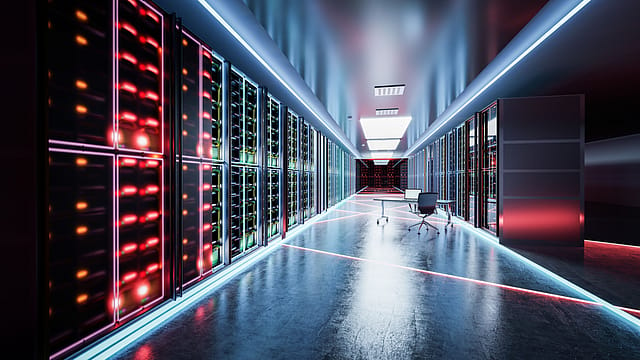
India's operational data centre capacity could reach only around 3 GW by 2030—roughly half of the 6-8 GW capacity publicly announced by industry players—as execution bottlenecks rather than demand are likely to slow expansion, according to insights shared during an expert session hosted by Axis Capital.
The expert, who has over two decades of experience in data centre design, operations and strategy, estimates that India's installed data centre capacity currently stands at around 1.4 GW. While the industry has outlined ambitious expansion plans, the expert believes a more realistic estimate is 3.4-3.6 GW of planned capacity by mid-2030, with actual operational capacity likely to be closer to 2.8-3 GW.
Execution constraints outweigh demand
According to the report, the biggest challenge facing India's data centre industry is not demand from hyperscalers or artificial intelligence workloads but the ability to execute projects on schedule.
"Publicly announced targets across industry players aggregate to roughly 6-8 GW by 2030, but much of this is marketing rather than realistic planning," the expert said during the session. "The more realistic estimate is 3.4-3.6 GW of planned capacity by around mid-2030, and being conservative, actual operational capacity could be closer to ~2.8 GW."
The report notes that awarding a project is only the beginning. Even after a contract is awarded, the first phase of a data centre typically takes 32-36 months to become operational, meaning a significant portion of announced capacity may not be commissioned within the current decade.
Power, supply chain remain key bottlenecks
The expert identified power availability and mechanical, electrical and plumbing (MEP) supply chains as the biggest impediments to faster expansion.
Power sanctions alone can take nearly 18 months, while shortages of EPC contractors, skilled manpower and critical equipment such as transformers and switchgear continue to delay projects. In addition, only three global manufacturers—Caterpillar, Cummins and MTU—currently supply hyperscaler-approved diesel generator sets, with all three reportedly booked out nearly two years in advance.
India's preference for vertical G+6 and G+7 data centre buildings, driven by high land costs and floor space constraints, also increases construction complexity compared with the warehouse-style facilities common in the US and the Middle East, the report said.
Hyperscalers to dominate future demand
Despite the execution challenges, demand remains robust and is increasingly being driven by hyperscale cloud providers.
The expert expects the demand mix to shift from roughly 60:40 in favour of hyperscalers over enterprise customers currently to about 90:10 by 2030, supported by continued investments from global cloud providers and emerging AI and large language model hosting requirements.
The report also estimates that AI-enabled data centres carry only a modest 10-15% cost premium over traditional colocation facilities. EExcluding land and IT hardware, conventional data centres require capital expenditure of around ₹44-46.6 crore per MW, while AI-ready facilities cost ₹48-54 crore per MW, because of higher structural loading, hybrid liquid cooling systems and enhanced power infrastructure.
₹1.66 lakh crore opportunity for industrial companies
Even with a more conservative capacity outlook, the expert estimates India's data centre ecosystem could generate a total addressable market of ₹1.31-1.66 lakh crore between FY27 and FY30, excluding land and IT hardware.
Power equipment, civil construction, backup power systems and cooling infrastructure are expected to account for the bulk of investments, benefiting companies such as ABB India , Siemens , Cummins India , CG Power , Hitachi Energy India , Blue Star , Voltas , Polycab and Exide Industries , according to the report.