
India seeks review of proposed tariff, cites flaws in USTR's report on forced labour probe
ADVERTISEMENT
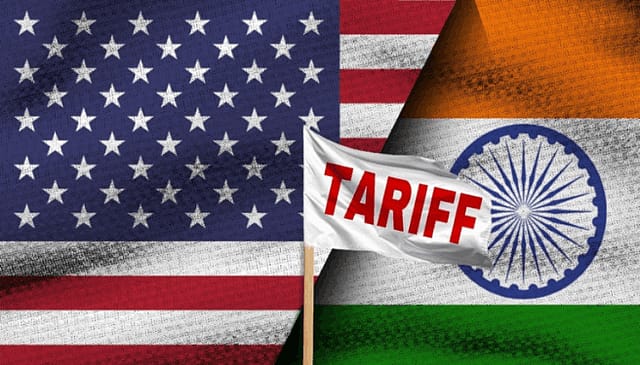
India has urged the United States to reconsider its proposed 12.5% tariff on imports under the Section 301 investigation into forced labour concerns, arguing that any trade-related differences should be addressed through bilateral negotiations rather than unilateral measures.
Making submissions at a public hearing conducted by the Office of the US Trade Representative (USTR), the Department of Commerce said the proposed action was not supported by adequate evidence and raised concerns over the methodology adopted in the investigation. The hearing was held on July 8, with the written transcript subsequently published on the USTR website.
Commerce Ministry questions USTR methodology
Representing India, Department of Commerce Joint Secretary Brij Mohan Mishra said the country remains committed to eliminating forced labour as a constitutional obligation and in line with international legal principles.
"India would like to highlight its concerns with the USTR's report and findings against India," Mishra said.
He argued that the USTR had failed to satisfy the legal standards prescribed under Section 301(d) of the US Trade Act, adding that the absence of a specific prohibition on imports made with forced labour could not, by itself, be construed as an unreasonable trade practice.
According to Mishra, the USTR's determination lacked a clear rationale for imposing countrywide tariffs and incorrectly grouped 46 economies, including India, under a common category despite differing trade practices and regulatory frameworks.
"In conclusion, it is submitted that the USTR reconsider the imposition of tariff in light of the identified inconsistencies in the report in the Federal Register notice. We ask any trade problems be addressed within the framework of the India-US bilateral trade negotiation, not through unilateral measures such as this investigation," he said, adding that India remains willing to engage constructively with the USTR through consultations and dialogue.
India rebuts rice import allegations
The Indian government also contested USTR's observations on rice imports. Speaking on behalf of the Agricultural and Processed Food Products Export Development Authority (APEDA), First Secretary at the Embassy of India in Washington, DC, Shreyans Gupta said India's rice imports are limited to niche varieties and account for less than 3% of the value of rice exported from India to the US.
He added that regulatory safeguards prevent the export of imported rice produced using forced labour and that exports to the US are permitted only from rice mills and processing units registered with the Agriculture Ministry.
"For these reasons, the present investigation against India may be rescinded without prejudice," Gupta said, while requesting exemption for Indian rice from the proposed tariff if the proceedings continue.
Industry warns of higher costs, supply chain disruption
Industry bodies FICCI and CII also opposed the proposed duty, arguing that it would increase costs for Indian exporters as well as US manufacturers, retailers and consumers, while disrupting resilient bilateral supply chains.
FICCI said higher tariffs would burden businesses that already comply with global standards, while CII maintained that the proposed 12.5% levy is neither supported by evidence nor likely to achieve the stated policy objective.
The USTR launched the Section 301 investigations in March 2026 across 60 economies and, in June, proposed additional tariffs of 10% on imports from six economies and 12.5% on imports from 54 others, including India and China. The proposal is yet to be finalised, with the USTR expected to review stakeholder submissions before taking a final decision.