
Indian airlines' operating profit to fall 10-15% to ₹16,000-17,000 crore in FY27 as fuel, forex costs bite: Crisil
ADVERTISEMENT
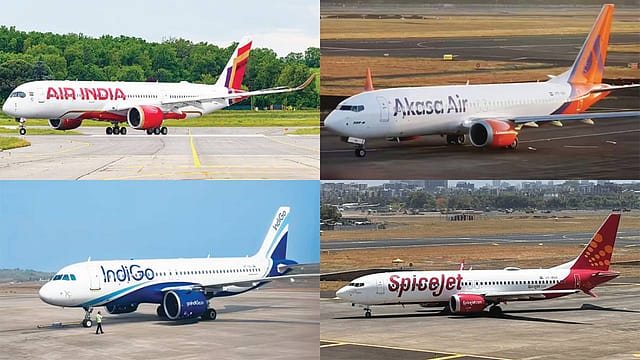
Domestic airlines are expected to see their operating profit decline 10-15% this fiscal as elevated fuel prices, currency depreciation and airspace restrictions erode margins despite robust passenger demand, according to Crisil Ratings.
The rating agency estimates aggregate operating profit of Indian carriers will fall to ₹16,000-17,000 crore in FY27 from around ₹19,000 crore in the previous fiscal. The moderation comes amid a sharp rise in aviation turbine fuel (ATF) costs triggered by the West Asia conflict, which has disrupted global energy markets and increased operating expenses for airlines.
Fuel shock raises cost burden
Fuel, which accounts for 40-50% of airline operating costs, has emerged as the biggest headwind. Crisil noted that global ATF prices surged more than 50% from pre-conflict levels, touching about $145 per barrel in early June before easing to below $125 per barrel. Even at current levels, prices remain significantly above last fiscal's average of around $90 per barrel.
As a result, airlines' cost per available seat kilometre (CASK), excluding foreign exchange impact, is projected to rise to ₹4.8-5 per km this fiscal from ₹4.3 per km last year. The pressure has been compounded by the depreciation of the rupee, given that fuel purchases, aircraft leases and maintenance expenses are largely dollar-denominated.
Surcharges offer partial relief
To offset higher costs, airlines have introduced fuel surcharges, which are expected to lift revenue per available seat kilometre (RASK) to ₹5.2-5.4 per km from ₹4.9 per km in FY26. However, the pass-through remains limited because of the price-sensitive nature of the Indian aviation market.
Carriers are also rationalising routes and trimming capacity, particularly on international sectors affected by airspace restrictions and longer flight durations. While these measures may support margins, they are likely to temper growth.
Fleet expansion adds to financial strain
At the same time, airlines are continuing aggressive fleet induction plans, with 90-100 aircraft expected to be added during the fiscal for both replacement and expansion purposes. This is expected to push lease rentals up nearly 15% to ₹27,000-28,000 crore.
According to Crisil, lower operating profitability combined with rising lease obligations could weaken airlines' ability to service lease commitments through internal accruals. However, strong parent support, liquidity buffers, access to credit under ECLGS 5.0 and the government's recently launched ATF price stabilisation fund are expected to help the sector navigate the current turbulence.
A quicker resolution of the West Asia conflict and a sharper correction in fuel prices could limit the decline in profitability, while prolonged disruptions or sustained high crude prices may put further pressure on earnings.