
India’s next fashion edge may lie in foresight, not fast fashion
ADVERTISEMENT
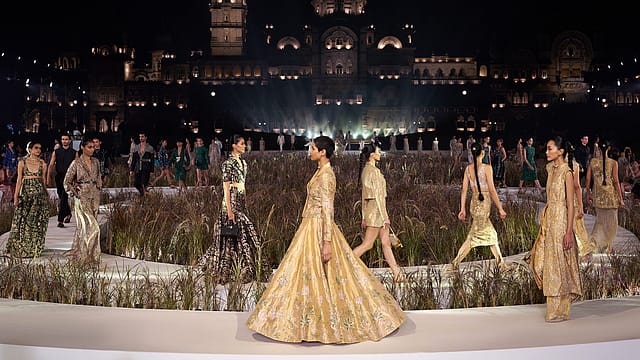
India’s fashion and lifestyle market is projected to cross $240 billion, growing at over 10% annually. Yet, the way many brands read trends hasn’t quite kept up. Decision-making is still largely shaped by global forecasts that offer big-picture inspiration but often miss the everyday realities of Indian consumers. This ranges from climate and craft traditions to regional tastes and shifting buying habits.
A new collaboration between Indian foresight platform ICH NEXT and French trend-forecasting firm Peclers Paris is trying to change that, bringing together global trend expertise with research that is deeply rooted in India’s cultural and behavioural context.
At the heart of the partnership is the idea that India no longer needs to be treated as a market that merely adapts global trends. “A market demands its own narrative when it stops behaving like an extension and starts behaving like a cultural force,” said Anne Etienne-Reboul, CEO of Peclers Paris. “India is no longer only a growth market, it is a value-setting market. Its consumers are confident, expressive, and deeply rooted in their identity.”
For Indian brands, the missing piece has often been contextual depth. While access to global inspiration has improved, predictive, India-grounded intelligence remains scarce. “Most trend inputs used in the market today are either global reports that are not built for Indian climate, culture, price sensitivity, or buying cycles, or backward-looking data like sales reports that explain what sold, but not why or what will work next,” said Kanika Vohra, co-founder of ICH NEXT. “What was missing was a system that listens to India’s emotional, cultural, and behavioural signals at scale and translates them into clear business and design decisions.”
What's the business case
That shift - from inspiration to foresight - is already influencing how some Indian brands make decisions. Instead of designing six to nine months in advance based largely on instinct, brands using ICH NEXT’s intelligence are narrowing down colour palettes, silhouettes, and fabric stories that are more likely to convert. According to Vohra, several partners have reduced design options by 30–40% while improving hit rates. “Collections aligned with forecast intelligence have seen tremendous improvement in sell-through, and in some cases 4–7x revenue per style, because the product meets the consumer at the right moment,” she said.
This is not about predicting fashion, she added, but about reducing commercial risk. In an industry known for thin margins and high volatility, foresight is increasingly being positioned as a form of business insurance. “In India, we are very comfortable trusting instinct, and instinct is important, but at today’s scale and speed, instinct without intelligence becomes risky,” Vohra said. “The future belongs to leaders who treat foresight as infrastructure, not inspiration.”
For designers, the shift is also philosophical. Anuradha Chandrasekhar, co-founder of ICH NEXT, describes it as a move from “translation to origination.” “Earlier, translation meant taking a global trend and asking, ‘How do we Indianise this?’ Origination starts by asking, ‘What is changing in the Indian consumer and what does that demand?’” she said. This is increasingly visible in Indian silhouettes influencing Western categories, and in craft, colour, and texture being reinterpreted for contemporary lifestyles.
Contrary to the fear that faster insights might dilute creativity, Chandrasekhar argues the opposite. “Speed doesn’t dilute creativity, clarity enhances it,” she said. “When designers spend less time guessing and more time understanding, they design with conviction.” According to her, teams using foresight tools are able to reach insight in one-third the usual time, freeing them to focus on storytelling, form, and innovation rather than endless iteration.
Investing in consumer intelligence represents a small fraction of overall design and inventory costs, but it shapes how effectively that capital is deployed. With better clarity on fashion cycles, consumer sentiment, and trend longevity, brands can reduce speculative bets, cut overproduction, and time launches more precisely. So, the goal is not to spend more, but to spend smarter.