
India’s stock market will struggle for another two years: Shankar Sharma
ADVERTISEMENT
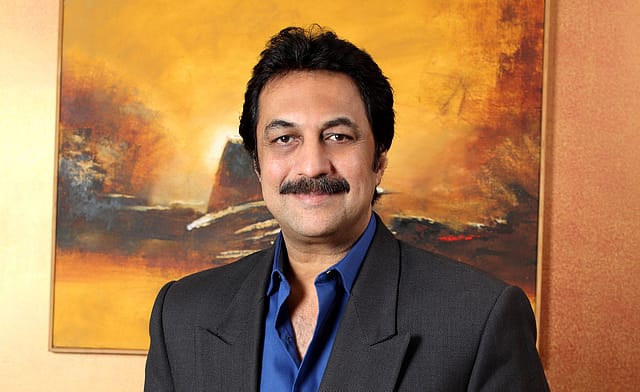
Shankar Sharma is not the one who hedges his language.
The veteran investor and market contrarian, speaking from Dubai where he has been based for some time now, does not offer probabilistic scenarios. He offers verdicts. “The bull market is over, both in the US and India," he tells Fortune India over a phone call. "Two years ago, I said we would have zero returns over five years. We have already seen no returns over the past two years," mentions Sharma, founder of GQ FinXRay, which offers AI-powered stock and fund analysis tool.
Sharma was very much expecting markets and geopolitics to converge on rising tension in the Middle East. The Strait of Hormuz lies between Iran to the north and Oman and the UAE to the south. But, more pertinently, he sees the current US-Israel-Iran confrontation as not a regional conflict but a structural reset that India, he argues, has catastrophically misread.
India imports roughly 80% of its crude oil. That single fact is the lens through which Sharma reads everything that is happening in the Middle East right now. “Oil is my largest position that I entered at $70–72. I expect it to get to $100–120 a barrel,” believes Sharma, who now runs his own family office.
Factor in the rupee, that he describes as structurally among the weakest major currencies globally, makes the landed cost of oil, by his calculation, effectively already at $100 a barrel.
The freight economy compounds the problem. India cannot simply pivot to cheap Venezuelan crude without consequence, a shipping route that takes 30 hours by air translates into several weeks at sea, adding $14–15 per barrel in freight alone, with additional costs stacked on top. “You add $10–15 from Venezuela, you factor in the rupee slide, and you have a very ugly landed cost," he says.
India's annual oil import bill was $137 billion in FY25, thanks to reliance on imports for 88% of its crude oil requirements and 50% of its natural gas needs. A sustained spike to $110–120 per barrel, against a weakening rupee, would put pressure on the current account, the fiscal deficit, and ultimately corporate earnings in ways that the market has not fully priced in. Nifty has already shown nil returns over the past one year and even on an 18-month basis.
India’s Strategic Miscalculation
Sharma's frustration with Indian foreign policy is visceral, and it extends well beyond crude oil mathematics. His argument is about strategic positioning: what he sees as India's decision to abandon friends in exchange for a transactional relationship that has left the country with no bargaining power at precisely the wrong moment.
“India's oil trade with Russia has come down from about 40% to 20% under US pressure. We had a rupee trade corridor with Iran, we had one with Russia. These were loyalty-driven relationships built over decades. We made them transactional. And now we have no cards to play," he says.
The context matters. Iran and India have had deep civilisational and trade ties for centuries. During the periods of Western sanctions on Iran, India had quietly maintained its energy relationship, paying in rupees, building alternative settlement corridors outside the dollar system. Russia, similarly, had been a defence partner of long standing. Sharma sees both relationships as having been progressively sacrificed in pursuit of proximity to Washington, that has proven to be an unreliable patron. “Russia and China have held their ground. We folded. And now we have no leverage," says Sharma.
He mentions 1971 as a reference point, when the U.S. sent the Seventh Fleet into the Bay of Bengal against India during the Bangladesh liberation war. "We had the Soviet Union behind us, we had our own armed forces, and we won. We stood up to a bully," he says. The other historical parallel was India's response to the nuclear sanctions of 1974 following a nuclear test. "We were sanctioned. We were a much smaller economy back then. But we made our own plutonium device by 1977. That is what strong leadership looks like," adds Sharma.
Why Iran is not Iraq or Libya
Central to Sharma's thesis is a conviction that the U.S. has profoundly miscalculated the nature of the adversary it is now confronting. He has lived in the region long enough, and counts enough Iranians among his friends and professional contacts, to have formed a view that goes well beyond what you read in Western financial media.
“Iran is not a country you regime-change. The US has done this before — Iraq, Libya, smaller states. It worked because those were relatively fragile institutional structures. Iran is a different civilisation entirely. Persian culture goes back thousands of years — be it astronomy, algebra, medicine, architecture — long before the modern West. It is a deep and proud race. You attack them from outside, and whatever they think of their own government, they will unify. Every Iranian I know who dislikes the regime will close ranks the moment a foreign power attacks," he explains
He points to the military dimension as well. Iran's drone and missile programme is, by most independent military assessments, among the most advanced in the region. Its hypersonic-capable missiles, travelling at over Mach 5 speeds, cannot be reliably intercepted by existing defence systems. More significantly, Iran has spent decades building redundancy into its military infrastructure: underground cities of missile stockpiles, dispersed command structures, capabilities that no amount of bunker-busting can fully eliminate. "They have cities underground. Built up over decades, accelerated significantly over the last seven to nine months. You cannot do a clean surgical strike and walk away. This is not Baghdad," says Sharma.
The US, he argues, has forfeited its position as a credible mediator by abandoning a ceasefire agreement: "Once you renege on a ceasefire, why would any party want to negotiate with you? You have told the world you cannot be trusted — not in trade and not in war."
What India Should Have Done
Sharma’s feels India can do what it did before when its back was against the wall: self-sufficiency, creative statecraft, and a refusal to be bullied into choices that serve someone else's agenda.
"When wheat exports were stopped against us, we did the Green Revolution. We became food self-sufficient. We don't beg for food. When nuclear sanctions came, we built the bomb ourselves," he says.
The rupee-ruble and rupee-rial trade corridors were, in his view, exactly the kind of alternative architecture India should have been building and protecting not dismantling to please Washington.
Oil is a fungible commodity, he notes. China has already built alternative supply chains for virtually everything the West has tried to deny it — rare earths processing, semiconductor equipment, technology platforms. Oil is simply the next item on that list.
India could have been a central node in that alternative architecture. Instead, the nation finds itself with reduced Iranian oil access, a strained relationship with Russia, and no strategic depth. "Look at the position we are in. We gain nothing from this conflict and we stand to lose everything. Higher oil, weaker rupee, isolated from our oldest partners, no bargaining power on energy pricing. India is the final loser in this game," says Sharma.
The concoction of a crude spike, a weak rupee, the loss of strategic positioning, the absence of bargaining power with energy suppliers, in Sharma's conclusion, makes for a very bearish reading for Indian equities. "The bull market had a good run. And easy money makes you complacent. Markets stop being intelligent when returns come without effort. India's market ran hard for years on the back of domestic flows and a global liquidity wave. That wave has turned," says Sharma.