
India–US trade deal reshapes consumption exports, eases pressure on margins
ADVERTISEMENT
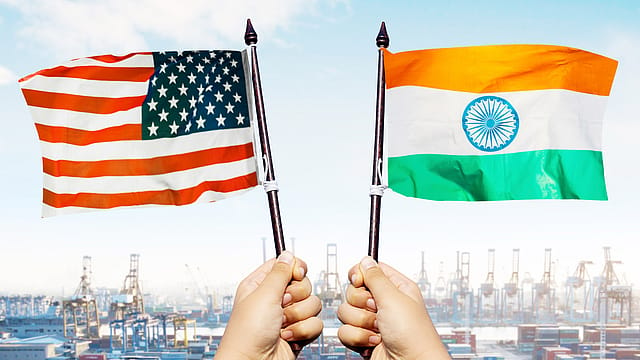
Indian exporters are set to regain lost ground in the US market after Washington sharply cut tariffs on Indian goods from as high as 50% to 18% and announced a long-awaited India–US trade deal that also lowers duties on American exports to India. The move has been welcomed by businesses on both sides, with industry leaders calling it a clear reset in bilateral trade ties after months of uncertainty.
With the headline tariff now set at 18%, Indian products will face a lower additional levy over the most-favoured-nation or product-specific rate, immediately improving price competitiveness across several consumption-led export categories.
For better understanding, for instance, if a shipment with a free-on-board value of $100 that earlier attracted a 25% tariff would land in the US at $125. Under the revised regime, the same shipment will cost $118, translating into a $7 saving per $100 of goods. For price-sensitive sectors, that difference can decide sourcing contracts.
While the fine print of the agreement is still emerging, both Prime Minister Narendra Modi and US President Donald Trump have publicly acknowledged the rollback of unilateral tariffs that had recently weighed on Indian exports.
Textiles, gems and seafood gain pricing edge
The tariff cut comes as a relief for labour-intensive sectors such as textiles and apparel, including cotton garments, home textiles and made-ups, which compete directly with Bangladesh, Vietnam and Sri Lanka. At 18%, duties on Indian garments are now marginally lower than the 20% faced by exports from Bangladesh and Sri Lanka, and 19% from Pakistan and Thailand, improving India’s relative position in a market where buyers are acutely sensitive to small price movements.
A similar dynamic is playing out in carpets, where Indian exporters had ceded market share to Turkey, and in shrimps, which are expected to become more affordable for American consumers. The US already accounts for nearly 35–40% of India’s shrimp exports, making tariff relief particularly significant.
“For India’s shrimp sector, the India–US trade pact is a clear positive,” said Deepanshu Manchanda, managing director of Zappfresh (whose stock has risen by around 4% following the announcement, given the company’s exposure to seafood exports). “Any reduction in tariffs or smoother customs processes directly improves price competitiveness for Indian exporters in a category where margins are sensitive to logistics, compliance and cold-chain efficiency.”
Manchanda added that the agreement could also accelerate India’s shift towards value-added and processed food exports, supported by better cold-chain, testing and traceability infrastructure.
Gems and jewellery exporters, who had lost competitiveness amid higher duties, are also expected to benefit. According to ICICI Direct Research, US imports of gems and jewellery stood at about $89.9 billion in calendar year 2024, while India’s exports were around $10 billion, giving it an 11% share. Post the deal, India will be tariffed lower than major competitors such as China, which faces levies of 34%, improving its appeal to US wholesalers and retailers.
“The reduction from 25% to 18% lowers landed costs and eases pressure on margins,” ICICI Direct said, adding that companies such as Titan, Goldiam International and Renaissance Global stand to benefit.
Reset in trade sentiment, broader export push
Industry experts see the tariff reset as more than short-term relief. Suresh Nair, indirect tax partner at EY India, said the agreement would support export sentiment and order flows across consumer-facing sectors. “Textiles and apparel, gems and jewellery, and shrimp and seafood are all highly responsive to marginal duty changes,” he said, calling the move supportive of India’s broader consumption export basket.
Beyond immediate price effects, analysts see a structural shift underway. Manchanda noted that improved access to cold-chain technology and testing infrastructure could help India move up the value chain, from commodity exports to processed and branded food products. Over time, this favours organised players with integrated supply chains.
Legal and trade experts also pointed to improving momentum. Rudra Kumar Pandey, partner at Shardul Amarchand Mangaldas & Co, noted that India’s exports to the US rose 11.3% to about $59 billion between April and November 2025, even amid tariff uncertainty. “A rationalisation towards an effective rate of around 18% provides a durable tailwind for further expansion,” he said.
For manufacturers, the focus now shifts to execution. “The trade agreement makes India more competitive in the US market, especially in manufacturing,” said Suketu Shah, CEO of Vishal Fabrics. “The true impact will depend on how quickly the changes are implemented and how well companies scale.”