
Life is a zero-sum game, investing is not
ADVERTISEMENT
A couple of years before his demise on August 14, 2022, the late Rakesh Jhunjhunwala had spoken, in this trademark candour, about how he wished his life would end.
“I am going to work until the last day of my life. I pray to God that whenever you are going to take me, let me get up in the morning, do my yoga, have a lovely breakfast, come to the office, do some trading, do some investing and in the evening, go have two good drinks and then you can take me,” he had said in an interview on his plans for retirement after turning 60.
Fate, however, had other plans in store. Jhunjhunwala passed away on a Sunday morning in a hospital following a cardiac arrest. The Big Bull, sadly, was confined to a wheelchair in his final days owing to diabetes-related complications.
Often referred to as the Oracle of Dalal Street, the late 62-year-old had long reconciled himself to mortality. “I do not know when it will come. I cannot predict it. I can model it, but I cannot know it. So, it is inevitable. What is death? Death is permanent sleep,” he had once remarked.
While Jhunjhunwala had, in many ways, prepared himself for the inevitable, there are others whose departure comes without warning, and can be profoundly unsettling.
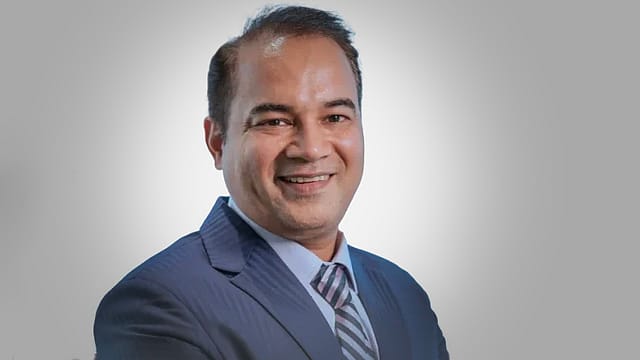
One such loss is that of Siddhartha Bhaiya, the 47-year-old founder of Mumbai-based Aequitas Investment, who passed away following a massive cardiac arrest on December 31, 2025, while vacationing with his family in New Zealand.
Just months before his untimely demise, Bhaiya was at the peak of his professional powers. He chose a path that few others dared to tread. He moved decisively away from Indian equities, raised substantial cash in his AIF schemes, shifted nearly 60% of his PMS portfolio into gold, beside investing overseas – decisions that would later define his final, and unknowingly his finest chapter as a fund manager.
For Bhaiya, investing was never about bravado. It was about discipline with a decluttered mind.
Couple of months back, when I caught with him at his office in Bandra Kurla Complex, he came across as someone who was very clear in his thinking. “Capital allocation is another word for investment. And 99.9% of people get it wrong,” he said, distilling decades of insight into a single line.
Bhaiya, who quit the mutual fund industry to start his own venture in 2012, believed markets were shaped less by numbers and more by human behaviour. “The biggest mistakes happen when people feel great about themselves. Capital allocation is about egos. Finally, it is human behaviour,” he said
As Indian equities were struggling to scale new highs, Bhaiya had already stepped aside. “Brave is being 90% invested in these markets. Buying stocks at 50 times earnings is not courage,” he said.
Though by his AIF mandate he was to stay invested in equities, especially in small and mid-caps, Bhaiya chose to do the complete unexpected. He went into cash as he found no value in Indian equities. In his PMS, he took a bold call of investing in the yellow metal. In his framework, investing in gold was not a tactical bet but an inevitable outcome. “Gold is anti-fragile. Governments can print money, but they cannot print discipline,” he had remarked on why he believed that excess liquidity and fiscal stress would ultimately seek refuge in gold.
The bold move saw Aequitas’ returns sizzle, burnishing the PMS fund’s long-term performance to an enviable 33% CAGR. Yet, Bhaiya was disarmingly honest about his success. “I don’t say I am the most brilliant guy. I was in the right market, the right country and at the right time. The skill is knowing that this might end,” he had admitted.
Based on our interaction, I had planned to write about Bhaiya’s performance in the New Year as, “The fund manager with a Midas touch”, a rare investor who had the courage to step away, and the clarity to be right when it mattered the most.
In his memory, I will give him that epithet. He earned it.
But his sudden demise is a sobering reminder that that it’s not the world of investing that is complex, its rather life: a zero-sum game with no “return.”