
Microsoft’s Puneet Chandok’s 5 predictions for the AI world
ADVERTISEMENT
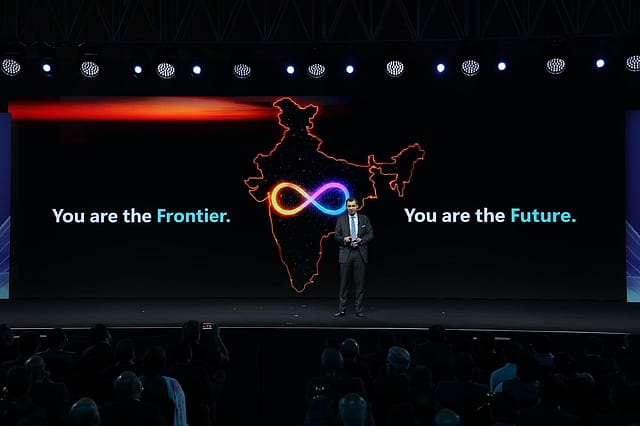
Earlier this year in January, Microsoft Chairman and CEO Satya Nadella kicked off a multi-city AI tour and more recently concluded a second AI tour, hopping across New Delhi, Bengaluru and Mumbai. During the latest visit, Microsoft announced a US$17.5 billion investment in India over the next four years. This investment is in addition to the $3 billion announced earlier this year, which the company plans to deploy over the next two years to build cloud and AI infrastructure in the country. This marks the largest investment by the US tech giant to set up next-generation technology infrastructure in the Asia region.
With India set to overtake the US as the largest GitHub developer base in the world by 2030, and with a large partner ecosystem in place, Microsoft sees the country as having all the right ingredients—public digital infrastructure and talent—to draw value from the AI revolution. As Indian firms deploy AI use cases ranging from employee experience to reshaping business processes and learning, Puneet Chandok, President, Microsoft India & South Asia, sees Indian companies at the forefront of using AI at scale to deliver real impact and return on investment.
Addressing an audience in Bengaluru, Chandok said, “The world is rearranging itself. A new map is forming today, and it does not care about where goods are produced or where value is created. This map only cares about where intelligence is produced and, more importantly, where intelligence is diffused. In this perpetual beta world lies the biggest opportunity for all builders.”
As the adoption of AI and agentic AI accelerates, Chandok sees five major changes coming our way.
Digital colleagues: Alongside human colleagues, AI will introduce digital colleagues in the form of agents. Agentic AI will evolve from answering questions and reasoning in the workplace to becoming true collaborators. This constantly evolving agentic environment—irrespective of models—will lead to autonomous agents with perception and cognition, acting with the user’s permission but without constant involvement.
Next-generation AI businesses: With AI, the focus is shifting for software builders and businesses—from where to build and which models to use—to the application layer. Attention is moving away from infrastructure to application programming interfaces to extract value from AI technology. Businesses and developers focusing on this shift now stand a chance to become the next big tech giants.
Outcome economy: Businesses whose revenue models are based on time-based billing are set for disruption. Services such as consulting and legal practices, where billing is done by the hour, will move to outcome-based models. Human inefficiencies will be replaced by agents, with tasks such as inferencing and documentation increasingly handled by AI as the services industry transitions to an outcome economy.
AI factory: Every business in the near future will need an AI factory—building AI systems or agents tailored to the unique needs of each enterprise. While at a national level this relates to AI sovereignty, at the enterprise level, where AI models access company-specific data, organisations will build agents trained on internal knowledge to provide the right context and maximise machine intelligence.
Jobs will get unbundled: While fears of AI replacing jobs are real, its more likely impact will be the unbundling of human tasks. AI will require constant skill upgrades, making continuous learning essential to remain relevant and employed. No skill will have a lifelong shelf life, and those unwilling to learn risk becoming irrelevant.