
Mistral AI’s Arthur Mensch makes pitch for Open-Source sovereignty at India AI Impact Summit 2026
ADVERTISEMENT
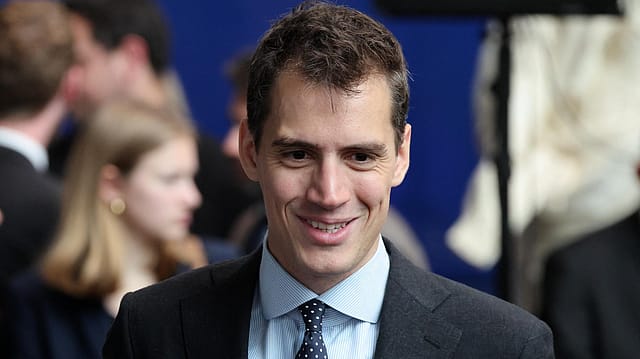
At the India AI Impact Summit 2026, Arthur Mensch, CEO and co-founder of Mistral AI, made a strong case for open-source artificial intelligence, digital sovereignty, and decentralised AI deployment, positioning India as a potential global leader in the next phase of the AI economy.
Addressing Prime Minister Narendra Modi, ministers, and industry leaders, Mensch framed AI not merely as a technology wave but as a geopolitical and economic inflection point.
“AI should be a tool for empowerment, not dominance,” he said, arguing that the real question is not scale or speed, but who controls AI systems, who benefits from them, and whether nations can ensure autonomy over their deployment.
Ownership, not dependence
Mensch warned against excessive concentration of AI power in the hands of a few global corporations. As AI begins to account for multiple digits of GDP in the coming years, he said governments and enterprises must ensure they retain control over the infrastructure that runs their AI workloads.
“Everyone that runs AI workloads should have access to the on and off button,” he said, underscoring concerns around overdependence on external providers that could dictate terms of access.
According to him, countries must “own their AI destiny”—not as a privilege but as a necessity to preserve digital autonomy and shape their economic futures. This, he argued, requires decentralised AI deployment anchored in open-source models.
Open source as strategic infrastructure
Drawing parallels with the evolution of cloud computing and the internet, Mensch said open collaboration and transparency have historically underpinned technological breakthroughs.
“Open source is not a radical idea. It is what allowed us to build the cloud infrastructure and a secure internet,” he said.
He outlined a growing divide in AI: between open-source ecosystems and closed, proprietary models controlled by a handful of private corporations. Mistral, he said, is betting on the former—compressing global knowledge into models that can be customised by enterprises, states, healthcare systems, and educational institutions.
The company collaborates with governments, research institutes, and local ecosystems to improve language representation in AI models. Mensch highlighted India’s linguistic diversity—22 official languages—as a priority area for multilingual AI development.
“No language and no culture should be left behind,” he said, adding that local content aggregation is critical to ensure representation in foundational models.
AI for public services and productivity
Beyond infrastructure debates, Mensch emphasised practical deployment. AI, he said, is not about replacing humans but enabling them to delegate routine tasks and focus on creativity and higher-value work.
Mistral works with public services and healthcare institutions and in France has deployed AI systems to help unemployed citizens find jobs faster.
The company operates both as a model provider and a software layer builder, customising systems for enterprises and collaborating with infrastructure partners to make smaller, efficient models affordable for mass adoption.
“Becoming an entrepreneur today is made much easier with AI,” he said, noting that code-generation models are lowering barriers for non-technical users to build digital tools and businesses.
A call to governments and business
Mensch urged governments to invest in AI infrastructure they own and distribute through local and regional providers. He called for sustained investment in domestic talent, AI literacy, and content creation to ensure cultural and linguistic representation.
To businesses, his message was clear: adopt AI meaningfully and internalise it.
“You have unique IP, unique knowledge and unique ways of operating. You need to build your own AI systems,” he said, likening AI agents to employees that must be trained specifically for each enterprise’s context.
He cautioned that while AI adoption may take time, those who fail to ride the current acceleration wave risk being left behind.
India’s leverage moment
Mensch described India’s AI opportunity as immense, citing its talent base, cultural diversity, large domestic market, and industrial scale.
By controlling its own AI stack, he said, India could emerge as a global innovation hub and a major exporter of differentiated AI products, strengthening its position on the international stage.
Framing AI as the next vector of economic and geopolitical equilibrium, he concluded with a broader call to action: ensure AI becomes a force that levels the playing field rather than deepens divides.
“The future is ours to shape,” Mensch said. “Will AI be a tool of dominance, or a force for empowerment? We choose the future where AI is built by the many and for the many.”
As nations race to define their AI strategies, the debate around openness versus concentration is likely to intensify. At the India AI Impact Summit, Mistral’s message was unequivocal: sovereignty, transparency, and partnership—not dependency—will define the next chapter of artificial intelligence.