
Outlook 2026: Domestic aviation hit an air pocket in 2025; will the New Year bring tailwinds?
ADVERTISEMENT
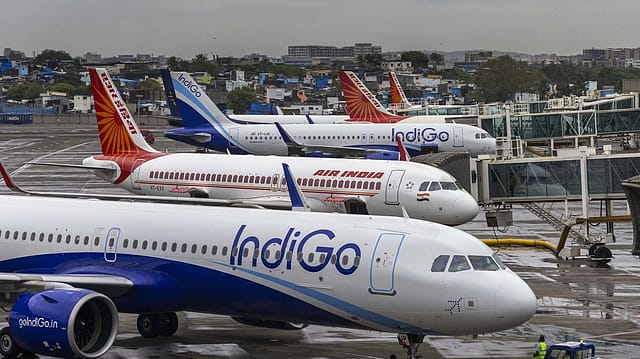
It’s perhaps been the worst year for India’s aviation sector in more than a decade.
For the first six months of the year, it all looked pretty well. The Kumbh Mela drove traffic for airlines, with many deploying additional capacity, even as IndiGo continued consolidating its position as the country’s largest airline. In fact, IndiGo even began operating long-haul flights to Manchester and Amsterdam as it sought to rewrite its playbook as a low-cost carrier.
India also hosted the International Air Transport Association (IATA) annual conference for the first time in over 40 years, with IndiGo as the host. “Aviation safety has always been India’s top priority. India has aligned its regulations with ICAO’s global standards,” Prime Minister Narendra Modi said during the event. Of course, the war with Pakistan curtailed flight operations and even closed airspace, leading airlines to take longer routes. It all seemed on track for a good year for Indian aviation.
Then came June 2025. On June 12, a few days after the IATA event, Air India’s flight AI 171, operating from Ahmedabad to London, crashed soon after take-off, killing as many as 241 people on board, and another 19 people on the ground, taking the total toll to 260, making it the deadliest crash in decades.
The aircraft involved in the crash, a Boeing 787 Dreamliner, was less than 13 years old, and the government or Boeing has yet to pinpoint the cause, leading to numerous speculations, including pilot error. The crash also drew significant global attention, as it was the first accident involving a Dreamliner. The country’s Aircraft Accident Investigation Bureau pointed to the fuel switches in the aircraft transitioning from "run" to "cutoff" position one after another, within a second of each other, as a cause.
Cockpit voices also confirmed the situation, with one pilot asking the other, “Why did you cut off?" with the other responding, “I did not do so." At the time the aircraft took off, the co-pilot was flying the plane, while the captain was monitoring. The report, however, absolved Boeing of any responsibility. “At this stage of the investigation, the AAIB has not issued any safety recommendations for Boeing 787-8 aircraft or GE GEnx-1B engine operators and manufacturers," the report by the AAIB said.
Then, even as questions continued to swirl around the crash, IndiGo ran into its worst crisis since it began operations in 2005. On a single day in December, the airline cancelled over 1,600 flights of its scheduled 2,200 flights, as it sought to reboot its operations, throwing air travel into a tailspin. For a week, air travel in the country was severely affected, with many aircraft grounded or delayed, jeopardizing travel during peak season. IndiGo’s operations were hit after the government’s new flight duty time limitations took effect, which sought to increase crew rest among other norms.
“This has been a difficult year for Indian aviation,” Alok Anand, the chairman of Acumen Aviation, an aircraft asset management and leasing company, says. “Unfortunately, the long-standing reputation for over-governance and inconsistent application of rules has only been reinforced, particularly with the continued absence of a final report on Air India, alongside the Indigo episode.”
Growing losses
The disruptions in 2025 have led ratings agency ICRA to expect domestic air passenger traffic to grow only between 0% and 3% in fiscal year 2026, down from an earlier projection of 4%-6%.
“This revision reflects a slower-than-expected traffic growth in 8M FY2026 (April November 2025) with a YoY growth of 2.2%, which was impacted by cross-border escalations (that led to flight disruptions and cancellations earlier during the year); the aircraft accident tragedy in June 2025 that made travellers hesitant at least during the period immediately post the accident; and the impact on business travel owing to the headwinds stemming from US tariffs; and the impact of operational disruptions at IndiGo from December 3, 2025 to December 8, 2025, leading to around 4,500 flight cancellations,” ICRA said in its report.
The disruptions and turmoil have also meant that the net loss forecast for the Indian aviation industry in FY2026 could rise to between Rs 17,000 crore and 18,000 crore, higher than the earlier expectations of a net loss of Rs 9,500 crore and 10,500 crore for the year (against a net loss of Rs 5,600 crore in FY2025). India’s aviation sector is capital-intensive, with aviation fuel alone accounting for 40 percent of operating costs. Compared with many Middle Eastern airlines that have been posting record profits, India remains at a disadvantage in terms of fuel costs.
“The primary contributor to this larger deficit is IndiGo’s elevated losses, stemming from the financial impact of flight cancellations, passenger refunds, and higher operating expenses due to the operational disruptions experienced in the first week of December 2025,” ICRA says about the ballooning losses. “The weakening of the INR against the USD in Q2 FY2026 also resulted in airlines reporting large forex losses in Q2 FY2026, although a large proportion of these losses are unrealised. Additionally, as the INR continued to depreciate in Q3 FY2026, airlines are likely to face further foreign exchange losses, impacting the overall net loss.”
“It is time for Indian regulators to make meaningful governance reforms that genuinely open up the market,” adds Anand of Acumen. “The ambition of building a large, globally relevant aviation ecosystem cannot be realised if policy continues to favour a handful of dominant players. Entrepreneurship must be encouraged by enabling rules that allow new ventures to form, innovate, and create impact—both within India and internationally.
Not all gloom
Meanwhile, it’s not all gloom for the sector, even though losses are expected to grow.
The year saw the inauguration of the Navi Mumbai airport, which will operate as the second airport in Mumbai, decongesting the main airport in the city and, in the process, allowing greater accessibility for regional airlines. This year, the government has approved two new regional airlines and a full-service airline as it seeks to break the duopoly in the Indian aviation sector, controlled by IndiGo and Air India.
By 2040, India’s passenger traffic is expected to grow sixfold to around 1.1 billion, with India’s commercial airline fleet predicted to grow from 400 in 2014 to around 2,359 in March 2040.
Next year will also see the launch of the Noida International Airport, an alternative to the heavily congested New Delhi airport. With the Navi Mumbai and Noida International airports, India will move away from the long-standing tradition of having just one airport in a city. “Without a fundamental shift in how aviation is viewed as critical national infrastructure serving a mass market, we will continue to see the same outcomes, merely dressed in different forms,” Anand adds.
Then, there is also the transformation underway at both IndiGo and Air India, which have been on different paths to rediscover themselves. While IndiGo has begun moving away from being a low-cost carrier into a hybrid one, offering some of the services that full-service airlines provide, such as business class seats and a frequent flyer program, Air India has been busy refurbishing many of its aircraft and consolidating operations under the Air India and Air India Express brands. The two airlines have ordered as many as 1,000 aircraft between them.
Perhaps, 2026 could give the sector a much-needed break after a challenging year.