
IndiGo is getting back on track, but regaining trust won’t be easy
ADVERTISEMENT
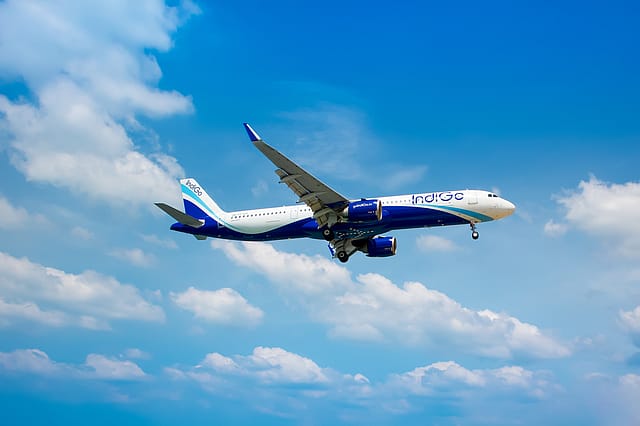
It all spiralled out of control in ways even IndiGo hadn’t fathomed.
For an airline that’s often admired for its forward planning, a meltdown of this scale is still a tough one to process. It’s also unfair to say that IndiGo didn’t play a role in the crisis.
It all began on December 2, when the country’s largest airline by market share began cancelling flights, leaving thousands of passengers stranded at airports. Because of its scale of operations and its market share of more than 60 per cent, there was no immediate reprieve for passengers, and by December 5, as many as 1,600 flights had been cancelled by IndiGo.
The only other meaningful airline in the Indian skies is Air India, which controls about 30 per cent of the domestic market, essentially making the country’s aviation sector a duopoly. All that meant that, suddenly, the world’s third-largest aviation market was in something of a mess.
At the centre of the crisis was a new crew-rostering rule that allowed pilots and cabin crew more rest. For IndiGo, which had championed a lean model, the new rules posed significant challenges. The rules included longer weekly rest for pilots (48 hours instead of 36) and tighter limits on night landings (two instead of six) after years of fatigue complaints to the regulator.
“It’s a complex issue,” Satyendra Pandey, the managing partner of aviation finance firm AT-TV, says. “When it comes to compliance, it seems the simple answer is yes (IndiGo being responsible for the crisis). However, for an airline that is often admired for its forward planning, the scale of the meltdown and the oversight, or lack thereof, is still hard to digest. It has also exposed several weak links which have to be examined.”
“It’s also the failure on the part of the regulator in putting guardrails around the autonomy given to airlines,” says Alok Anand, the chairman of Acumen Aviation, an aircraft asset management and leasing company. “But yes, the root cause seems to stem from IndiGo’s operational planning failure.”
On December 9, Pieter Elbers, the Netherlands-born CEO of IndiGo, announced that operations are back on track and that the airline is flying to as many as 138 of the 139 destinations it serves. While the government has now cut 10 per cent of IndiGo’s scheduled flights for the winter season—which means the airline will reduce its operations by about 200 daily flights—the crisis has come at a time when travel in the country peaks.
“Right now, the airline has lost its credibility, and I suspect there's more downside, unfortunately,” said Shukor Yusuf, the founder and chief analyst at Singapore-based Endau Analytics. “It’s bruised and battered, but it has a tried-and-tested business model. Hopefully, the government sees the positives even if it must punish the airline for this chaos.”
Where did it all go wrong?
On paper, IndiGo’s pilot strength is close to 5,500, with about 400 aircraft in operation. The airline was operating some 2,000 flights a day and was busy scaling up its international operations in its attempt to rewrite its legacy as a low-cost carrier.
With new offerings such as business-class seats, airline miles, and long-haul international operations, Elbers—who was brought in from the Netherlands-based KLM—has been busy attempting to rewrite traditional airline models that categorise airlines as full-service or low-cost carriers.
In 2023, IndiGo even beat the country’s oldest airline, Air India, to what can now safely be called the mother of all aviation deals when it ordered as many as 500 aircraft from the France-headquartered Airbus. Today, IndiGo has more than 900 aircraft on order with Airbus, while Air India is awaiting delivery of 570 aircraft.
With all that going for the airline, and a market share of nearly 66 per cent in October, according to the DGCA, the crisis came as a bolt from the blue. “The disruption has brought forth several weak links and challenges across the system,” adds Pandey of AT-TV. “From the lack of redundancy measures to inadequate monitoring mechanisms to the lack of consumer protection laws. These are elements that have to be addressed—not sequentially but all together and all at once. Which is easier said than done. Which is also why a speedy solution is extremely hard.”
IndiGo said the crisis was due to a combination of factors, including technology glitches, weather conditions, and the change in rules from November 1 that reduced flight frequency for pilots and increased the duration of mandatory rest breaks to minimise fatigue. “The rules were notified two years ago,” adds Anand. “The plan could have been to increase the number of pilots or rationalise the sectors to avoid unscheduled cancellations. It was further compounded by the weather woes around this time of the year in North India.”
So, what’s going to happen?
For now, the worst seems to be over for the airline.
“We have optimised our operations, and our on-time performance is also back to normal levels,” IndiGo said in a statement on December 10. “We have also automated the procedure for our customers to get full refunds upon cancellations through a simple process on our website.”
The airline is still not off the hook, as the government seeks a detailed response regarding the issues. While Elbers has held on to his job, it’s also likely that the government won’t forgive the airline for the trouble it caused. In an interview on December 9, the country’s aviation minister questioned the timing of the crisis—during Russian president Vladimir Putin’s visit—and said that the government is studying the situation across both IndiGo and the Director General of Civil Aviation (DGCA), whose role in the crisis remains questionable.
“For a country that is on its way to becoming a 5-trillion-dollar economy and already the world’s third-largest aviation market, air travel is a key foundational pillar,” says Pandey. “Connectivity drives commerce, talent flows, and capital flows—all of which are key.”
In the process, the government also seems to have understood that the duopoly in the Indian skies remains a challenge. A decade ago, India’s skies boasted airlines such as Jet Airways, Air India, Vistara, AirAsia India, Go First, SpiceJet, TruJet, Zoom Air, and Air Deccan. Today, IndiGo and Air India together control as much as 91 per cent of the market. Akasa corners another 5 per cent, while SpiceJet holds nearly 3 per cent, raising serious questions about the country's reliance on IndiGo and Air India for domestic travel.
It also hasn’t helped that Air India, which had promised radical reforms under the Tata Group’s might, hasn’t been able to deliver, with its market share still showing no significant growth. An air crash in June this year, whose cause remains unanswered, also affected Air India’s long road to recovery. All that means that even though IndiGo’s brand has taken a hit, it’s unlikely that the crisis will have a cascading effect in the coming months.
“In a duopolistic market where the competitor (Air India) also faces challenges of its own, it is only the consumer that has borne the brunt of the crisis,” adds Pandey. “Longer term—what options are really there for the consumer? Trains continue to be packed, and there simply aren’t enough airlines. Within a week, the issue will dissipate, and by January, it is likely that forward bookings for IndiGo will rebound.”
India remains a highly expensive market for airlines due to high fuel costs, taxation, and parking charges, making it difficult for new entrants. “We are encouraging more new airlines, ensuring fair access to airport capacity and eliminating any possibility of a duopoly controlling connectivity and pricing in our skies,” Union Civil Aviation Minister Ram Mohan Naidu said on December 9. “More airlines mean more choice and more affordability.”
But that’s still a long way off. In the process, it’s likely that IndiGo will bounce back. The crisis, however, is sure to serve as a reminder—and may not be forgotten or, perhaps, even forgiven easily.