
Over a dozen WHO-listed essential medicines, including key cancer and diabetes drugs, missing from India’s NLEM, civil society warns
ADVERTISEMENT
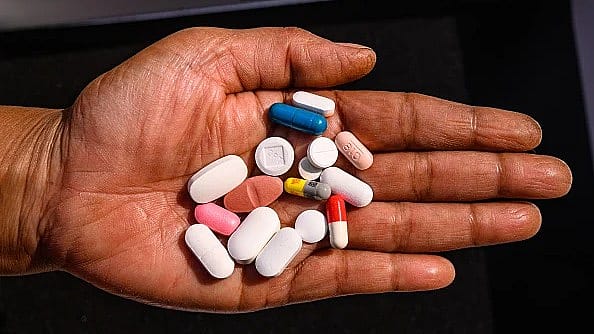
Over 100 medicines, including some cancer and diabetic drugs, that are in the Model List of Essential Medicines of World Health Organisation (WHO) are yet to be part of India’s National List of Essential Medicines (NLEM), says the Working Group on Access to Medicines and Treatments, a civil society coalition.
In a letter to Dr. Rajiv Bahl, Chairperson, Standing National Committee on Medicines (SNCM), the group said while the WHO List of Essential Medicines, 2025 has a total of 523 medicines, the number of medicines listed in NLEM, 2022 is 384. The WHO has revised its Model List of Essential Medicines on two occasions, in 2023 and 2025, incorporating significant additions and updates, after the current NLEM was notified in 2022, they point out.
Copies of the letter have also been sent to Union Health Minister Jagat Prakash Nadda, Punya Salila Srivastava, Secretary Department of Health and Family Welfare and Manoj Joshi, Secretary Department of Pharmaceuticals.
According to the group, the omissions include critical medicines for the treatment of noncommunicable diseases such as cancer and diabetes. The letter lists out 17 active cancer-treating agents and four supportive agents for cancer treatment that are missing from the NLEM.
It also mentions nine monoclonal antibodies (mAbs) that have been proven critical for targeted therapies in many diseases, especially cancer, that are missing from the NLEM, 2022.
The 17 active cancer treating agents are Abiraterone, Anastrozole, Bevacizumab, Blinatumomab, Cladribine, Dasatinib, Erlotinib, Everolimus , Fludarabine, Ibrutinib, Nilotinib, Pegaspargase, Pembrolizumab, Procarbazine, Realgar-Indigo naturalis formulation , Tioguanine and Vinorelbine. The four supporting agents for cancer treatment that are missing in NLEM are Aprepitantm Octreotide, Pegfilgrastim and Rasburicase.
Recognising the fact that NLEM has to be based on the public health priorities of India, the group said that these medicines will become accessible and affordable once it becomes part of NLEM.
According to them, prolonged delay in revising NLEM has denied millions of citizens free access to newly recognized essential medicines within the public health system, while also restricting affordable access in the private sector.
“Such a delay carries profound constitutional and human rights implications. We therefore urge the immediate initiation of a transparent, time-bound, and conflict of interest-free process to revise NLEM, ensuring that it reflects the latest evidence, public health priorities, and the WHO Model List of Essential Medicines,” the letter said.