
PM Modi inaugurates Noida International Airport, bets on infra push to drive western UP growth
ADVERTISEMENT
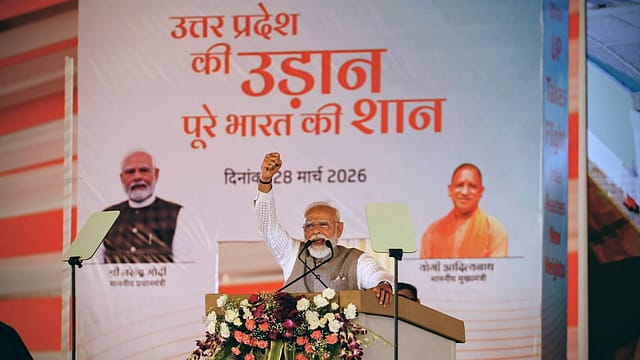
Prime Minister Narendra Modi on Saturday inaugurated the long-awaited Noida International Airport in Jewar, positioning the project as a cornerstone of infrastructure-led development in western Uttar Pradesh and a catalyst for economic activity across the region.
The airport, built with an investment of nearly ₹11,200 crore ($1.2 billion) in its first phase, will initially handle 12 million passengers annually. Once fully developed, capacity is expected to scale up to 70 million passengers, making it India’s largest airport. Planned across 7,200 acres with six runways, the project has Zurich Airport International AG as its sole investor.
The government is also pushing an aerotropolis model by integrating aviation with commercial, industrial, logistics and residential ecosystems to create self-sustaining urban centres. This is similar to global hubs like Amsterdam Airport Schiphol. Around Jewar, this approach is expected to shape a new urban cluster anchored on the new airport.
An aerotropolis is an urban planning concept centered on a major airport, functioning as an "airport city".
A multi -modal push
Modi linked the airport’s launch to a broader infrastructure push underway in the state, citing projects such as a semiconductor facility in Noida, the Delhi–Meerut Namo Bharat rail corridor, and metro expansion. “This Jewar airport is connecting northern India with the world,” he said, adding that such projects are transforming Uttar Pradesh into a major investment destination.
He said the airport’s strategic location would benefit cities including Agra, Mathura, Aligarh, Ghaziabad and Meerut, while also supporting farmers and small businesses. “Flights will take off from here to the world, and it will also become a symbol of the flight of a developed Uttar Pradesh,” Modi said.
The PM highlighted the region’s emergence as a logistics hub, pointing to the intersection of two dedicated freight corridors at Dadri. This multi-modal connectivity which combines air, rail and road will enable faster movement of agricultural and industrial goods to domestic and global markets.
Beyond connectivity, the project is expected to generate employment across aviation services, maintenance, and logistics. According to the PM, India’s aviation sector has expanded significantly, with the number of airports rising from 74 before 2014 to over 160 now. Under the UDAN scheme, more than 1.6 crore passengers have accessed affordable air travel.
With the airport nearing operations, the region is expected to drive the next phase of NCR’s real estate growth, turning the Yamuna Expressway into a key investment destination. The aerotropolis-led development is likely to accelerate this trend, and it will position Jewar as a new urban and economic centre within the NCR.
According to Square Yards, property prices near the airport are projected to rise sharply, with plot values expected to increase by 28% and apartment prices by 22% over the next two years. Over the past five years, apartment prices have nearly tripled, while plot values have grown about 1.5 times, with some micro-markets recording up to fivefold gains.
Shield from disruptions
Modi also spoke about the role of infrastructure in insulating the economy from global disruptions, pointing to ongoing geopolitical tensions in West Asia affecting energy and commodity supplies. Despite these challenges, he said, India has maintained its development momentum through sustained investment in infrastructure.
“Ethanol made from farmers’ sugarcane has reduced dependence on crude oil. Without ethanol blending, India would have needed to import about 700 crore liters of crude oil every year,” he added.
“An airport is not just a facility; it gives wings to progress,” Modi said, framing the Jewar project as part of a larger vision to build a “developed India”.
As a symbolic gesture, Modi had invited the audience to participate in the inauguration by lighting up their mobile flashlights.