
Prices are rising faster than incomes; India’s premium housing market is under stress
ADVERTISEMENT
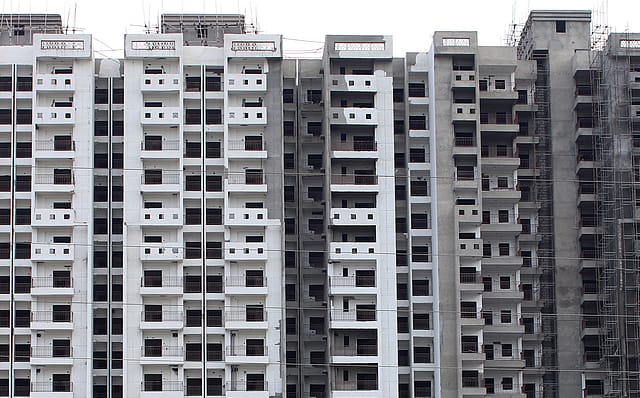
With India’s growing economy, the rise in purchasing power is a fact, but it is still unable to meet the pace at which home rates are increasing, putting India’s premium housing sector under stress. If you want to buy a 3BHK home in a good locality in any major city, it will require 12 years with an annual income of ₹23 lakh, or in other words, you need to be in India’s top 1%, shows a study by Square Yards.
The study shows that there is a noticeable rise in the number of affluent Indians. As a result, the demand for spacious, amenity-rich 3BHK homes has increased sharply, driven by evolving family structures, the need for multifunctional living spaces, and higher work-from-home adoption.
However, the rapid escalation in residential prices, rising land and construction costs, and a supply skew towards premium segments have pushed this configuration beyond the reach of the average homebuyer, according to the report From Aspiration to Reality: The Cost of Owning a 3BHK in India.
Average price of a 3BHK home in metro cities
The average price of a new 3BHK home in India’s top five metro cities is now about ₹2.7 crore. If a person earns ₹23 lakh a year, it would take them nearly 12 years to afford such a house. Even someone earning around ₹22 lakh a year, which puts them in India’s top 1% income group, would face the same challenge, highlighting the depth of stress in large-home ownership.
“India’s residential market is witnessing a sharp affordability imbalance, with just 11% of new housing supply currently falling within the affordable segment. The remaining 89% is concentrated in markets where buyers face significant EMI stress, often stretching incomes beyond sustainable levels. Alarmingly, 41% of this supply lies in ‘income-stretch’ markets, where financial pressure begins to intensify,” the report noted.
Sales grow in South India but decline overall
Findings from multiple reports present a mixed picture of India’s housing market.
For example, a report by real estate consultant PropTiger shows that total housing sales across eight major cities, including the Mumbai region, Delhi-NCR, Pune, and Ahmedabad, declined 12% to 3,86,365 units in the 2025 calendar year from 4,36,992 units in the preceding year. However, sales increased in Bengaluru, Hyderabad, and Chennai by 15%, with over 1.33 lakh units sold last year.
“2025 was not a year of demand destruction, but one of recalibration. Buyers remained active but more deliberate,” said Onkar Shetye, Executive Director of Aurum PropTech, which owns PropTiger.
Interestingly, despite a decline in overall housing unit sales, the total transaction value rose 6%, crossing ₹6 lakh crore. According to a report by ICC-ANAROCK, this is a clear signal that higher ticket sizes and premium housing are now driving the market.
“This divergence between volume and value reflects a structural shift underway in Indian housing,” the report said.
Which cities are most affordable for buyers?
According to the reports quoted above, Bengaluru has the most balanced housing market, where home prices and incomes have grown at a similar pace across most areas.
In NCR and the Mumbai Metropolitan Region, prices and affordability vary widely by location, so choosing the right area is very important.
Hyderabad has grown fast, but home prices have risen much faster than incomes, making housing stressful to afford in most parts of the city.
Pune, despite attracting many young professionals, has expensive central areas dominated by wealthier buyers, forcing most people to look at outer areas for an affordable 3BHK.
The reports show that by choosing the right location, buyers can save ₹30–60 lakh, as central and premium areas are mostly used for investment, while emerging and outer areas offer a better chance of actual home ownership.
“This concentration of premium supply has coincided with a post-pandemic shift in buyer preference, with larger, amenity-rich homes by reputed developers becoming the most sought-after living format. At the same time, a surge in high-net-worth individuals in a positive economic environment has further pushed 3BHK affordability under significant stress,” said Tanuj Shori, Founder and CEO, Square Yards.