
Snap launches Specs AR glasses at $2,195
ADVERTISEMENT
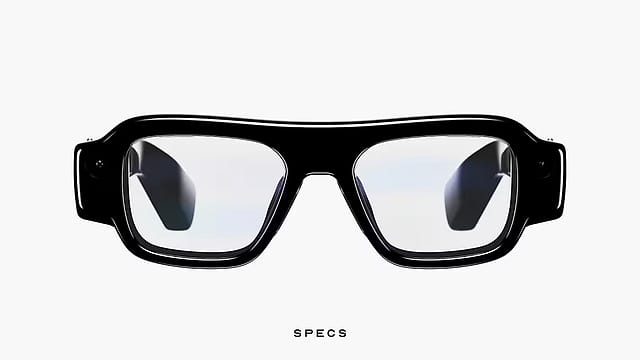
Snap has introduced Specs, its augmented reality glasses, priced at $2,195, with a $200 refundable deposit. The glasses are available for pre-order and will ship in the U.S., France and the U.K. later this year. According to Snap, Specs are a "wearable computer built into a lightweight pair of glasses" designed to bring digital experiences into the real world.
Specs come in two sizes, with the 47 mm model weighing 132 grams and the 52 mm model weighing 136 grams. Removable inserts support a wide range of prescriptions.
Hardware and battery
The display system consists of liquid crystal on silicon technology, which delivers a 51-degree field of view and 16 million colours.
Specs offer up to four hours of mixed-use battery life, including audio and video playback, Lenses, AI assistance and Bluetooth notifications. The charging case provides four additional charges for up to 20 hours of mixed use.
Snap said it has invested across the augmented reality stack, including displays, optics, computer vision, hardware, developer tools and its operating system, and has filed more than 7,000 patents during the development of Specs.
Tapping into augmented reality
Specs feature see-through lenses that overlay digital content onto the physical world. The glasses offer a 51-degree diagonal field of view and support interactive AR experiences directly within the user's surroundings. Snap says digital experiences can appear anchored to the real world, allowing users to interact with information, objects and applications without looking at a separate screen.
Specs can display information directly within the user's field of view, allowing digital guidance to appear in context. Snap said developers can build experiences that respond intelligently to the real world in real time.
AI assistance and hand tracking
Snap is positioning AI as a core part of the Specs experience. "AI becomes more useful when it understands context," the company said. With Specs, AI can see what users see, understand what they are trying to accomplish and provide assistance in real time. The company said guidance can appear where it is needed, and information can be connected to objects and places in the user's environment.
The glasses are powered by two Snapdragon processors. One is dedicated to computer vision, and the other runs Lenses. According to Snap, the system enables fast hand tracking, low latency and responsive interactions that help digital content feel anchored in the real world. Users can interact with experiences using their hands and voice.
Specs support spatial experiences that blend digital content with the physical world. The company said developers can create experiences for learning, gaming and productivity that are grounded in real-world environments rather than traditional screens.