
Vedanta delivered 55% cumulative dividend yield in five years; demerged firms can become $100-billion companies: Anil Agarwal
ADVERTISEMENT
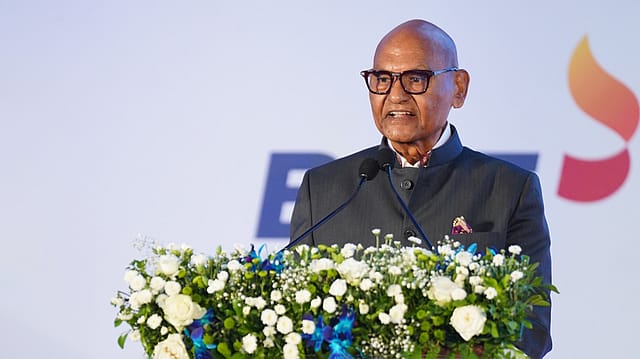
Vedanta Group chairman Anil Agarwal on Monday said each of the group's newly demerged listed entities has the potential to become a $100-billion company, as he unveiled plans to invest $20 billion over the next three years to drive growth across its metals, mining, energy and natural resources businesses.
Speaking after the listing of Vedanta's four demerged entities on the stock exchanges, Agarwal highlighted the group's track record of creating shareholder value, noting that Vedanta has delivered a 300% total shareholder return and a cumulative dividend yield of 55% over the past five years.
"Throughout our journey, we have remained committed to creating value while keeping the interests of our shareholders paramount," Agarwal said.
The billionaire industrialist said the demerger marks the beginning of a new growth phase for the group, with each company gaining greater strategic flexibility, dedicated management focus and access to specialised investors.
"We are committed to growth and plan to invest $20 billion over the next three years. Each of the five companies has the potential to become a $100-billion enterprise in its own right," he said.
Agarwal said the global economy's increasing dependence on artificial intelligence, electrification and the energy transition will significantly boost demand for metals, minerals and energy resources, placing Vedanta's businesses in a favourable position to benefit from long-term structural trends.
"The economy of tomorrow will be highly dependent on minerals, metals and energy resources. These are the sectors in which Vedanta operates, and we are uniquely positioned to benefit from this long-term trend," he said.
He noted that India continues to import nearly 50% of its natural resource requirements despite possessing abundant reserves, highlighting the importance of increasing domestic production of critical resources.
According to Agarwal, every tonne of metal and every barrel of oil and gas produced in the country strengthens India's economic and strategic position.
Among the group's growth areas, power remains a major focus. Vedanta currently operates around 4.2 GW of power generation capacity and sees significant opportunities as India's electricity demand expands. The group's long-term ambition is to build a 50-GW power portfolio.
In steel, Vedanta plans to increase capacity from around 4 million tonnes to 15 million tonnes through brownfield expansion. Agarwal said the company enjoys strategic advantages through access to iron ore, metallurgical coal, gas infrastructure and logistics assets.
He also expressed confidence in the long-term prospects of India's steel industry, stating that domestic demand could eventually rise to 400-500 million tonnes annually from around 150 million tonnes at present.
Oil and gas remains another key pillar of Vedanta's expansion strategy. Agarwal said the standalone oil and gas company is debt-free and generates strong cash flows, enabling investments of around $5 billion over the next three years. The company aims to increase production to 500,000 barrels per day in the medium term and eventually target one million barrels per day.
In aluminium, Vedanta is pursuing capacity expansion backed by strong demand growth and secure access to critical raw materials such as bauxite and coal.
Agarwal also highlighted opportunities in critical minerals, noting that Vedanta is India's only producer of nickel and has exposure to other strategic minerals with favourable demand-supply dynamics.
Beyond expanding its core businesses, Vedanta also plans to support downstream manufacturing industries by developing industrial ecosystems around its metals, minerals and energy operations. Agarwal said such initiatives could create significant employment opportunities and strengthen India's manufacturing base.
"Nothing creates more long-term value than manufacturing. Once a factory is established, it generates jobs, enables downstream industries and contributes to economic growth," he said.
Vedanta currently contributes nearly ₹60,000 crore annually in taxes and supports around one million jobs, both directly and indirectly, Agarwal added.