
We are in the midst of Adhik Maas: Ajay Garg of Equirus Capital
ADVERTISEMENT
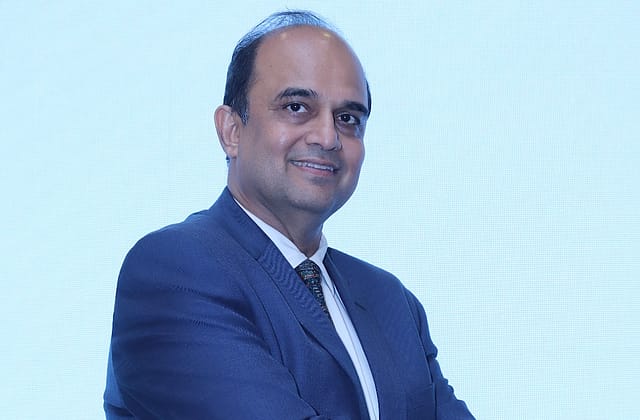
While promoters have been cashing through IPOs in recent years, Ajay Garg, founder & managing director, Equirus Capital, explains that this isn't a sign of weakness but evidence of a maturing market where capital allocation has become far more disciplined. Drawing on the concept of Adhik Maas, the month in Hindu calendar reserved for contemplation, Garg makes the case that India's market mechanisms naturally weed out excesses and that the best for India Inc is still ahead, provided the country moves beyond incremental reforms to embrace structural change
Over the past couple of years, we've seen a lot of offer for sales — promoters cashing out rather than companies raising money. In the '90s and 2000s it was growth capital; today it's promoter capital. The promoter gets rich, not the company. Many of these businesses aren't profitable, yet promoters are cashing out thanks to the ₹30,000 crore of average monthly SIP flows. What's your view on that?
This is a mindset that exists widely: that a primary raise is always better for the investor than a secondary one. It's a myth that needs debunking, for very good reasons. If you look at the data, from an investor's perspective I take much less risk in a secondary purchase than in a primary one. And the capital-turn ratio on secondary investments is always better than on primary.
When I started my career, there were two types of investors: FIIs, who were episodic, and retail, who were temperamental — and they invested with a lot of myths and emotion. Today a large part of the market is institutionalised. An institutional investor does significant homework, though they can still get it wrong. The difference is this: an individual looks at every single stock and wants to win on each one; a fund manager looks at a portfolio of, say, forty stocks and can afford to get four or five calls wrong. That's the best economic decision the fund manager can take with the capital available. So, the market should increasingly read the data for what it is, rather than using a template that "OFS is bad, primary is good," or the reverse.
As an investment banker taking lot of companies public, isn't that the antithesis of what you’d want, since you would want promoters to go public?
Capital markets are, to my mind, the great vehicle for democratizing entrepreneurship, unlike banks which support only those who already have it. In a society, you want entrepreneurship democratised. Capital markets say, "I'll give you a chance" — just as with Sunil Mittal — and he also knows that if he misses it, he won't get a second chance. The market has become very disciplined: I'll invest in your idea, but if you don't deliver, I won't look at you again. The more performance pressure sits on every entrepreneur's cap table, the better the returns.
So, the modality for capitalising a business becomes the IPO. Some IPOs perform, some don't, but that's not unique to IPOs. When I started, there were eight thousand listed stocks; today, of those, six thousand don't exist anywhere. Business carries risk, and some of it gets manifested through IPOs. That's the way business is — continuous transformation and innovation that disrupts things. Management teams that have achieved certain things tend to grow complacent, while entrepreneurs are riding their own capability and the economic wave push forward. Bharti is the reason a telecom sector exists in India; had it been left to the other listed players — all with good pedigree — the sector wouldn't be there.
But Bharti Airtel is an outlier
Please understand the trend: outliers create the trends to begin with. I'm making a fundamental argument for why democratizing entrepreneurship helps society: it keeps pressure on older companies to keep innovating and protecting their position. If you lock the IPO market and lock access to capital for everyone, what happens? Earlier, every talented middle-class person went abroad or joined an MNC. Now startups are happening across the board because capital is available through VC, private equity, and then the capital market. That's the journey India needs, because that kind of innovation made the US what it is. Look at the SpaceX IPO: can you, by any stretch, justify its valuation? No. But that country is willing to back it, and I'd love to see India do that.
Markets always work on greed and fear. Sometimes greed makes you lose capital; sometimes fear makes you lose opportunity. The market always functions this way. We keep saying India is the next hub of innovation, but entrepreneurs tell me, "India mein risk lo, aur agar galat ho jaaye to sab tumhe neeche gira dete hain. [If you take a risk in India and it goes wrong, everyone beats you down]." And then we say we're not innovating enough.
But if a lot of money is just being taken off the table, that is privately enhancing promoter wealth rather than funding companies, how long can that trend last?
Where is all that money coming back to? It comes back into the market as mutual funds funding other entrepreneurs, and partly through private equity. The money taken out goes back into the wealth industry, which deploys it into private equity and VCs. It's the same cycle playing out. The business taking the money out doesn't need it, and the market's capital allocation is now decentralised. Earlier, a promoter would do unrelated diversification and misallocate capital. It isn't perfect now either, but if you compare the value chains of the top hundred companies today versus before 2018, the discipline in capital allocation is mind-boggling. So, if a promoter realises the business has reached a scale where it can be institutionally held by the market, and they can use their entrepreneurial ability and capital elsewhere, why should that be wrong? Today, most of the money coming into the startup ecosystem comes from startup founders who sold stakes in their businesses to generate cash flow.
So, does that mean existing businesses cannot generate higher RoEs and most businesses in India are at peak ROE levels, because entrepreneurs don't see merit in reinvesting capital into the business?
That’s a very sweeping, generalized statement. Corporate finance is hard work. Every business in every sector has multiple opportunities and multiple checkpoints. Companies also have DNAs, and the bigger a business gets, the harder the DNA is to change. But with continuous performance pressure, organizations keep evolving for the better. I'm a little hesitant to give you the answer you're looking for. Look at the broad trend: the kingpins of commodity chemicals are not the kingpins of specialty chemicals. The kingpins of the two-wheeler auto-component segment are not the kingpins of four-wheelers. It's not that those companies had no reason to exist; it's a business-model shift. When personal transport moved from two-wheelers to four-wheelers, organisations needed different DNA, different technology, different distribution. So, there are many factors. I can't make a sweeping statement the way you're framing it.
How about some sectors such as autos, auto ancillaries, and banks. Is it fair to say that, for established businesses, the best of the cycle is over?
I wouldn't agree. At $4 trillion GDP we are bigger than most European countries. We have corporations of that scale, bigger and better than those in most European countries. But we still have $3,000 per-capita income, and as a country we don't deserve to stay at $3,000. So, when I look at any business, I ask: why think within a $4 trillion GDP? Think incrementally. If tomorrow we're $10, $12, $15 trillion, what scale will you have? Indian businesses are building scale with a velocity of non-linearity that's mind-boggling.
People confuse this point. My profit will be higher when I'm growing slower than it is today, because today I have to invest properly to be relevant when the market is twelve, fifteen trillion. People question that ROEs fall as growth comes down. But as growth moderates, my investment need also comes down, other costs come in, and there are always continuous disruptions. So, there are too many variables to make a sweeping statement on ROE.
What new growth vistas you think India will see? Where do you see opportunity and value being created, and where do you see value destruction?
Valuations at the base can be very flat, and value destruction hits those who aren't innovating or refreshing their business model every day. Global markets and the younger generation are getting more and more assertive about their preferences.
The beauty of the Indian market: of the thirty-six, thirty-seven IPOs we did the current cycle, they were across sectors, across geographies, and across age groups. I've never been so excited about India's opportunity.
In the Hindu calendar there's Adhik Maas, the extra month [dedicated towards contemplation and spiritual growth]. There's a lesson Indians have been given through it. We get carried away so fast: over-excessiveness in anything destroys everything. So, in our case, destruction would always come from over-excessiveness. Philosophically, our ancestors taught us the importance of having fun, as long as you follow the right code.
What's your understanding of the current geopolitical strife? How much of it is structural, how much is cyclical, and where does it leave India Inc.?
The last similar oil crisis was around 1990; it almost brought India to its knees. India really got started as an enterprise in 1991, with a complete shift in how corporates and economy were handled. Every crisis has been a great opportunity for India. Why do we need a crisis to act?
So, I'm hopeful we'll be in a better situation. A few years ago, in an internal offsite, our group made a point: the two biggest problems over the next ten years are, one, the level of debt sitting on America's balance sheet — it's reaching a stage well beyond what they can manage. It's like the goonda in our society who is never poor; everyone else pays the cost of him being what he is. America's debt problem will be manifested as the world's problem, not just America's — exactly how, we're not the best people to predict, but what I'm seeing is a manifestation of that. Two, how does the rivalry between the world's number one and number two play out? What you see in geopolitics today is basically these two trends. India doesn't really matter to those two trends, but the collateral challenges will be thrown at us.
Whenever India has been "packaged" to the world, it has always come out well. The country is far more resilient, has far more access to technology, and has very unified leadership, so if things need to be solved, it won't get stuck in endless debate. That's an advantage we have. But we'll have to do much more than we are doing on reforms, and yes, there will be some troubled times too. The good part is that market discipline has improved. I've never seen value chains in India this good. The same crisis in 2006–07 would have worried me a lot; today, it's much better.
What's your take on the tax breather on G-Secs for FPIs?
I don't think we need incremental change. Unfortunately, we often end up using all our intellectual capacity and every resource we have doing things incrementally.