
Why it’s high time for Hindustan Aeronautics Limited (HAL) to deliver
ADVERTISEMENT
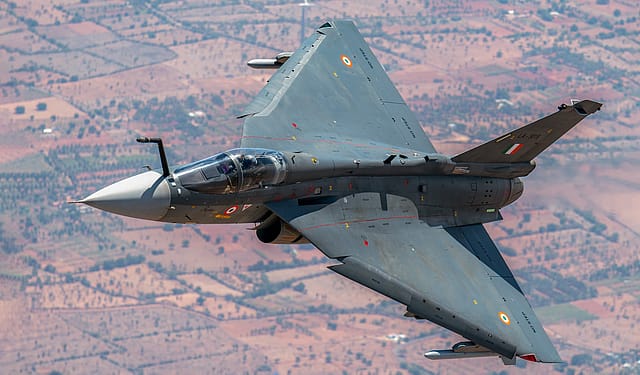
It’s without a doubt, an embarrassment of sorts.
For all its storied history over the past eight decades, Hindustan Aeronautics Limited was the Indian government’s mainstay for manufacturing fighter jets for the world’s third-largest defence force. From the likes of the Curtiss Hawk Fighter and Vultee Bomber Aircraft during World War II, to the MiG-21 and Sukhoi aircraft in use with the Indian Air Force, HAL boasts a legacy in Indian aircraft manufacturing second to none.
That’s also why the Indian government’s decision not to allow HAL to participate in its flagship fifth-generation fighter aircraft manufacturing program has raised eyebrows and even alarmed the company's investors. The fifth-generation stealth aircraft project, also known as the Advanced Multirole Combat Aircraft (AMCA), aims to build a single-seat, twin-engine, all-weather, fifth-generation stealth, multirole combat aircraft to replace the ageing Sukhoi-30 in the skies.
Also read: Budget 2026: Defence sector likely to bag mega allocation amid heightened global tensions
The AMCA project, which could see India join a coveted list of countries capable of manufacturing its own fifth-generation fighter jet, will certainly be a pivotal moment for India’s defence manufacturing, which has relied on imports for decades. It will also play a critical role in plugging the shortfall of aircraft plaguing the squadron strength of the Indian Air Force.
The Narendra Modi government’s plan for AMCA is straightforward. In May last year, it tweaked the project's execution model to allow the private sector to play an active role in manufacturing, effectively ending the decades-long favouritism HAL had enjoyed. Under the new execution model, private and public sector companies could bid independently, as a joint venture, or as a consortium. The tweak must also have come due to HAL’s delay in delivering the Tejas aircraft to the Indian Air Force.
“HAL simply had too big an order book to meet the required deadline,” Kartik Bommakanti, a senior fellow with the Strategic Studies Programme at the global think tank, Observer Research Foundation says. “A more complex reason is that HAL is constrained in meeting delivery schedules for the Tejas (both variants) due to General Electric’s inability to supply the jet engines expeditiously.”
That means, with HAL out of the race, the Aeronautical Development Authority (ADA), the design authority for AMCA, will work with one of three shortlisted private sector consortia to build five prototypes of the AMCA aircraft for Rs 15,000 crore. Once that clears the necessary tests, and if satisfied, the government would place a firm order to manufacture as many as 114 aircraft worth a staggering Rs 3.25 lakh crore.
The shortlisted companies for the ACMA project now include Tata Advanced Systems Limited, the defence arm of the salt to steel conglomerate, the Tata Group, infrastructure heavyweight, Larsen and Toubro (L&T) which has stitched a partnership with government owned Bharat Electronics Limited (BEL) and Dynamatic Technologies Ltd (DTL), as well as a consortium of Pune based defence big gun, Bharat Forge and government owned BEML and Bengaluru based Data Patterns.
“A national aerospace project not led by HAL would be unprecedented and present a unique set of challenges and risks,” Abhijit Apsingikar, Aerospace & Defense Analyst at a London-based consultancy firm, GlobalData says. “Although companies like Tata and Adani have built capability—for example, Tata in transport-aircraft assembly and Adani in large UAVs—operating a fighter-aircraft production line has never been attempted before. Some handholding might still be required to support private-sector firms with complex integration tasks.”
In total, seven firms attempted to participate in what’s certainly a momentous project for the Indian defence ecosystem. These include a consortium of Adani Defence & Aerospace in the lead with precision engineering company MTAR Technologies, engineering solutions provider Goodluck India Ltd with defence firm Axiscades Technologies Ltd, and state-run BrahMos Aerospace Thiruvananthapuram Ltd; and another tie-up comprising ICOMM Tele Ltd — a group company of Megha Engineering & Infrastructures Ltd and PTC Industries Ltd.
“The ADA and the government have taken a leap of faith by awarding the contract to the private sector,” adds Bommakanti. “HAL had a history of being a state-run monopoly and production experience in churning out MiGs and Su-30 fighters (under license) from its facilities, especially in Nashik.”
HAL’s chequered past
In many ways, HAL’s disqualification is also an eye-opener for the Bengaluru-based public sector major, which had emerged as a darling of the Indian stock market over the past five years, on the back of the Indian government’s focus on reducing defence imports, while pushing for manufacturing in the country.
Between January 2020 and now, HAL’s market capitalization has zoomed 1007 percent, outpacing the broader Sensex by 10 times, which grew 101 percent over the same period. Despite investor interest in the company, HAL has struggled with aircraft delivery timelines and has been criticized for its lax manufacturing practices.
In fact, in 2025, during the Indian government’s flagship defence exhibition, Aero India 2025, held in Bengaluru, the Indian Air Force’s chief, Air Chief Marshal AP Singh, publicly rebuked HAL officials for the slow pace of deliveries. The chief even said, in a widely circulated video, that he had no confidence in HAL. Much of that has to do with the slow delivery of the Tejas aircraft, which was initially conceived in the early 1980’s and took over four decades to be finally inducted. The Tejas fighter project includes the Tejas Mk1, MK1A, and an under-development Tejas Mk2.
The Indian government had made the purchase of the Mk1 aircraft in four tranches. The first lot of 20 aircraft was ordered in 2006, followed by another 20 in 2010. Of these, 38 have been delivered so far. By 2021, the government had signed a deal to procure the advanced Mk1A variant of the Mk1 aircraft. These included 83 aircraft for Rs 48,000 crore of which 73 were fighter aircrafts and 10 were trainer aircraft.
In 2025, the Indian government placed an additional order for 97 Tejas Mk1A aircraft for Rs 62,370 crore, bringing the total Tejas order to over Rs 1.1 lakh crore, signaling a robust order book for HAL.
But, despite all that, HAL has been well behind on its delivery timelines. The company is also in the midst of the design and development for the Tejas Mk2 aircraft. HAL designed the Mk1A as an interim aircraft between the Mk1 and Mk2, and equipped it with air-to-air refueling, advanced avionics, and electronic warfare suites.
The Tejas Mk1 was envisaged to replace the aging MiG-21 fleet, while the next generation Tejas Mk2 is set to replace aircraft such as the Mirage-2000, MiG-29, and Jaguars. In 2021, HAL signed a deal with American multinational, General Electric, to supply the F-404 engines for the Tejas Mk1. HAL signed a $716-million deal with GE in August 2021 for 99 F-404 aircraft engines and support services for the LCA-Mk1A.
“HAL confirms that five aircraft are fully ready for delivery, incorporating major contracted capabilities in accordance with the agreed specifications,” HAL said on Feb 04 regarding the delivery of the first batch of the Tejas Mk1A aircraft. “An additional nine aircraft have already been built and flown. Upon receipt of engines from GE, these aircraft will be made ready for delivery.”
“Historically, HAL’s production model was fashioned after the Soviet system: as the sole aircraft producer in India, HAL handled every subcomponent—radars, avionics, wiring harnesses, engines, subassemblies—internally,” adds Apsingikar. With the government now preparing to place AMCA under private-sector leadership, HAL must prepare for a competitive contracting environment in which private consortia may compete with it for design and production contracts. While HAL does not lack technical ability, it must embrace modern automation in design and manufacture of aerospace components and assemblies, reduce reliance on manual labor to control man-hours, and strengthen its project and program management capabilities with strict emphasis on minimizing waste and ensuring optimal efficiency in assembly-line operations.”
The burden of a monopoly
For now, it looks like the burden of its past orders cost HAL the AMCA project. While the company’s chairman has publicly stated that the company would participate in the next round of bidding comes up when the aircraft has to be made at scale, it is certain to be a wakeup call for the company.
“Currently, HAL has several high-priority aerospace programs, and its order book is already full,” adds Apsingikar of GlobalData. “Its production lines are allotted for 70 BTT-40 basic trainers and 180 LCA Mk-1A fighters, leaving significant capacity constraints. With the first LCA Mk-2 prototype now expected to be delivered between mid-2026 and early 2027, the prototype rollout and subsequent flight trials for LCA Mk-2 will overlap with AMCA’s own prototype timeline.”
It's perhaps the capacity constraints of developing prototypes for both programs simultaneously that may have forced the Indian government to consider a private-sector aircraft production line to avoid delays. “While expanding HAL’s production line remains an option, it would require additional time and resources and could further delay AMCA timelines,” adds Apsingikar.
Initially established in Bengaluru in 1940 as Hindustan Aircraft Limited by industrialist Walchand Hirachand, the Indian government took over the running of the company in 1951. Soon after, the company-built engines under license while also designing and developing India’s first indigenous aircraft, the HT-2 Trainer. Over 150 Trainers were manufactured and supplied to the IAF and other customers.
But the late 1960’s the company began focusing on licensed manufacturing, making everything from the likes of MiG21 to MiG27 and Sukhoi Su310 MKI. “HAL has too many issues related to inadequate facilities to produce fully tested capabilities in numbers the IAF requires,” adds Bommakanti. “It is also overwhelmed by several orders in the pipeline and a government-run monopoly that has had more than its fair share of chances. To be sure, some of the constraints are not exclusively of the HAL’s making, such as the delayed supply of the GE engine.”
What happens now?
For now, it’s quite clear that one of the private sector consortia will have the opportunity of a lifetime to build a once-in-a-generation defence project. And if all goes well, the export opportunity in it is also immense.
TASL is already making aerostructures, metallics, and composites for the likes of the Chinook and Apache helicopters, and Lockheed Martin F-16 and C-130J aircraft in India. For commercial aircraft such as the Airbus A320, A350, Boeing 737, and 787, the company produces vertical fins, floor beams, and wing panels.
However, in most cases, the company manufactures them under a license agreement that does not involve technology transfer, effectively making it a contractor. The company is also building Airbus C295, a new-generation tactical airlifter intended to replace the aging fleet of Avro Hawker Siddeley HS-748 twin-turboprop aircraft, which the Indian Air Force has used since the early 1960s.
L&T doesn’t have much of an exposure to the world of aviation, while Bharat Forge cemented itself as an artillery player. That’s why it wouldn’t have hurt to have some of HAL’s expertise in the project. “Over the past five to ten years, the private sector has developed robust capabilities, shown adaptability, and rapidly embraced the latest production technologies,” adds Apsingikar. “They have also excelled at meeting production deadlines and adhering to stringent quality-control processes. Against this backdrop, private firms are adept at leveraging strong in-house engineering talent and have demonstrated competence in managing complex engineering projects.”
It’s also likely that the private sector’s lack of expertise in undertaking a full-scale project, remains a concern. “Although the private sector has never executed an entire program—so far limiting itself to sub-contracted work—its strong emphasis on cost control and improving production efficiency promises meticulous project planning and program management, areas where defense Public Sector Undertakings (PSUs) have often lagged,” adds Apsingikar.
The AMCA is designed to incorporate advanced sensor fusion and will include integrated avionics such as Infrared-Search & Track (IRST), a digital Radar Warning Receiver (RWR) / Laser Warning Receiver (LWR), and a Missile-Approach Warning System (MAWS). It is slated to feature a full glass-cockpit instrumentation layout with wide-angle displays and comprehensive situational awareness.
The first tranche of AMCA aircraft is planned to be powered by GE F414 engines and will include an advanced GAN AESA radar, broadband electronic warfare capabilities, and a towed decoy system to survive in contested airspace. “AMCA represents a paradigm shift in technology for India’s defense aerospace ecosystem,” adds Apsingikar. “It is a major upgrade over the LCA program and is intended to spearhead Indian Air Force combat aviation over the next decade.”
All that means, i’s almost certain that the corridors of the HAL headquarters near Cubbon Park in Bengaluru is certainly feeling a sense of regret.