
With Worldmark, we are doubling down on leased offices and global tenants at Aerocity: Bharti Real Estate MD & CEO SK Sayal
ADVERTISEMENT
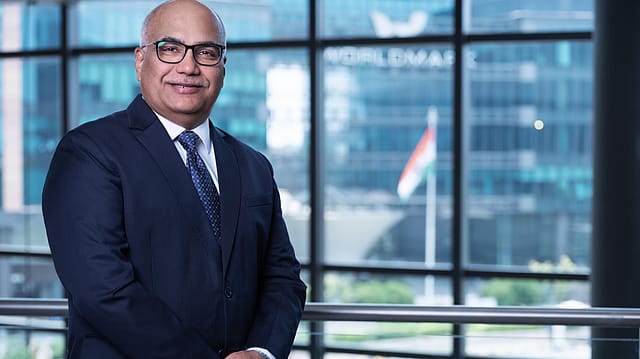
Sunil Bharti Mittal-led Bharti Group, best known for its telecom business, has been steadily diversifying into sectors such as digital infrastructure, financial services, real estate and food processing. Among these, real estate stands out as a distinct business proposition, with the group making its most ambitious commercial real estate bet at Delhi’s Aerocity.
Through Worldmark, Bharti Real Estate is building a global-grade business district anchored in a leased-only model, and primarily focuses on multinational corporations. In an exclusive interview with Fortune India, SK Sayal, MD and CEO Bharti Real Estate, outlines the progress of Worldmark 2.0 and 3.0 projects, the roadmap for future phases, and explains why Aerocity is emerging as India’s next commercial real estate hub. He also shares his assessment of the Indian real estate sector’s performance in 2025.
Q: Let’s start with Bharti Real Estate’s ongoing projects, particularly Worldmark 2.0, its progress, current status and delivery timeline?
SK Sayal: As you know, Bharti is primarily into the telecom business. Real estate is mainly a family investment. So although we are fully into creating marquee real estate, we are not mass-market players. We do not have a vision to be the biggest or the largest, but to create something that leaves a stamp on the global map. With that vision, we started Worldmark at Aerocity because Delhi Aerocity is unlike any other Aerocity in the world.
It is strategically located, surrounded by Delhi and the city on multiple sides. In most global cities, Aerocities are 40-50 km away from the city. So we thought of creating something India needs, something that has not been done in the capital so far, which can put India on the global pedestal. With that in mind, we bid for the largest land parcel at a strategic location where most infrastructure already existed and the balance was under development.
We won the bid to develop 17 million square feet in different phases. Worldmark 1.0 is already developed, leased out and operational for the last few years. Worldmark 2.0 started around two-and-a-half years ago. It is a 7 million sq. ft. development. About 4 mn. sq. ft. will be ready in the next six months, when we will start handing over and operationalising the buildings.
Worldmark 2.0 includes 4 million square feet of office space and close to 3 million square feet of retail, which will be India’s largest retail development. Retail construction is at an advanced stage, and we intend to operationalise it in 2027.

Q: How much of this space, office and retail, is pre-leased so far versus available?
SK Sayal: There are two components: office and retail. Retail is still under construction, and until we reach visibility on completion, we do not sign leases. However, global interest is very strong. All top luxury and entertainment brands across the world, whether entering India or already present, want flagship stores at Aerocity.
To give perspective, this retail development is three times the combined size of the Vasant Kunj malls. In the office segment, close to 50% has already been leased before operationalisation. We have strong inquiries from top global companies operating in or planning to enter India. Aerocity is the highest secured zone in the country with the best infrastructure.
Q: Tell us about the phased expansion, including Worldmark 3.0, its progress and timelines, and how it’ll affect the Aerocity ecosystem.
SK Sayal: We have kick-started Worldmark 3.0. We have broken ground for the first million square feet, where foundation work is underway. Worldmark 3.0 will be close to 5 million square feet. The remaining 5 million sq. ft. will be Worldmark 4.0. Planning for Worldmark 3.0 is complete, and construction has started.
The 4 million square feet of office space will be handed over in six to eight months. Retail will be operationalised around September-October 2027. Worldmark 3.0 will take around two years. This is continuous delivery. Each year, we will bring over 2 million square feet to the market. Worldmark 1 hosts top global financial institutions, banks, Japanese companies and Fortune 500 firms. For many global consulting and professional services firms, Aerocity is the preferred location.
Q: How big is the commercial retail opportunity in NCR? Do you plan to remain focused on Aerocity or expand elsewhere?
SK Sayal: Aerocity is among the most premium areas, with rentals of around $3 per sq. ft. India’s economy is growing, and global companies across manufacturing and services are looking at India. Frankly, we are not fully prepared to accommodate what is coming.
When India becomes one of the top global economies, all major players will be here, and there is no better flagship option than what we are creating. Earlier, people said the ₹250 per square foot rental market was limited to 5-7 lakh square feet nationally. In the last year alone, we leased nearly 50% of our space, and there is strong interest for the balance. By the time we operationalise, we expect close to 90% occupancy.
Q: Now let’s talk about the real estate sector’s growth this year. How do you see the property market’s performance?
SK Sayal: Real estate has done very well in the last few years. Residential, especially in NCR, has grown beyond expectations, but caution is necessary. I believe developers with strong delivery track records will continue to do well. In commercial real estate, there is huge potential. Most developers sell strata units, which does not work well for global-grade retail or offices.
We follow a “leased model”. We create assets, retain ownership, and bring in global tenants. This segment is performing very strongly, and as long as India’s economy grows, it will continue. India is not yet fully geared up to accommodate global retail demand. In developed markets, luxury retail is spread across cities, whereas in India we still talk about one luxury mall in the capital. This decade will see strong expansion.
Q: Do you see overheating in luxury market? Is the industry prepared for a correction in 2026?
SK Sayal: Luxury residential has grown strongly over the last two to three years. Affordable housing has flattened but not declined. Commercial offices, especially in the luxury segment where we operate, have performed extremely well.
As far as overheating of luxury real estate market is concerned, yes there are risks. Financing schemes and speculation can distort affordability. A healthy project needs a majority of end-users. Otherwise, you risk creating ghost towns, as seen in parts of China. We must learn from those examples. With regards to correction, I think it impacts everyone, but the upmarket office segment is limited to very few serious players. Large global corporations need single-owner, institutionally managed spaces of 100,000 to 500,000 sq. ft. That segment is more resilient and is where we are focused.