
China dominates 19 of 20 critical energy minerals; battery prices may jump 40–50%: IEA
ADVERTISEMENT
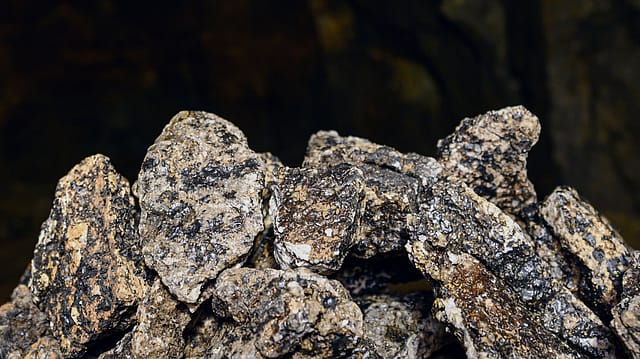
China is the dominant refiner for 19 of the 20 energy-related critical minerals, holding an average market share of around 70%, and a sustained supply shock for battery metals could increase global average battery pack prices by as much as 40–50%, warns the International Energy Agency (IEA).
China has 98.7% of global refining capacity in gallium, 95.2% in graphite, 95% in manganese, 92.1% in rare earths, 84.8% in silicon metal, 81% in molybdenum, 77.2% in cobalt, 76.5% in tellurium, and 74% in antimony. In the rest of the battery metals, China’s share ranges from 38% to 70%, except in the case of nickel, in which Indonesia is the leader with 42.9%, says the Global Critical Minerals Outlook 2025 report of the IEA.
Monopoly in refining
Between 2020 and 2024, growth in refined material production was heavily concentrated among the leading suppliers. As a result, the geographic concentration of refining has increased across nearly all critical minerals, particularly for nickel and cobalt. The average market share of the top three refining nations of key energy minerals rose from around 82% in 2020 to 86% in 2024, as 90% of supply growth came from the top single supplier alone: Indonesia for nickel and China for cobalt, graphite and rare earths.
Since 2020, supply growth for battery metals has been twice the rate seen in the late 2010s. As a result, following the sharp price surges of 2021 and 2022, prices for key energy minerals have continued to decline, returning to pre-pandemic levels. Lithium prices, which had surged eightfold during 2021–22, fell by over 80% since 2023. Graphite, cobalt and nickel prices also dropped by 10–20% in 2024.
Despite strong expectations for future demand growth, investment decisions today face significant market and economic uncertainties. Investment momentum in critical mineral development weakened in 2024, with spending rising by just 5%, down from 14% in 2023. Adjusted for cost inflation, real investment growth was just 2%. Exploration activity plateaued in 2024, marking a pause in the upward trend seen since 2020, says the report.
Looking ahead
Looking ahead to 2035, the IEA says the average share of the top three refined material suppliers is projected to decline only marginally to 82%, effectively returning to the concentration levels seen in 2020. China’s stronghold extends beyond refining; two-thirds of global battery recycling capacity growth since 2020 has been in China.
Similarly, the most recent growth in mining output stemmed from established producers such as the Democratic Republic of the Congo (DRC) for cobalt, Indonesia for nickel, and China for graphite and rare earths. As a result, the average market share of the top three mining countries for key energy minerals rose from 73% in 2020 to 77% in 2024. Lithium was a notable exception, with a major portion of supply growth coming from emerging producers like Argentina and Zimbabwe.
Looking ahead, some diversification is coming into view for the mining of lithium, graphite and rare earths. However, geographical concentration is expected to intensify for copper, nickel and cobalt. Overall, the share of the top three producers is projected to decline slightly to the levels seen in 2020, similar to trends observed in refining.
The impact of a critical minerals supply shock can be far-reaching, raising consumer prices and reducing industrial competitiveness. A sustained supply shock for battery metals could increase global average battery pack prices by as much as 40–50%. There is already a significant gap in battery manufacturing costs across regions. Prolonged supply disruptions could widen cost disadvantages for other battery manufacturers vis-à-vis China, potentially hindering efforts to diversify manufacturing supply chains.
New battery technologies face an input shortage
Emerging battery technologies are challenging incumbent nickel-based lithium-ion batteries, and these are not immune to high supply concentration and volume risks, says the IEA. Lithium iron phosphate (LFP) batteries have surged in recent years, covering nearly half of the electric car market, up from less than 10% in 2020, and emerging technologies like sodium-ion and manganese-rich lithium-ion batteries are also gaining traction.
However, the supply chains for these technologies are significantly more concentrated than those for nickel-based batteries. China produces 75% of the world’s purified phosphoric acid, essential for LFP batteries, and 95% of high-purity manganese sulphate, a key input for manganese-rich and sodium-ion battery chemistries. These two materials are emerging as key chokepoints, with current project pipelines indicating the potential for major supply gaps.
Planned projects for purified phosphoric acid are insufficient to meet projected demand from around 2030. High-purity manganese sulphate supplies from announced projects meet only 55% of the expected 2035 demand.
Sodium-ion batteries offer some upstream diversification potential, with the United States and Europe playing active roles in soda ash, caustic soda and biomass supplies. Yet the downstream supply chain—for cells, cathodes and hard carbon anodes—remains dominated by China. Given the growing competitiveness and market share of LFP and other emerging technologies, it is becoming increasingly important for policymakers to pay close attention to supply chain vulnerabilities in these new technologies, the report said.