
Consumption recovery remains uneven despite strong growth in key indicators; manufacturing gathers pace, says report
ADVERTISEMENT
India's economy continues to show signs of resilience, but the recovery in consumption remains uneven despite double-digit growth in several demand indicators, according to DSP Mutual Fund's latest Tathya report. The report cautions that much of the year-on-year (YoY) expansion seen across consumption metrics is largely a reflection of a low base from the previous year, rather than evidence of a broad-based and sustained demand revival.
"On an absolute basis, the consumption bit has done better than last year, but it still remains patchy to call it a trend already," the report said, adding that most of the double-digit growth in demand indicators should be viewed in the context of the weak base effect.
Among consumption indicators, personal loans continued to grow at a healthy pace, rising 15.4% YoY in June 2026. Outstanding personal loans increased to ₹70.2 lakh crore, while the 12-month average outstanding loans rose to ₹66 lakh crore, compared with ₹58.2 lakh crore a year ago. Retail spending also remained firm, with digital retail payments increasing 12.8% YoY to ₹92.5 lakh crore during the month.
Automobile demand remained robust. Two-wheeler sales climbed 18.6% YoY to 1.85 million units while passenger vehicle sales, including utility vehicles, rose 23.2% to around 380,000 units in June. However, the report cautioned that the improvement across these indicators is yet to translate into a broad-based consumption upcycle.
Consumer price inflation also moved higher during the month. Retail inflation accelerated to 4.4% in June 2026, compared with 1.2% in December 2025, driven primarily by food and fuel prices.
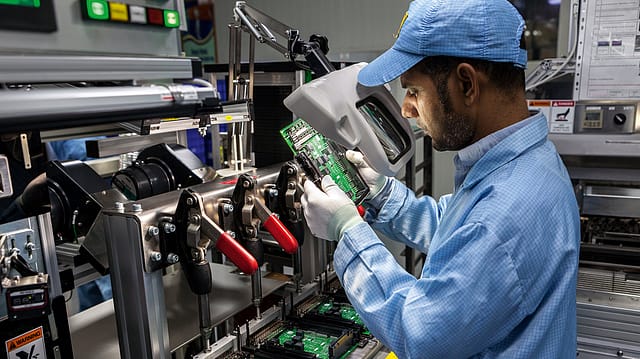
The report noted that manufacturing activity has strengthened despite rising input costs. Credit to industry grew 17.5% YoY in June, the fastest pace in the available dataset, taking the 12-month average outstanding industrial credit to ₹43 lakh crore, up from ₹39 lakh crore a year earlier.
The Manufacturing Purchasing Managers' Index (PMI) remained in expansion territory at 54.2, while several industrial indicators also posted healthy growth. Cement production increased 8.4%, steel output rose 5%, and the Index of Industrial Production (IIP) for capital goods surged 30.9% YoY. Coal production, however, declined 9.3% during the month.
Wholesale inflation strengthened sharply, with the Wholesale Price Index (WPI) rising 8.3% YoY in June after contracting 0.1% in December 2025. The report attributed the increase primarily to elevated crude oil prices but noted that geopolitical tensions eased before higher fuel costs could spread meaningfully across the broader consumption basket.
The services sector continued to outperform manufacturing. The Services PMI stood at 57.4 in June, indicating strong expansion, while credit to the sector grew 20.4% YoY, with the 12-month average rising to ₹56 lakh crore from ₹49 lakh crore a year ago.
At the same time, some pockets of the economy continued to show signs of moderation. Housing loan growth slowed to 10.9% YoY, suggesting that even segments that had remained resilient through much of the past year are beginning to lose momentum. Electronic toll collections increased 10.7% to ₹75.2 billion, but the report observed that both government expenditure and revenue trends have shown limited improvement compared with last year.
On the fiscal front, total government expenditure rose 9.1% YoY in June, while capital expenditure remained largely flat, declining 0.6% from a year earlier. Meanwhile, e-Way bills, a key proxy for goods movement and business activity, increased 14.5% YoY to 136.8 million.
The report also suggested that concerns over India's external sector have eased. Although the Indian crude basket averaged $83.9 per barrel in June, significantly higher than $62.2 in December 2025, the recent decline in global oil prices has reduced concerns around the country's balance of payments. India's trade deficit stood at $30.4 billion, including an oil deficit of $14.4 billion, while the services trade surplus remained healthy at $15.1 billion. Foreign exchange reserves stood at $667 billion during the month.
DSP Mutual Fund said liquidity conditions remain comfortable but stressed that this should not be confused with adequate money supply. "India needs higher credit growth," the report said, noting that despite a cumulative 125 basis points reduction in policy rates since January 2025, lower policy rates have not translated into significantly cheaper borrowing costs.
The report also highlighted a divergence between gross and net foreign direct investment (FDI). While gross FDI inflows into India have remained strong, net FDI has weakened due to rising repatriation by foreign investors and increasing overseas investments by Indian companies. Between June 2021 and April 2026, net FDI declined at a 27% compound annual rate, even as gross FDI inflows grew at a 13% CAGR.
On investment trends, the report said nearly 80% of the value of newly announced projects is concentrated in nuclear power and data centres and information technology, indicating that broader private investment activity remains subdued outside a handful of marquee projects.
Despite continued foreign portfolio investor (FPI) outflows of $5.2 billion in June, the report said improving valuations in several segments of the equity market could help limit further selling.