
Economic Survey 2026: What India’s cities must fix to stay competitive for talent
ADVERTISEMENT
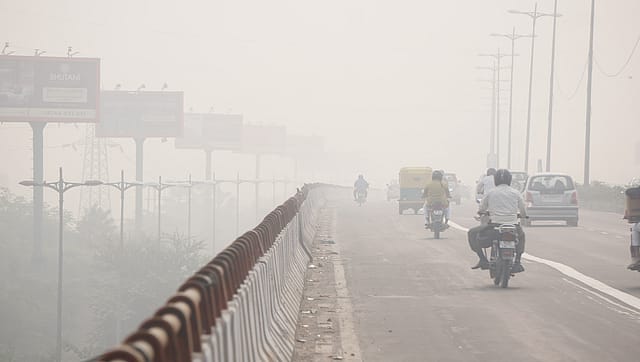
There is no doubt that India’s cities are in crisis.
From flooding to traffic congestion and pollution, India’s cities are among the worst places to live in the world, something not befitting the world's fastest-growing large economy. While the government can devote more attention to governance, financial devolution, and urban infrastructure, the economic survey argues that it's time for cities to adopt a different approach to growth, one in which their residents also feel a sense of ownership.
“The most liveable global cities systematically minimise time lost to commuting, services, and uncertainty,” the economic survey says. “Neighbourhood planning in new urban expansions and redevelopment zones should align housing, schools, anganwadis, health centres, and workplaces within short travel radii.”
The survey argues that street designs can be guided by Guillermo Penalosa’s “8-80” philosophy, which holds that good streets must work equally well for an eight-year-old and an eighty-year-old, prioritising safety, comfort, and accessibility. “In cities like Barcelona, the 'superblock' model reclaims streets for walking, play, cafés, and culture by restricting through-traffic, the survey adds. “Melbourne deliberately designed laneways to encourage cafés, art, and informal commerce, turning leftover spaces into cultural assets. Liveability will require a shift from road-widening to street-making, where public space is designed for lingering, interaction, and safety.”
This also means that, in India’s congested cities, 10–15% of city streets must be designated as pedestrian-first or low-traffic streets, particularly in dense commercial and residential areas. In addition, road-widening norms should include street design codes that mandate features such as shade, seating, vending space, and safe crossings. “In certain cities, 'weekend streets' can be piloted before scaling citywide,” the survey notes.
That’s not all. Cities, the survey notes, that actively nurture art, music, design, food, and street culture as part of urban policy, will also play a critical role in attracting skilled workers, entrepreneurs, and ideas. “Cities that exhaust people will lose them, regardless of wage differentials,” the survey notes. “Cities that offer dignity, expression, and predictability will retain and attract them.” That also means cities that might be culturally rich, but remain institutionally hostile to creativity by restrictive licensing, noise rules without zoning nuance, lack of affordable inner-city spaces, and moral policing also push culture into the margins, thereby making them untenable in the long run.
“Making cities engaging in India means protecting spaces for expression, not over-regulating them out of existence,” the survey says. “Low-rent creative zones in inner cities (craft clusters in Jaipur) should be created using public or underutilised land and with single-window approvals for studios, theatres, institutional spaces (such as the Okhla Institutional Area in Delhi), rehearsal spaces, and galleries.”
More importantly, even as India attempts to retain its status as the world’s fastest-growing large economy, it remains a concern that cities lack the institutional, fiscal, and planning foundations. Urbanisation, the economic survey notes, has focused on productivity, innovation, and labour markets, resulting in congestion, informality, and governance complexity.
That means it’s also time to ensure that citizens feel a sense of ownership of cities. “They will assume responsibility for it, like their own houses—a phenomenon called the endowment effect,” the survey notes. “However, since the system fails and is unrewarding for common citizens, their ownership is limited and often driven by individual values rather than collective sense,” the survey says. "Improving daily service delivery, such as road maintenance and traffic management, can help reduce the cognitive load on citizens and foster a stronger sense of ownership.”
Perhaps it's time for city administrators and their residents to heed the economic survey.