
India, Canada make 'positive progress' in 3rd round of CEPA talks; target to conclude trade pact in 2026
ADVERTISEMENT
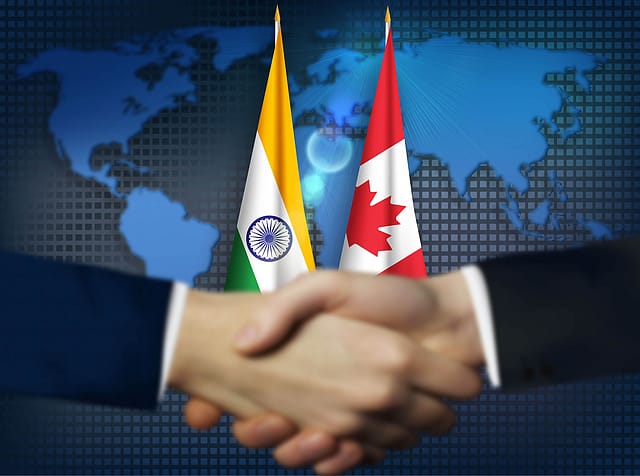
India and Canada have concluded the third round of negotiations for the proposed Comprehensive Economic Partnership Agreement (CEPA), with both sides reaffirming their commitment to conclude the trade pact in 2026 as they seek to significantly deepen bilateral economic engagement and raise two-way trade to $50 billion by 2030.
The five-day negotiations, held in Ottawa from July 6 to July 10, covered a broad range of issues, including trade in goods and services, intellectual property rights, rules of origin, sanitary and phytosanitary measures, and technical barriers to trade. The latest round assumes significance as New Delhi and Ottawa look to rebuild trade momentum following a decline in bilateral commerce during the last financial year.
Negotiators reaffirm commitment to conclude CEPA this year
"India and Canada concluded the 3rd Round of negotiations for the India-Canada CEPA in Ottawa from 6-10 July 2026. The discussions witnessed positive progress across multiple negotiating tracks, reaffirming the shared commitment of both countries to conclude the negotiations in 2026, in line with the vision of the leaders," the Department of Commerce said in a social media post.
The proposed CEPA is expected to provide greater market access for businesses in both countries while facilitating trade and investment across multiple sectors.
Joint Secretary in the Department of Commerce Brij Mohan Mishra is leading the negotiations from the Indian side, while Bruce Christie is Canada's chief negotiator.
Trade recovery in focus amid $50 billion target
The negotiations come against the backdrop of a decline in bilateral trade. India-Canada merchandise trade fell 8.22% to $7.95 billion in 2025-26 from $8.66 billion in the previous fiscal. India's exports rose to $4.67 billion from $4.22 billion, while imports declined to $3.28 billion from $4.44 billion during the same period.
Both countries have set an ambitious target of increasing bilateral trade to $50 billion by 2030, making the successful conclusion of the CEPA a key strategic priority.
Pharma, electronics, services among key trade drivers
Canada, with a population of 41.65 million and a GDP of $2.34 trillion at purchasing power parity, remains an important export destination for India.
India's major exports to Canada include pharmaceuticals, iron and steel, seafood, cotton garments, electronic goods and chemicals, while imports largely comprise pulses, pearls and semi-precious stones, coal, fertilisers, paper and crude petroleum.
Beyond merchandise trade, India's services exports to Canada are led by telecommunications, computer and information services, and other business services. Canada is also home to more than 4,25,000 Indian students and a large Indian diaspora, further strengthening economic and people-to-people ties as both countries push to conclude the proposed trade agreement this year.