
Iran war impact: Cabinet approves ATF price stabilisation fund worth ₹10,000 crore
ADVERTISEMENT
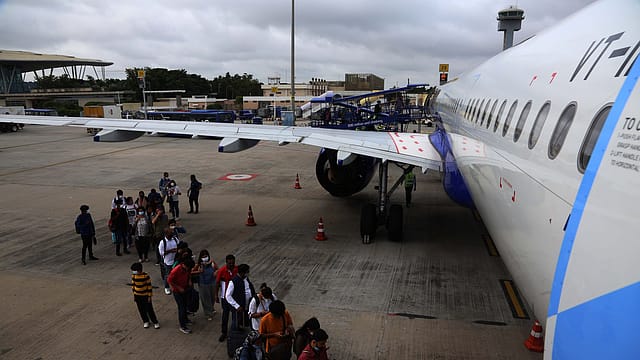
The Union Cabinet on Wednesday approved a price stabilisation fund worth ₹10,000 crore for aviation turbine fuel amid the skyrocketing ATF prices in the wake of the West Asia crisis.
The Cabinet has also approved a scheme for phasing out old buses and trucks in Delhi with an of ₹5,041 crore. In total, schemes worth ₹39,290 crore have been approved by the Cabinet today.
"West Asia crisis has emerged as major challenge. ATF prices have gone through the roof. ATF prices have increased from ₹60 per litre in March to ₹142 per litre. To ensure that the domestic passengers and middle class is not impacted, the government had capped the ATF prices at ₹75.6 per litre for domestic operations. But the oil marketing companies are facing a negative impact," Union Minister Ashwini Vaishnaw said.
He said the ATF price stabilisation fund is a self sustaining revolving fund. "Carriers who want to participate in the scheme will get a stable ATF price during the current crisis. Provision for reimbursement mechanism after the crisis has also been made," he said.
What will be the funding mechanism?
On the mechanism of the fund, the government said in a release that the budgetary support shall be in the form of interest-free advances to OMCs through the demands for grants of the ministry of petroleum and natural gas. "The support shall be provided to OMCs to facilitate stable ATF pricing for airlines during the ongoing period of exceptional fuel price volatility arising from the West Asia crisis," it said.
"The corpus shall compensate OMCs for losses arising from elevated international ATF prices whenever the prevailing Import Parity Price exceeds the benchmark price determined under the approved mechanism," the government said in a release. "When international ATF prices moderate, the differential amount shall be recovered from OMCs and returned to the Consolidated Fund of India. The arrangement shall continue until the entire support amount is fully recovered and settled," it said. The government said the mechanism provides greater predictability in fuel costs by adopting a fixed-price arrangement for domestic and international operations, thereby reducing airline’s exposure to sudden fuel price spikes.