
Middle East crisis may hit 10-15% fertiliser output; subsidy bill seen rising ₹20,000-25,000 cr
ADVERTISEMENT
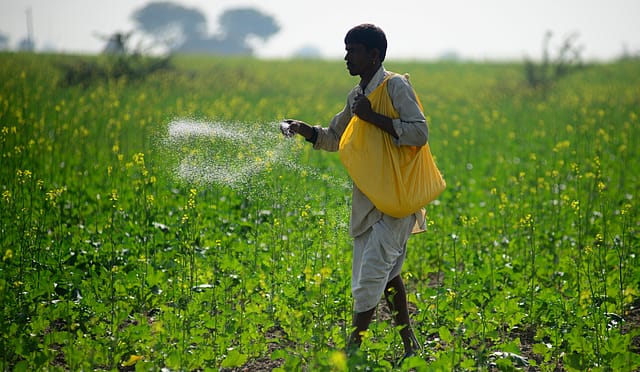
The Middle East crisis is likely to affect 10–15% of domestic urea and complex fertiliser production, while the government’s subsidy bill may rise by ₹20,000-25,000 crore.
Supply chain disruptions stemming from the ongoing conflict in the Middle East could potentially impact annual domestic production of both complex fertilisers and urea by 10–15%, and increase the government’s subsidy bill by ₹20,000–25,000 crore.
Further, the profitability of fertiliser manufacturers could decline amid lower capacity utilisation due to supply constraints of key raw materials, says a Crisil Intelligence report.
The increase in prices of raw materials and imported fertilisers is also likely to raise the working capital requirements of players and push up the government’s subsidy bill by ₹20,000–25,000 crore. However, the strong liquidity of large fertiliser companies and the government’s track record of supporting the sector through adequate and timely subsidy disbursements will support the credit profiles of companies.
Urea accounts for 45% of fertiliser consumption in India, complex fertilisers (diammonium phosphate, or DAP, and nitrogen, phosphorus and potassium, or NPK) account for one-third, while single super phosphate (SSP) and muriate of potash (MOP) make up the rest.
The fertiliser sector’s dependence on imports remains high, with around 20% of urea and one-third of complex fertilisers, primarily DAP, being imported. Furthermore, key raw materials for urea (natural gas, which comprises 80% of the raw material cost) and for complex fertilisers (ammonia and phosphoric acid) are largely imported due to limited domestic reserves.
For both urea and DAP imports, the Middle East remains an important region, accounting for around 40% of imports in the first nine months of fiscal 2026 (42% in fiscal 2025 and 28% in fiscal 2024). For domestic fertiliser production, dependence on the Middle East is even higher, with around 60–65% of liquefied natural gas (LNG) and 75–80% of ammonia imports coming from the region.
Anand Kulkarni, Director, Crisil Ratings, says disruption in LNG and ammonia supplies for about three months could cut domestic urea and complex fertiliser production by 10–15%. “The impact on production will be cushioned to some extent by the recent government directive allocating 70% of gas to urea manufacturers. Additionally, fertiliser inventories of around three months, along with expected imports from alternative sources, will help mitigate the risk of immediate supply shortages.”
Reduced capacity utilisation is likely to dent profitability, with urea manufacturers expected to see a larger impact, as sub-optimal capacity utilisation will reduce energy efficiency.
The profitability of complex fertiliser players may also be impacted due to the interplay of variables such as rising input costs, transmission of costs to the Nutrient-Based Subsidy (NBS) rates set by the government, and retail prices. Shortages of raw materials and increased supply chain costs have already pushed up ammonia prices by around 24% since the start of the conflict.
Nitin Bansal, Associate Director, Crisil Ratings, says that factoring in elevated input costs and imported fertiliser prices for a quarter, the overall subsidy budget is likely to increase by 12–15% from the initial estimate of ₹1.71 lakh crore for fiscal 2027. “While the government has been prompt in clearing subsidy dues over the past five years, the timeliness and adequacy of subsidy support will have a bearing on the working capital cycle of players. In the interim, players have adequate liquidity in the form of cash or funded bank lines to withstand temporary cash flow mismatches.”
The ability of fertiliser makers to source key raw materials and fertilisers from alternative sources, along with government intervention in this regard, will be crucial to watch if the Middle East conflict prolongs.