
PM Modi pitches for UPI’s global expansion, says India’s digital payments model can cut remittance costs
ADVERTISEMENT
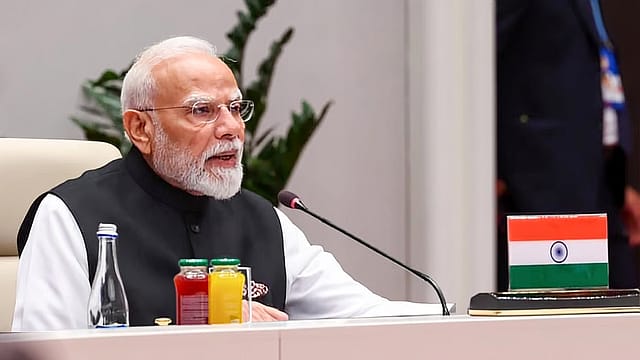
Prime Minister Narendra Modi on Tuesday pitched for a wider global expansion of the Unified Payments Interface (UPI), calling on India’s fintech industry to connect the homegrown payment system with local networks in countries that have a large Indian diaspora or significant trade ties with India, saying this could reduce remittance costs and help money reach families faster.
Addressing the seventh edition of the Global Fintech Fest (GFF) 2026 in Mumbai, Modi said UPI’s next phase should be about moving beyond its remarkable domestic success and connecting with payment systems in other countries. He cited the India-Singapore linkage as an example, saying payments between the two countries can now happen almost like transactions between two cities.
“This is essential because Indians work in large numbers in foreign countries. They are the largest remitters of money. A part of the remittances goes away as transaction costs; UPI can help in saving on these costs and the money can also reach families faster,” Modi said.
The Prime Minister said the focus should be on countries where Indians live in large numbers, where India has substantial trade or which are willing to partner with India by connecting their payment systems. UPI is currently operational in 11 countries, according to government data.
Modi wants UPI to shape global payment standards
Modi also framed the internationalisation of UPI as an opportunity for India to influence the architecture of global payments.
“Global card payments are running on systems designed in other countries. Today, we have an alternative. We can set our own rules and standards and connect them with the world,” he said.
The push comes at a time when UPI has become one of the world's largest real-time payment systems. It processed 24,509 million transactions in August 2026, while government data says the platform handles nearly 50% of global real-time digital transaction volumes.
India’s own experience with cross-border UPI has already demonstrated the potential for cheaper and faster transfers. The UPI-PayNow linkage with Singapore was launched to facilitate instantaneous, low-cost transfers between the two countries, with the Indian government specifically highlighting benefits for the Indian diaspora, including migrant workers and students.
UPI’s 10-year journey strengthens India’s global pitch
Modi’s call comes as UPI completes a decade of operations. From 1.78 crore transactions in FY2016-17, the platform’s annual transaction count rose to 24,162 crore in FY2025-26 — an increase of nearly 13,000 times.
The Prime Minister described the transformation as “monumental” and said UPI had become so closely associated with fintech that the two were now almost inseparable.
“India's fintech story has been monumental and one of its champions is UPI,” Modi said. “This is a transformation big enough that whenever one mentions fintech, it'll be mentioned by default alongside.”
He also said the success of Indian fintech was encouraging greater risk-taking among entrepreneurs. “I see the realm of possibilities expanding. It feels as though the burden on risk-taking capacity is easing, and dreams are becoming possible,” he said.
Global expansion becomes fintech’s next test
The 2026 edition of GFF is themed “Potential to Impact: Agentic AI, Tokenisation, Quantum — Trusted, Connected, Global Systems for Inclusive Finance.” The event is also focusing on the next generation of financial services, including agentic AI and tokenisation.
For UPI, however, Modi’s message was clear: the next milestone is not simply processing more transactions in India, but taking the payment architecture to more countries and using interoperability to make cross-border payments cheaper and faster.