
PM Modi to launch India’s first hydrogen-powered train today, boosting green rail push
ADVERTISEMENT
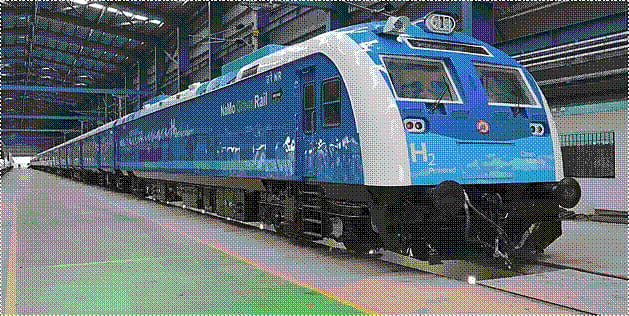
Prime Minister Narendra Modi will inaugurate India's first hydrogen fuel cell-powered train on the Jind-Sonipat section of Northern Railway in Haryana. He congratulated everyone associated with the project.
“Today marks the realization of India’s dream of getting its first hydrogen-powered train. It is a landmark day for Atmanirbhar Bharat and for the country’s journey towards sustainable development. I extend my heartfelt congratulations to everyone associated with this achievement,” PM Modi said in a post on X.
According to the official release, this is a 10-coach passenger train capable of carrying around 2,600 passengers, which will initially operate on the 89-km-long route. It generates electricity onboard using hydrogen and emits only water vapour and heat, making it one of the cleanest forms of rail transport.
The hydrogen-powered train represents the next phase of Indian Railways' decarbonisation efforts after achieving more than 99% electrification of the broad gauge network. Unlike conventional electric trains that rely on overhead power lines, the hydrogen train carries its own power generation system. Hydrogen stored in onboard cylinders reacts with oxygen inside Proton Exchange Membrane (PEM) fuel cells to produce electricity, which powers the traction motors. The process eliminates combustion, smoke and direct carbon emissions.
The train comprises two Hydrogen Driving Power Cars and eight trailer coaches. Each power car is equipped with fuel cells, lithium iron phosphate batteries and hydrogen storage cylinders, producing 1,200 kW (1,600 hp) of power.
Together, they enable the train to achieve a design speed of 110 kmph, while its operational speed on the Jind-Sonipat route will be 75 kmph.
To support operations, Indian Railways has established the country's largest railway hydrogen refuelling facility at Jind. The facility produces hydrogen through electrolysis, compresses it to 500 bar for storage, and dispenses it at 350 bar to refuel both power cars simultaneously.
With a storage capacity of nearly 3,000 kg of hydrogen, the facility has been approved by the Petroleum and Explosives Safety Organisation (PESO).
Given hydrogen's highly flammable nature, Indian Railways has incorporated multiple safety mechanisms across the train and the refuelling ecosystem. These include hydrogen leak detectors, flame, heat and smoke sensors, continuous ventilation systems, automatic hydrogen shut-off mechanisms, emergency operating modes, and real-time system monitoring for the loco pilot. The Jind plant is also equipped with leak detection systems, fire alarms, water spray systems, and automatic shutdown features.