
Rupee may stabilise, appreciate from current levels: RBI Dy Guv Poonam Gupta
ADVERTISEMENT
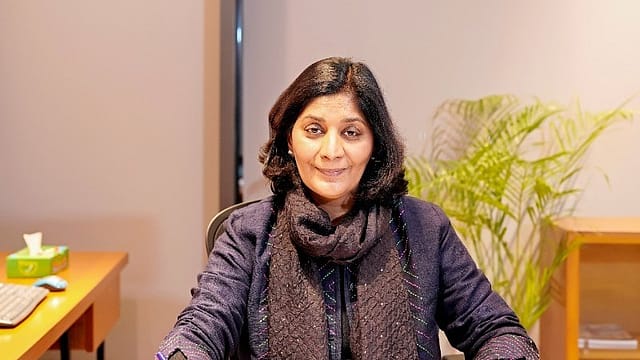
The cumulative depreciation of 13.% faced by the Indian rupee over the past year and a half could prove to be temporary, with the currency potentially stabilising and even appreciating from current levels as India's external position strengthens, Reserve Bank of India Deputy Governor Poonam Gupta said on Wednesday.
Speaking at the 13th SBI Banking & Economics Conclave in Mumbai, Gupta said the rupee depreciated 13.1% on a point-to-point basis between March 31, 2025 and September 16, 2026.
“Put together, these arguments indicate that one may think of the cumulative depreciation of the INR (or shall one say its overcorrection) in the past year and a half to be a temporary phenomenon,” Gupta said.
She added that the RBI remains committed to ensuring orderly conditions in the foreign exchange market.
“If anything, there seems to be a fair case for the rupee to not just stabilise but perhaps even appreciate from the current levels,” Gupta said.
External position remains a key support
Gupta's comments come against the backdrop of pressure on India's balance of payments over the last two financial years. Higher oil and gold prices pushed the current account deficit temporarily higher, while the capital account surplus fell short of the CAD.
India recorded a negative balance of payments of about $5 billion in 2024-25 and $23.6 billion in 2025-26, she said.
However, Gupta pointed to several structural strengths in India's external sector that could help improve the balance of payments in the coming years.
India has traditionally run a relatively small current account deficit alongside a larger capital account surplus, resulting in a net positive balance of payments over time. The CAD as a share of GDP has also declined and remains below levels generally considered prudent for emerging market economies.
Net services exports and remittances remain key strengths, with Gupta saying they are large and resilient enough to absorb the merchandise trade deficit and keep the CAD below 1% of GDP.
Lower oil dependence, stronger exports could help
Looking ahead, Gupta expects India's CAD to shrink further as the country's dependence on imported oil declines and merchandise exports strengthen.
She said India's oil dependence could fall as alternative energy sources gain ground and efforts to find domestic oil reserves progress. This could reduce oil demand as a share of GDP, while India's broader trade basket is also responding to new trade opportunities.
Gupta also spoke about the potential benefits of India's recent free trade agreements, saying their positive impact should materialise over time alongside a conducive exchange rate.
“The recent oil price and gold price shocks have pushed CAD temporarily higher,” Gupta said, while noting that India's underlying external position remained supported by structural strengths.
Capital flows could provide another boost
Capital flows could provide another source of support for the rupee, according to Gupta, who expects India's capital account to become more favourable, plausibly from later this financial year.
She cited strong domestic macroeconomic fundamentals, high real and nominal GDP growth, a gathering domestic investment cycle, healthy bank and corporate balance sheets, rising foreign direct investment and continuing measures to attract different forms of capital.
Gupta said India is positioned to grow at 7-8% in real terms and 11-12% in nominal terms for years and decades to come.
She also pointed to the potential for greater foreign investment through the eventual inclusion of Indian bonds in more global indices.
The RBI's special capital-flow measures implemented in June this year have already helped improve the balance of payments, Gupta said.
“These measures have resulted in a meaningful balance of payments surplus for the year,” she said, adding that the development reflected India's ability to attract large inflows at a small country premium.
Gupta also spoke about the potential role of artificial intelligence in India's next phase of economic growth.
“The AI story is, in effect, an ‘unspent force’ for us,” she said, adding that India could leverage AI's potential while avoiding the risks associated with the technology.
(With agency inputs.)