
UP defence corridor targets ₹25,000 crore fresh investment, around 22,000 jobs in five years
ADVERTISEMENT
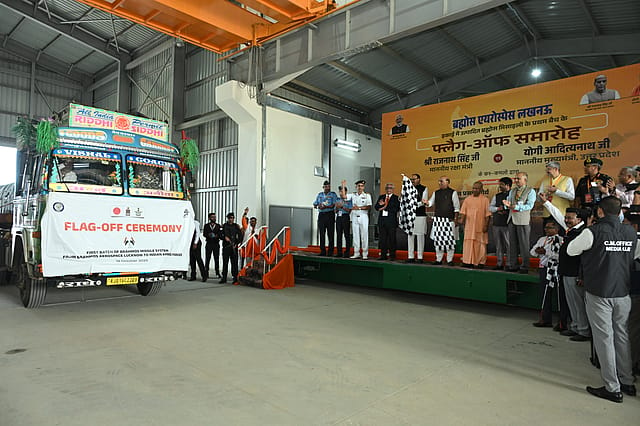
The Uttar Pradesh Defence Industrial Corridor (UPDIC) is set to attract an additional ₹25,000 crore of investments over the next five years, generating 20,000-22,000 direct jobs, as the state looks to strengthen its position as a key defence manufacturing hub under India's self-reliance drive.
"The agenda in the next five years is to bring in about another ₹25,000 crore of investment, which is a very realistic figure, and we should be able to achieve it. The employment that would get generated with this ₹25,000 crore coming will again be almost about 20,000-22,000 direct personnel," Colonel Sanjay Singh, Chief General Manager, UP Defence Industrial Corridor, Uttar Pradesh Expressways Industrial Development Authority (UPEIDA), told Fortune India.
The proposed expansion comes as the corridor gains momentum, with investments already translating into operational manufacturing facilities across its six nodes—Lucknow, Kanpur, Jhansi, Agra, Aligarh and Chitrakoot.
According to Singh, the first land parcel under the corridor was allotted on June 9, 2021. Since then, 64 companies have been allotted land, bringing in grounded investments of about ₹13,486 crore and creating the potential for around 15,300 direct jobs.
"Today we have got nine units which are functional, which have got themselves registered under the Factories Act, and they have started production and contributing towards the GST of the state. The other 55 are in various stages of construction," he said.
He expects the pace of execution to accelerate over the coming months. "With the current progress that is happening, we are likely to have another 14 industries getting commissioned and starting production in this financial year, which ends in March 2027," Singh said.
The corridor has also received investment intent from 189 investors, with proposed investments amounting to nearly ₹39,000 crore and the potential to create around 42,000 jobs.
Adani Defence, BrahMos lead corridor's operational push
The official said Uttar Pradesh's strategy is centred on attracting anchor defence manufacturers that can bring along a wider network of ancillary industries and MSMEs.
"The concept on the UP Defence Industrial Corridor was to bring in an anchor unit in a particular node, and then their supply chain MSMEs will automatically hook on there," he said, citing BrahMos Aerospace, Adani Defence and Aerolloy Technologies as examples of anchor investments.
Among the operational units, Adani Defence Systems and Technologies Ltd operates a ₹1,500 crore ammunition manufacturing facility in Kanpur, the largest investment in the corridor so far. BrahMos Aerospace (DRDO) has operationalised its ₹300 crore facility in Lucknow and has begun full-scale production, delivering its first batch of advanced supersonic missiles. Aerolloy Technologies manufactures titanium castings for aerospace applications from its ₹320 crore plant in Lucknow.
In Aligarh, Amitec Electronics has commenced production of electronic warfare systems and satellite technology at its ₹330 crore facility, while Werywin Defence manufactures small arms from its ₹65 crore unit. Other operational companies include A R Polymers, which manufactures ballistic materials and safety equipment in Kanpur; Adhunik Materials and Sciences, which produces specialised defence textiles; and Sankalp Safety Solutions, which manufactures safety equipment and woven fabrics.
UPDIC eyes larger share in defence manufacturing
Looking ahead, Singh said the currently allotted projects are expected to contribute significantly to India's defence production once they reach full capacity.
"If it is ₹2 lakh crore, then the kitty that should come in our favour should be ₹40,000 crore. We are 20% of this country's population, so ideally that contribution should happen," he said, referring to Uttar Pradesh's targeted share of India's future defence manufacturing output.
Highlighting the state's emphasis on faster project execution, Singh said the government has moved beyond the concept of "ease of doing business."
"We are now working on the speed of doing business. Ease of doing business is a term of the past," he said, adding that the latest land allotment under the corridor was completed within 40 days through a transparent, fully online process.
With new investments in the pipeline, expanding testing infrastructure, policy incentives and a growing base of operational defence manufacturers, Chief Minister Yogi Adityanath-led Uttar Pradesh is positioning the corridor as a key pillar of India's long-term defence manufacturing and export ambitions.
As India's defence manufacturing ecosystem expands, Singh said the state's combination of industrial policies, infrastructure, abundant land availability and anchor investments will enable Uttar Pradesh to play an increasingly important role in the country's defence production and exports.