
China defined the last 20 years, India will shape the next: Lakshmi Mittal
ADVERTISEMENT
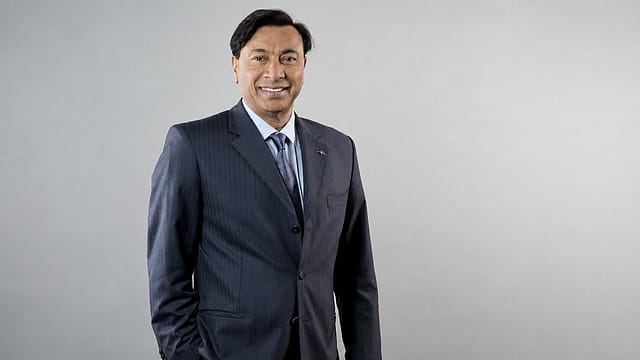
India is poised to become the next major engine of global steel demand, supported by infrastructure expansion, urbanisation and investments linked to the energy transition, ArcelorMittal executive chairman Lakshmi Mittal said as the world's second-largest steelmaker approaches its 20th anniversary.
In a video message delivered at the Global Steel Dynamics Forum in New York ahead of ArcelorMittal's 20th anniversary on July 31, Mittal spoke on the transformation of the steel industry since the merger of Mittal Steel and Arcelor in 2006, while outlining the factors likely to drive demand over the coming decades.
"The last 20 years has been characterised by China's remarkable growth. Now it is India's turn, with massive infrastructure expansion, rapid urban housing growth, and energy transition infrastructure all on the cards," Mittal said.
He added that ArcelorMittal continues to have "significant growth plans" in India through its joint venture AMNS India.
AI emerging as a new steel demand driver
Mittal said that while infrastructure replacement in developed economies, renewable energy projects and electric vehicle manufacturing would continue to support steel consumption, artificial intelligence could emerge as an important new source of demand.
"The truly incremental demand will likely come from AI, and the significant increase in electricity that will be needed to fuel this computing power," he said.
According to Mittal, rising power requirements from AI-driven computing will necessitate large investments in electricity generation, transmission networks and energy infrastructure, all of which are steel-intensive sectors.
He also pointed to opportunities linked to wind turbines, electricity grid expansion, EV manufacturing facilities and nuclear energy projects.
Industry operating in a different world
Reflecting on two decades since the creation of ArcelorMittal, Mittal said the operating environment for steelmakers has changed significantly.
"Operating in 2026 is obviously very different to 2006. Today markets move faster, competition is more global, technology changes constantly, and companies are expected to adapt in real time," he said.
He described the rapid expansion of China's steel industry and the resulting flow of low-cost production into global markets as the defining industry development of the past 20 years.
"Back in 2006, we were not talking much about China. Yet the exponential growth of China's steel industry and the subsequent flow of sub-economic production from that country on to the world market has been the key industry development of the last 20 years," he said.
Industrial policy gains prominence
Mittal also highlighted the growing importance of domestic industrial policies amid rising geopolitical tensions, supply-chain concerns and persistent global steel overcapacity.
"A new theme, one driven by geopolitics, and which I would not have predicted in 2006, is a stronger domestic industrial policy, with steel increasingly becoming strategically protected," he said.
While acknowledging ongoing challenges related to trade, overcapacity and decarbonisation, Mittal remained optimistic about the industry's long-term outlook.
"There are plenty of reasons to remain optimistic and excited about the future," he said. "After 50 years in the steel industry, there is no place I would rather be."