
FM Nirmala Sitharaman calls for ‘intellectual swaraj’, says India needs wider archives, more languages and rigorous research
ADVERTISEMENT
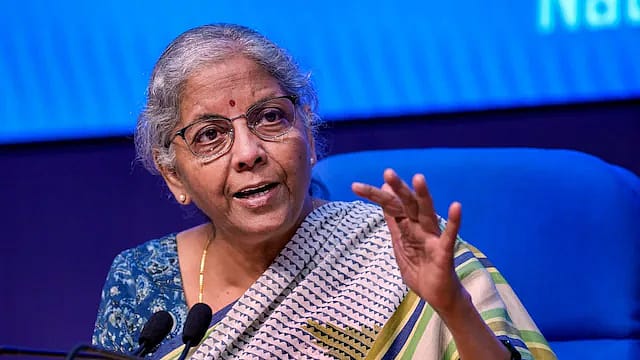
With intellectual freedom gaining strength, India is today “self-assured and quite unapologetic” and has stopped waiting for anyone else’s permission to study its own heritage, Union Finance Minister Nirmala Sitharaman said on Saturday.
Speaking at the annual history prize awards ceremony organised by the Foundation for Indian Historical and Cultural Research (FIHCR), Sitharaman said intellectual freedom must give Indians the right to understand their own history and civilisational heritage.
“In 1991, we had our economic independence; it is only now that intellectual freedom is gaining strength... intellectual freedom has to give us the right to know ourselves,” she said.
India’s approach to history must broaden
Sitharaman said India was revisiting its historical record by reading inscriptions again, examining its maritime trade and returning to its contributions to mathematics, while seeking to present these stories with both “real pleasure” and “real precision”.
“We are reading our inscriptions again, working out our maritime trade, going back to our mathematics and telling these stories with real pleasure, as well as real precision,” she said.
She argued that this process should form the essence of decolonisation and cannot simply involve replacing one prescribed textbook with another.
“It has to mean a wider archive, more languages, harder questions, and a much larger circle of scholars who actually get read,” Sitharaman said.
She also called for thinkers representing different perspectives to be brought into the debate, allowing competing ideas to be examined before a discerning public that can assess the evidence independently.
“Above all, it should mean no establishment gets to decide beforehand what evidence is allowed to see,” she said.
‘Political freedom’ must be followed by intellectual freedom
Sitharaman described the process as an “act of intellectual swaraj”, drawing a distinction between political independence and intellectual self-determination.
“Political freedom gave us the right to govern ourselves. Intellectual freedom must give us the right to know ourselves,” she said.
She said India was now approaching its intellectual inheritance with greater confidence and without seeking external validation.
“India today is self-assured and quite unapologetic about it, and we have stopped waiting for anybody else’s permission to study our own heritage,” she said.
Sitharaman pays tribute to S.L. Bhyrappa
On the occasion, Sitharaman also delivered the SL Bhyrappa Memorial Lecture and reflected on the contribution of Kannada novelist, philosopher and screenwriter SL Bhyrappa, who died in 2025 at the age of 94.
Sitharaman said Bhyrappa never sought to mobilise an army of followers but instead focused on refining how human beings perceive truth.
She referred to Bhyrappa’s philosophical idea of “Satya mattu Soundarya”, meaning truth and beauty, saying it reflected the importance of intellectual inquiry for a civilisation as old and diverse as India.
“The finest tribute we can pay to our teachers and thinkers on September 5th is to keep both wings of India’s intellectual stage brightly lit,” she said.
Sitharaman urged continued debate and scrutiny in the study of India’s past, with evidence and academic rigour determining the outcome.
“Let the churning continue and let evidence, rigour and conscience have the final word. And together, let us carry India forward into its golden era of intellectual swaraj,” she said.