
Resilience, not just efficiency, will drive India’s next growth phase: Tata Steel CEO TV Narendran
ADVERTISEMENT
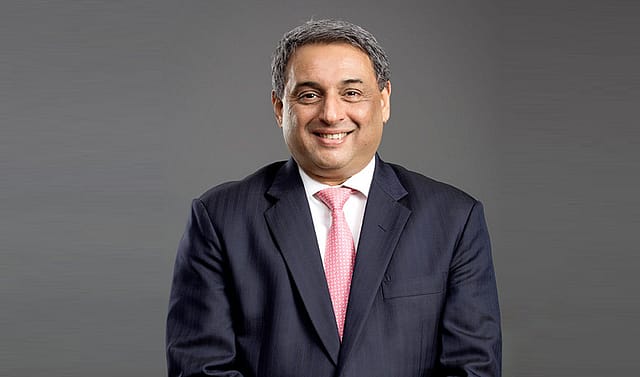
India’s ability to sustain economic growth amid global disruptions will depend on how quickly businesses move beyond efficiency-driven models and build greater resilience, Tata Steel CEO and managing director T V Narendran said on Monday.
Speaking at the All India Management Association’s Platinum Jubilee National Management Convention 2026 in New Delhi, Narendran said disruptions in West Asia, including the impact on shipping through the Strait of Hormuz, have highlighted the vulnerability of globally integrated supply chains.
“The conflict in West Asia disrupted shipping through the Straits of Hormuz, one of the world's most important energy routes. Traffic through the Strait remains well below normal levels even now,” Narendran said.
“For a country like India, these things have very direct consequences. Energy costs go up, shipping costs change, insurance premiums change, supply chains get disrupted, and eventually all that finds its way into the cost of doing business,” he said.
India’s growth resilience
Despite these challenges, Narendran pointed to India's economic performance as evidence of underlying strength. He noted that the Indian economy grew 7.8% in the April-June quarter, while investment grew 11.9%, with manufacturing and services remaining important contributors.
“This tells us about the underlying strength of the Indian economy,” he said, adding that India has “a very ambitious trajectory ahead”.
“We want to become one of the world's largest economies. We want to create productive employment for a very large young population. We want Indian companies to become much more significant participants in global value chains,” Narendran said.
From efficiency to resilience
Narendran said companies had spent decades optimising operations for efficiency by building global supply chains, reducing inventories and sourcing from the lowest-cost locations.
“But efficiency assumes a certain degree of stability,” he said. “Today, the question is not only what is the most efficient way of doing this, but also what happens if something changes.”
Businesses must ask where they can source from, how quickly they can find alternatives, how much technology they control and whether they have the talent to adapt, he said.
“And this is where the conversation on resilience becomes a conversation about competitiveness,” Narendran said.
The reorganisation of global supply chains presents a significant opportunity for India, Narendran said, but companies will invest in the country only when it makes economic sense.
“They will look at cost, quality, productivity, infrastructure, logistics, energy, and the ability to deliver consistently at scale,” he said.
Narendran also stressed the need for India to move beyond assembly towards technology, design and intellectual property.
“There is a significant difference between assembling a product and designing and engineering that product,” he said, adding that the same principle applies across services, healthcare, financial technology, space, defence and energy.
India's demographic advantage, meanwhile, will depend on its ability to equip its young population with the skills needed for a technology-driven economy.
“A young population becomes an advantage only when the people have the skills and the opportunities to participate productively in the economy,” he said.