
Fed keeps policy rate unchanged at 3.5-3.75%; analysts see possibility of rate hike ahead
ADVERTISEMENT
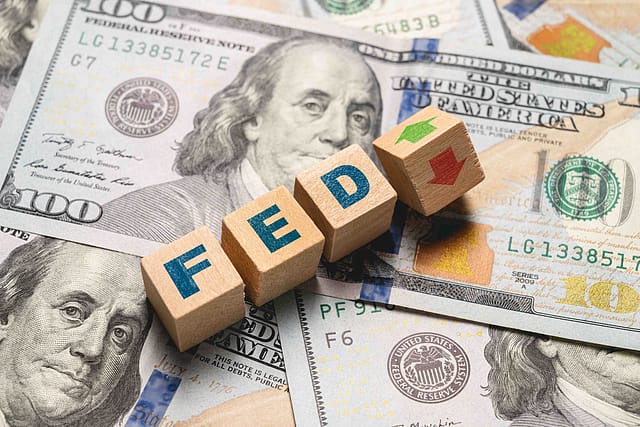
The U.S. Federal Reserve kept its benchmark interest rate unchanged at 3.5%-3.75% on Wednesday, but a rare split among policymakers and the central bank's hawkish stance on inflation has fuelled expectations that another rate hike could be on the cards later this year.
The Federal Open Market Committee (FOMC) voted 9-3 to maintain the target range for the federal funds rate, citing solid economic activity, strong productivity growth and a resilient labour market. However, the central bank acknowledged that inflation remains elevated relative to its 2% target, partly due to supply shocks, including higher energy prices in the backdrop of conflict in the Middle East.
"The Committee decided to maintain the target range for the federal funds rate at 3-1/2 to 3-3/4 percent," the Fed said in its policy statement. The central bank added that it remains committed to restoring price stability while supporting maximum employment.
The decision, while largely in line with expectations, was viewed as hawkish by market participants as three policymakers voted in favour of a 25-basis-point rate hike, the highest number of dissents since September 2016.
Hawkish pause raises rate hike fears
VK Vijayakumar, Chief Investment Strategist at Geojit Investments, said the outcome turned out to be negative for equity markets despite the widely expected pause.
"The Fed's decision to pause rates, though expected, turned out to be negative for equity markets since the decision was a 9-3 split, with three members voting for a rate hike to control inflation. This split decision indicates that a rate hike may come soon," he said.
The hawkish undertone pushed U.S. Treasury yields higher, triggering a sell-off in equities.
"Consequently, bond yields increased, impacting equity markets, which saw nearly a 2% sell-off in the S&P 500," Vijayakumar added.
Analysts at Emkay Global said the policy statement was largely unchanged from the previous meeting but underscored the Fed's determination to bring inflation back to target under Chair Kevin Warsh.
"The statement reiterated the FOMC's intent to deliver price stability, emphasizing that the Fed under Warsh will be laser-focused on bringing down inflation," the brokerage said.
During the post-policy press conference, Warsh welcomed the recent rise in Treasury yields, saying market participants were increasingly reacting to economic fundamentals rather than central bank communication. Emkay believes the Fed's reduced reliance on forward guidance could lead to greater market volatility around future policy meetings.
Fed stance likely to keep U.S. bond yields elevated
Following the decision, the U.S. yield curve steepened, with the 30-year treasury yield climbing 10.5 basis points to 5.201%. The benchmark 10-year note yield also gained nearly 7 basis points to 4.671%. The S&P 500 declined 1.5%, while market-implied probability of a September rate hike increased to 57%, with an 85% chance of at least one hike by December, according to Emkay.
The brokerage expects U.S. bond yields to remain elevated as persistent inflation concerns combine with geopolitical tensions in the Middle East, limiting the scope for emerging market currencies to rally.
Ponmudi R, CEO of Enrich Money, said the Fed's decision removed an immediate source of uncertainty but did little to change expectations for future policy.
"While the decision was broadly in line with market expectations, the split among policymakers reinforced that the future policy path remains highly data dependent. Investors will now closely monitor upcoming U.S. inflation and growth data for fresh clues on the Fed's trajectory," he said.
He added that gold prices moved higher after the announcement as investors adopted a more defensive stance amid uncertainty over interest rates and geopolitical risks.
For Indian equities, analysts expect the immediate impact to be sentiment-driven rather than fundamental.
Rajesh Palviya, Head of Research at Axis Direct, said the presence of multiple dissents in favour of a rate hike suggests the Fed is "not yet ready to declare victory over inflation", implying higher interest rates could persist for longer.
"This has already pushed U.S. bond yields higher and strengthened the dollar, creating near-term headwinds for global equities, particularly emerging markets," he said.
Palviya, however, believes India's domestic fundamentals remain supportive. "India's strong macroeconomic fundamentals, resilient earnings outlook and healthy liquidity should help cushion the impact. Investors should closely monitor U.S. bond yields, the dollar and crude oil prices, which together will determine the near-term direction of Indian equities," he added.