
NSE's long-awaited ₹30,000 crore IPO likely to hit D-Street in September
ADVERTISEMENT
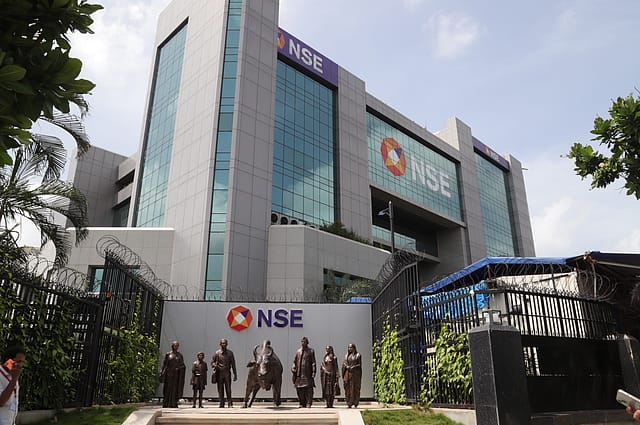
The National Stock Exchange (NSE) is planning to launch its long-awaited initial public offering (IPO) in September, with the issue size expected to be around ₹30,000 crore, industry sources told Fortune India.
The IPO is likely to value India's largest stock exchange at more than ₹5 lakh crore. The exchange is expected to begin investor roadshows shortly, a source said.
If successful, the NSE IPO would surpass Hyundai Motor India's ₹27,870-crore offering in October 2024 to become the largest public issue in India's history. However, the record could be short-lived, with Jio Platforms planning a significantly larger ₹36,000-40,000 crore IPO.
According to the draft red herring prospectus (DRHP) filed in June, the proposed NSE IPO will be entirely an offer for sale (OFS) comprising 14.89 crore equity shares. Existing shareholders will collectively dilute nearly 6% of NSE's equity through the offering. The exchange has around 1.8 lakh shareholders.
The OFS will see several prominent institutional investors pare their stakes in the exchange. While Life Insurance Corporation of India (LIC), one of NSE's largest shareholders, has opted not to participate in the IPO, several domestic financial institutions and global investors will monetise part of their holdings.
State Bank of India (SBI) is set to be the largest selling shareholder, offering up to 2.48 crore shares. It will be followed by Mauritius-based MS Strategic, which plans to offload around 1.6 crore shares, and Canada Pension Plan Investment Board (CPPIB), which will sell nearly 1.19 crore shares.
Among the other major shareholders participating in the OFS, Aranda Investments (Mauritius) will divest about 1.12 crore shares, while Bank of Baroda and Stock Holding Corporation of India will each sell around 1.1 crore shares. Public sector insurers are also reducing their holdings, with General Insurance Corporation of India (GIC Re) and New India Assurance each offering more than one crore shares. National Insurance Company and United India Insurance Company will each sell around 60 lakh shares as part of the offering.
According to the DRHP filed with Sebi, 50% of the net offer has been reserved for qualified institutional buyers (QIBs), 15% for non-institutional investors (NIIs), and the remaining 35% for retail investors. In addition, up to 5% of the post-offer paid-up equity share capital has been reserved for eligible employees.
The proposed share sale comes nearly a decade after NSE first sought to go public. Its listing plans were delayed for years due to regulatory scrutiny, governance concerns, and the co-location controversy.
(DISCLAIMER: The views and opinions expressed by investment experts on fortuneindia.com are either their own or of their organisations, but not necessarily that of fortuneindia.com and its editorial team. Readers are advised to consult certified experts before taking investment decisions.)