
Shrimp, textile stocks rally as India–US trade deal cuts tariffs
ADVERTISEMENT
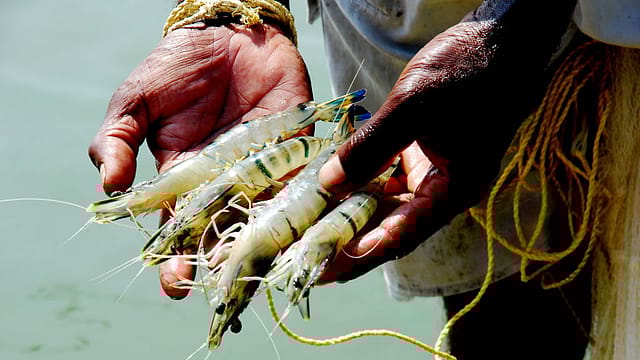
Export-oriented stocks across the shrimp processing and textile sectors rallied sharply after India and the US announced a trade deal that reduced tariffs on several Indian goods, including textiles and seafood. The tariff cut is expected to improve the competitiveness of Indian exporters in the US market and support better order visibility and margins, especially for companies with high exposure to North America.
Shrimp exporters led the gains. Avanti Feeds surged 20%, aided by its strong exposure to North America, which accounted for 65.4% of total sales in Q1 FY25. Apex Frozen Foods jumped 17%, with the US contributing 53% of its export sales in FY25, while Mukka Protein gained 4.6% in early trade.
Textile stocks too hit the upper circuits
Textile exporters also saw strong buying interest, with several stocks hitting their upper circuits. Gokaldas Exports climbed 20% to ₹694.05, while K.P.R. Mill was locked at the 20% upper circuit at ₹1,030.80. Indo Count Industries rose 20%, and Arvind Ltd gained over 19%, as investors bet on a pickup in demand from the US market.
Sanathan Textiles also gained nearly 10% intraday, hitting a high of ₹486 from its previous close of ₹442.
Industry weighs in
The textile industry feels at relief after the announcement of the trade deal, as tariff related uncertainities put pressure on their export business. Sammir Dattani, Executive Director, Sanathan Textiles said that elevated duties had weighed on demand from the US India’s largest export market but the reduction of reciprocal tariffs to around 18% materially improves cost competitiveness. "With the US accounting for nearly 28% of India’s textile and apparel exports, this easing of trade barriers provides a clear pathway for a gradual recovery in demand. This development is particularly positive for Sanathan Textiles, given its diversified presence across polyester yarns, cotton yarns, and yarns for technical textiles, all of which have strong relevance in the US market."
He futher continued that as US buyers reassess and rebalance their sourcing strategies, Indian manufacturers are positioned to gain a relative advantage over competing supplier countries, reinforcing India’s role in global supply chains. "This shift is expected to translate into a steady revival in order flows, improved pricing discipline, and progressive margin stabilisation across the sector," said Dattani.
Anil Rego,Founder and Fund Manager, Right Horizons PMS says that the deal removes a key overhang on exports, improves earnings visibility for several labour-intensive sectors, and could support India’s nominal GDP growth by an estimated 50–80 bps while also aiding currency stability through potential FPI flow reversal.
"For textiles, the impact is particularly significant given the US is one of the largest end markets for Indian apparel and home textiles. Reduced tariffs enhance price competitiveness against peers such as China and Bangladesh, potentially leading to order diversion in India’s favour. Higher volumes, better capacity utilisation, and operating leverage could gradually translate into margin recovery and more stable earnings for exporters."
For automobiles and auto ancillaries, he says that the benefit is more visible for component manufacturers integrated into global supply chains. Lower trade barriers improve export viability to US OEMs, support long-term sourcing relationships, and help protect margins that were earlier compressed by tariff costs.
What is the final US-India trade deal?
US President Donald Trump first announced the trade deal on his social media platform, Truth Social. It was corroborated by Prime Minister Modi, who confirmed the breakthrough following a high-level call with President Trump. "Wonderful to speak with my dear friend President Trump today," the Prime Minister stated. "Delighted that Made in India products will now have a reduced tariff of 18%. Big thanks to President Trump on behalf of the 1.4 billion people of India for this wonderful announcement."
The Prime Minister stressed that the partnership would benefit both nations and unlock "immense opportunities for mutually beneficial cooperation," while also noting that India fully supports President Trump's efforts toward global peace and stability.
President Trump on Truth Social said that India agreed to stop buying Russian oil, and that the country would "buy American" products at unprecedented levels. President Trump said that the deal includes over $500 billion in commitments for US energy, technology, agricultural products, and coal. "He agreed to stop buying Russian oil, and to buy much more from the United States and, potentially, Venezuela," Trump posted, linking the move to efforts to end the conflict in Ukraine by cutting off Russian revenue.
“Out of friendship and respect for Prime Minister Modi and, as per his request, effective immediately, we agreed to a trade deal between the United States and India,” Trump said.