
Building the future: Infrastructure and sustainability at the core of Budget 2026
ADVERTISEMENT
India’s Union Budget 2026-27 takes wisdom from a simple proverb: “A strong house needs a strong foundation.” It places infrastructure and sustainability at the heart of economic strategy, recognising that strong foundations and a clean future must grow together, not in isolation.
At a time when global supply chains are uncertain and climate risks are rising, India’s approach is to invest boldly in infrastructure while steering growth on a sustainable path. The Budget speech underlines this dual objective of accelerating economic growth and ensuring long-term energy security and environmental responsibility.
Infrastructure: The engine that keeps growth moving
Infrastructure has quietly become India’s most reliable growth driver. Over the past decade, public capital expenditure has risen sharply from about ₹2 lakh crore in 2014–15 to ₹11.2 lakh crore in 2025–26. This year, the government has raised it further to ₹12.2 lakh crore.
This is more than just a number. Roads, railways, ports, urban infrastructure, and logistics networks do more than just creating physical assets. They reduce transaction costs, improve productivity and create jobs across sectors. The Expenditure Profile also reflects sustained allocations towards transport, urban development, power and logistics-linked infrastructure, reinforcing infrastructure’s role as a key multiplier for economic activity. This sustained capex push reflects the importance of predictability and continuity in public investment, an area that industry has consistently highlighted.
Logistics and connectivity: Addressing a long-standing constraint
High logistics costs have long been a concern for Indian industry affecting competitiveness across manufacturing, agriculture and exports. Estimates suggest that logistics costs in India remain significantly higher than global benchmarks, underscoring the need for a decisive shift towards multimodal and efficient transport systems.
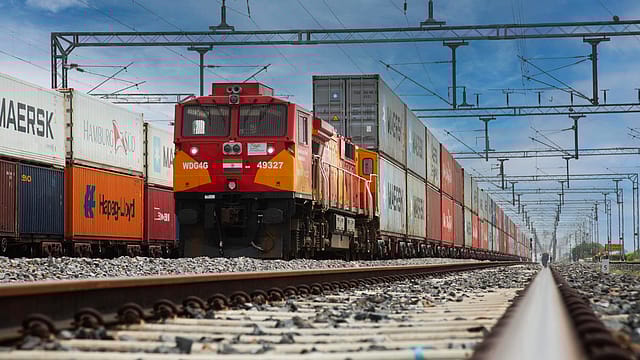
The Budget’s announcements on new dedicated freight corridors, operationalisation of 20 national waterways, and promotion of coastal and inland shipping mark important steps in this direction. These measures directly support faster, cheaper and more sustainable movement of goods, especially for manufacturing and export-oriented sectors. This is a clear recognition that improving competitiveness begins not at the factory gate, but on the road, rail and waterway beyond it.
Urban infrastructure and city-led growth
India’s growth story is increasingly urban. While metropolitan cities remain important, Tier II and Tier III cities are emerging as new centres of manufacturing, services and innovation. ASSOCHAM has consistently advocated strengthening urban infrastructure beyond the largest metros.
The Budget’s focus on city economic regions, backed by multi-year funding linked to reform outcomes, signals a shift towards integrated urban planning. Better transport systems, utilities, housing and digital infrastructure in these cities can unlock productivity, attract investment and generate local employment.
Financing infrastructure with confidence
One of the challenges highlighted by industry has been risk perception in infrastructure projects, particularly during the construction phase. The proposal to set up an Infrastructure Risk Guarantee Fund, offering partial credit guarantees, responds to this concern in a pragmatic manner.
Alongside continued asset monetisation through InvITs and REITs, this approach reflects an understanding that infrastructure financing must balance public investment with private participation. Risk-sharing mechanisms such as these help crowd in long-term capital while maintaining fiscal prudence.
Sustainability: Integrating growth with responsibility
Sustainability is no longer a parallel agenda; it is now central to economic planning. ASSOCHAM has consistently emphasised that India’s transition to a low-carbon pathway must be calibrated, especially for energy-intensive and hard-to-abate sectors.
The ₹20,000 crore Carbon Capture, Utilisation and Storage (CCUS) programme announced in the Budget addresses this need. Covering sectors such as power, steel, cement and chemicals, CCUS enables emissions reduction without undermining industrial growth.
Sustainable transport and cleaner mobility
The Budget also advances sustainability through transport choices. Proposals for seven high-speed rail corridors, expansion of inland waterways and incentives for modal shift recognise that cleaner transport is essential for a growing economy.
Rail and water transport are more energy-efficient and less polluting than road-based systems. Over time, these investments will reduce emissions, cut fuel imports and ease congestion—outcomes that align closely with industry’s call for green and efficient logistics.
Looking ahead
From our standpoint, Budget 2026–27 reflects meaningful alignment between policy direction and industry priorities in areas such as infrastructure expansion, logistics reform, risk-sharing mechanisms and sustainable growth pathways. Several long-standing recommendations have found space in the Budget’s design and intent.
The real test, as always, will lie in execution. Timely implementation, coordination with states, and sustained momentum will be critical. Yet the direction is clear. India is choosing to build not just faster, but smarter and cleaner.
To return to the opening proverb, a strong house does not stand on foundations alone, it also needs foresight. This Budget takes important steps in that direction, laying the groundwork for an economy that is resilient, competitive and sustainable.
(Minda is President, ASSOCHAM. Views are personal)