
Dealing with AI workloads in data centres
ADVERTISEMENT
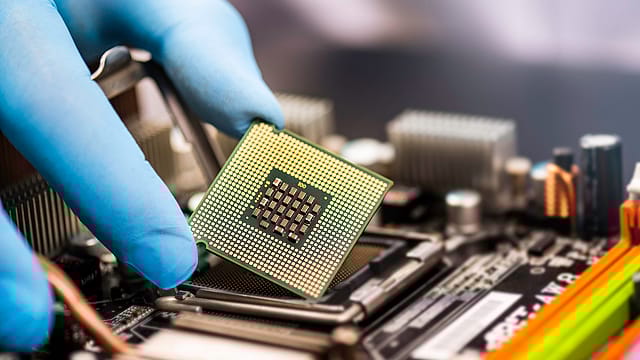
We are in the age of artificial intelligence (AI) when technologies are transforming and evolving at breakneck speeds. New AI models are emerging in large numbers, and their implications are growing and impacting our lives in more ways than ever. As a result, an unprecedented amount of data is being generated and stored. For example, generative AI uses intensive amounts of data to train and respond to queries accurately. The same model then creates a massive amount of data by answering questions in text, picture, or video formats. In other words, data is the currency that AI deals in.
As AI becomes ubiquitous, the demand for data centres (DCs) continues to grow at an incredible pace and scale. The global DC market will likely expand at a baseline 15% CAGR through 2027, with a potential to reach 20%. The Indian DC market is expected to shatter records and is projected to surge 77% by 2027, reaching a staggering 1.8 Gigawatts (GW) approximately.
Balancing increasing capacity demands with efficiency
One of the pressing dynamics that DCs are navigating is to meet the ever-increasing storage demands of the world. As a result, the global electricity demand from DCs is projected to more than double over the next five years, to around 945 terawatt-hours (TWh), slightly more than the entire electricity consumption of Japan. AI is said to be the most significant driver of this increase. Historically, DC capacity was defined by physical floor space; now, AI workloads and their substantial power requirements have shifted the focus to power availability. Compute servers, especially GPUs, drive most DC power demand, though storage also contributes significantly, making power efficiency critical.
A significant part of energy is consumed by cooling systems and servers, followed by network devices in a DC. Naturally, DCs’ storage device requirements are skyrocketing to house ever-growing data. Now, each storage drive needs cooling, in turn consuming energy. With this in mind, solid-state drives (SSDs) can build a strong foundation for a power-efficient DC for multiple reasons.
To begin with, power efficiency is a key benefit of SSDs. In fact, the new generation of SSDs is much more power-efficient and powerful than the earlier generation. For example, today’s Gen5 SSDs are over 30% more efficient than previous-generation, enterprise-class drives while offering far superior performance.
The second powerful argument is capacity. Today, companies have already demonstrated mindboggling 256TB NVMe enterprise SSDs, a breakthrough in storage capacity, performance and power efficiency. Such ultra-high-capacity drives offer unparalleled advantages, including far less space to store the same amount of data.
To put it in perspective, a DC built on 256TB SSDs will take more than 850% less space than the one built on 30TB drives. This also translates into the need for a lot fewer racks, and all other associated networks and cabling, and therefore drastically reducing cooling needs, in addition to a much-reduced real estate requirement.
Moreover, high-capacity SSDs, built on the UltraQLC platform, are designed for AI-driven, data-intensive workloads such as data ingest, preparation, and fast AI data lakes, as they offer high-performance speeds and power efficiency. Such high-capacity SSDs also help improve total cost of ownership (TCO) for high-capacity applications in hyperscale cloud.
Growing need for AI DCs
New use cases of AI are emerging every day. The world is shifting and reshaping to accommodate and take advantage of AI. Data is the oxygen that AI engines live and breathe. As a result, we will continue to see urgent demands for AI DCs. By 2028, with even conservative estimates of AI server adoption, overall power requirements for data centers are expected to double. It highlights the acute importance of continued innovation for power efficiency. Storage infrastructure plays a pivotal role in AI, and it is welcoming to see that the storage industry is introducing cutting-edge innovation to efficiently help AI reach its potential.
(Ismail is Chief Product Officer, Sandisk. Views are personal.)