
Explained: Why is the RBI absorbing ₹7 lakh crore from banks and what does it mean?
ADVERTISEMENT
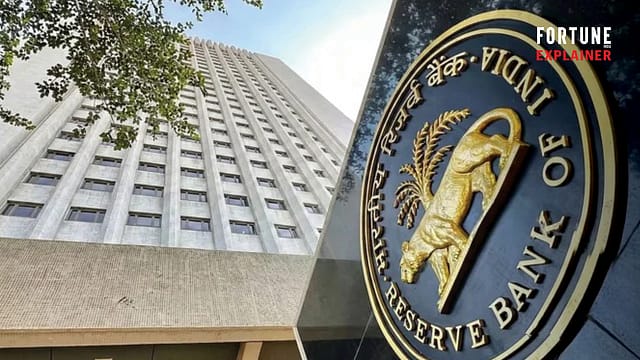
The Reserve Bank of India (RBI) is stepping up efforts to absorb surplus liquidity from the banking system as excess cash reaches record levels following a surge in foreign-currency inflows. The central bank will conduct a 30-day variable-rate reverse repo (VRRR) auction for ₹7 lakh crore on September 7 (Monday), marking a shift towards longer-duration liquidity absorption after a series of shorter auctions in recent weeks.
Why is the RBI conducting a ₹7 lakh crore VRRR auction?
The RBI is trying to pull excess cash out of the banking system and prevent surplus liquidity from pushing short-term interest rates too far below its policy rate.
Under the VRRR mechanism, banks can park surplus funds with the RBI for a specified period and earn interest on them. The 30-day tenor means the funds can remain outside the banking system for longer than in the recent overnight-to-14-day operations.
The auction will be conducted between 9.30 am and 10 am on September 7, with the scheduled reversal taking place on October 7.
How much surplus liquidity is there in the banking system?
The banking system is currently carrying an exceptionally large liquidity surplus. According to a Bloomberg Economics measure, excess liquidity was around ₹10.5 lakh crore while the RBI estimated the surplus at ₹10.32 lakh crore as of September 3.
The scale of the surplus has prompted the central bank to step up its liquidity-absorption operations.
Why has liquidity surged so sharply?
A major reason is the large inflow of foreign currency into India's banking system. The RBI had introduced special measures to attract foreign-currency deposits from overseas Indians and facilitate overseas borrowing by banks and state-owned companies. These steps brought a substantial amount of foreign currency into the financial system.
By August 31, the RBI said the measures had mobilised $136.38 billion, including: $127.23 billion through FCNR(B) deposits, $5.26 billion through overseas foreign-currency borrowings (OFCBs), and $3.89 billion through external commercial borrowings (ECBs).
The FCNR(B) window was closed on August 31, about a month ahead of schedule, after receiving a stronger-than-expected response. The ECB and OFCB facilities remain open until December 31.
How did foreign-currency inflows create excess rupee liquidity?
When banks bring foreign currency into the country and subsequently exchange or swap those funds with the RBI, they receive rupees in return. That conversion adds rupee liquidity to the domestic banking system.
The inflows therefore strengthened India's external financing position, but they also left banks with a large pool of surplus rupees. The RBI now has to absorb that liquidity without causing excessive disruption to money markets.
Excess liquidity can push short-term borrowing costs lower because banks have more funds available than they need. That is already visible in the money market. The weighted average call rate, which tracks the overnight rate at which banks lend to one another, has fallen below the RBI's policy rate amid abundant liquidity.
By absorbing surplus funds, the RBI can exert greater control over short-term money-market conditions and keep overnight rates better aligned with its policy stance. This is particularly important as policymakers continue to focus on managing inflation and maintaining orderly monetary conditions.
Is the 30-day VRRR auction a major change?
Yes. The longer tenor is notable because the RBI has recently relied on VRRR auctions with maturities ranging from overnight to 14 days. The 30-day operation allows the central bank to lock away surplus funds for a longer period, giving it greater control over the amount of liquidity circulating in the banking system.
At the same time, a reverse repo is relatively flexible because banks decide how much of their surplus funds they want to park with the RBI.
How much liquidity has the RBI already absorbed?
The RBI has sharply increased the frequency of its liquidity-absorption operations.
On September 7, the central bank absorbed more than ₹6.02 lakh crore through two VRRR auctions as surplus liquidity remained close to record levels.
The RBI has conducted 32 VRRR auctions since August, with maturities ranging from overnight to 14 days, as it seeks to keep liquidity conditions aligned with its policy rate.
Can banks withdraw their money before the 30-day period ends?
Yes. The RBI has allowed participants to seek premature reversal, including partial reversal, of the funds parked through the VRRR auction.
Requests can be submitted through the RBI's E-Kuber portal on working days between 9 am and 5 pm in Mumbai and must also be communicated to the Financial Markets Operations Department.
Settlement of a premature reversal will take place at the beginning of the next working day. Banks can seek premature reversal at least two working days before the scheduled October 7 reversal date.
On the scheduled reversal date, the participant's current account with the RBI will be credited with the principal amount along with the interest accrued during the lending period. The securities provided as collateral will simultaneously be debited from the participant's reverse repo constituent SGL account.
What is the broader challenge for the RBI?
The RBI is trying to strike a balance between two competing objectives.
On one hand, the large foreign-currency inflows have strengthened India's external financing position and provided banks with additional foreign-exchange resources. On the other, the conversion of those inflows into rupee liquidity has left the banking system with an unusually large cash surplus.
The challenge is therefore to withdraw excess liquidity without destabilising financial markets or pushing money-market rates sharply higher. The 30-day VRRR auction is the latest step in that effort and signals that the RBI is prepared to use longer-duration operations as it manages the unprecedented liquidity surplus.