
India's forex reserves rise by $11.83 billion to $688.13 billion in a month: RBI report
ADVERTISEMENT
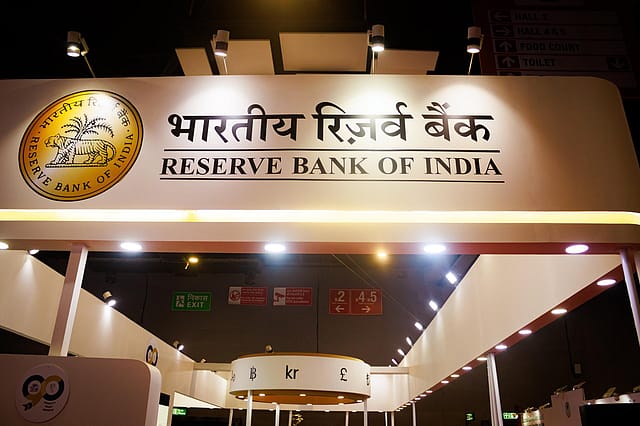
The Reserve Bank of India (RBI) Tuesday published its 44th half-yearly report on the management of foreign exchange reserves, providing a detailed account of the reserve position as of end-March 2025. The disclosure aligns with the RBI’s ongoing commitment to transparency and public accountability in managing the nation’s external assets.
According to the report, India’s total foreign exchange reserves stood at USD 688.13 billion as on April 25, 2025, reflecting a stable and healthy external sector position. The reserves almost rose by $11.83 billion in a month. As of April 4, 2025, India’s foreign exchange reserves stood at $676.3 billion, per the PIB press release.
India’s reserves are diversified across the following assets:
1. Foreign Currency Assets (FCAs): The largest component, these assets provide liquidity and comprise the major G-10 currencies. It is the first in line in terms of protecting against exchange rate movements. Currently, FCAs stand at $580.66 billion.
2. Gold: The yellow metal, which stands at $84.37 billion, provides a hedge against weakness in the dollar and in terms of substitutability in cases of geopolitical risks, particularly during uncertain times globally.
3. Special Drawing Rights (SDRs): Allocated by the IMF for additional liquidity, SDRs can be converted to usable currencies, should the need arise. The SDRs reserves are at $18.59 billion.
4. Reserve Tranche Position (RTP): These reserves stood at $4.51 billion.
All these reserves add to a diversification that protects against concentration risk and promotes economic stability. It provides policy flexibility, while maintaining confidence on the part of global investors and credit agencies.
"As of April 25, 2025, India's forex reserves of USD 688.13 billion reflect sound macroeconomic fundamentals and robust reserve management on the part of the RBI. The position of having such elevated reserves indicates the health of India's external sector, reflected in the presence of a controllable current account register, capital inflows that are unaffected and a recovering export performance. It is also a sign of India's greater monetary resilience, that is, a substantial buffer for the central bank to use for interventions in the currency market, if necessary. This serves to stabilise the rupee under conditions of global volatility," said Kunal Varma, CEO and co-founder, Freo, a digital financial services platform.
A strong forex reserve position provides better trade resilience as forex reserves stand above 10 months of imports and help to protect against external shocks. "It attracts foreign investment as it lends confidence and is a hedge against sovereign risk premiums. It supports inflation management as the Reserve Bank of India can intervene in the forex market to limit imported inflation, especially from spikes in oil prices as well as commodity prices," said Varma.