
India’s stock market faces divergent returns, not a broad-based crisis: Motilal Oswal’s Sandipan Roy
ADVERTISEMENT
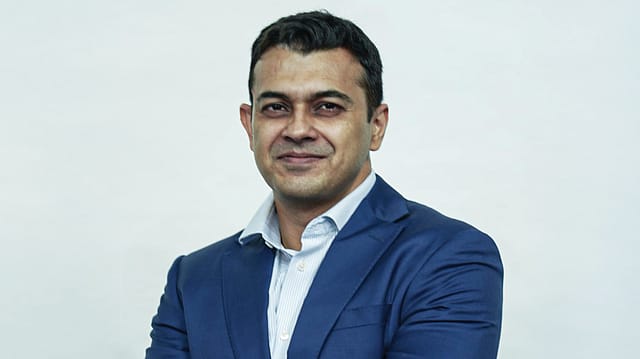
India’s equity market is going through a phase of sharply divergent returns rather than a broad-based crisis, with large-cap stocks bearing much of the pressure even as mid- and small-cap indices continue to deliver stronger gains.
“In FY27 so far, the Nifty 50 is almost flat, compared with ~13% positive returns for the Nifty Midcap 150 and ~23% for the Nifty Smallcap 250,” says Sandipan Roy, Chief Investment Officer at Motilal Oswal Private Wealth in an exclusive interview with Fortune India.
“This sharp divergence shows that the weakness has been concentrated much more in large caps while mid- and small-caps have delivered significantly stronger returns.”
Roy says the current market environment reflects the contrast between a challenging global backdrop and strengthening domestic fundamentals. Elevated crude prices and higher global bond yields are currently outweighing domestic economic resilience and earnings momentum. “So, rather than a prolonged crisis in investor returns, the bigger risk is a period of divergent return profile across segments,” he says. Going forward, earnings delivery, valuations and stock selection are likely to matter much more than broader market re-rating.
Crude, bond yields, and FII flows in focus
The trajectory of Indian equities over the next 6–12 months will depend on several key triggers, according to Roy. “A moderation in crude oil prices and global bond yields would be the most immediate positive, as both are currently pressuring inflation, the rupee, interest rates and foreign flows,” he says. Brent is still near $100 a barrel while foreign investor outflows have reached almost $28 billion in 2026.
The second trigger is earnings delivery. With valuation support from re-rating now limited, sustained market recovery will require earnings growth to broaden across sectors and justify current multiples.
Finally, a reversal in FII flows and sentiment towards India could materially improve the market outlook. Domestic liquidity remains supportive, but a more durable recovery would likely require FII selling to ease as well.
PMS gets a wider investment universe
Against this backdrop, the investment landscape for affluent investors is also changing, with an expanded PMS universe offering managers greater flexibility to build diversified portfolios.
“The expanded investment universe can make PMS a more flexible and complete investment solution for affluent investors,” Roy says. Instead of focusing mainly on listed equities, PMS managers can now use a wider mix of assets such as IPOs, debt, overseas securities, mutual funds/SIFs, and derivatives, subject to regulations.
“This can help investors diversify their portfolios more efficiently within a single managed solution, rather than investing through multiple separate products,” he says. However, the key benefit will still depend on how well the manager allocates across these different asset classes and manages risk.
Greater customisation may allow PMS portfolios to be tailored more closely to an investor’s risk profile, goals, and time horizon. “A conservative investor may prefer more debt, while a long-term growth investor may have higher equity and IPO exposure. Global assets and derivatives can also be used selectively for diversification and risk management.”
“The key is to ensure customisation remains disciplined, suitability-driven and aligned with the investor’s long-term objectives,” Roy adds.
From mutual funds to bespoke portfolios
The expanded framework could also narrow the gap between mutual funds and fully customised wealth-management solutions.
“Mutual funds remain pooled vehicles governed by a common mandate for all investors, while traditional PMS offers greater portfolio-level flexibility and direct ownership of securities,” Roy says.
The introduction of PRIM—Portfolio Managers Route for Investing in Mutual Fund units—adds another layer between the two, allowing professionally managed portfolios of direct mutual funds, ETFs, index funds, and SIFs with a ₹25 lakh minimum investment.
This could create a progression such as:
Mutual Funds → PRIM / managed fund portfolios → Traditional PMS → highly bespoke wealth-management mandates.
The differentiation for PMS would increasingly come from asset allocation, manager selection, customisation, and risk management, rather than simply providing access to concentrated equity portfolios.
A broader toolkit for portfolio construction
For investors, the key benefit of the expanded investment universe is that each instrument can play a distinct role in the portfolio. “IPOs can provide access to new growth opportunities, listed debt can add income and reduce overall portfolio volatility, SIFs can offer differentiated return sources, and derivatives can help protect downside or manage market exposure,” Roy says.
This gives the PMS manager ability to balance growth, income, liquidity and risk within a single portfolio, and to adjust that mix as market conditions or investor needs change. Taken together, this allows the manager to think beyond only security selection within one asset class, equity.
More flexibility also means more scrutiny
The broader investment universe could encourage greater innovation and competition among PMS providers. Historically, much of the PMS market has been differentiated through equity investment styles—growth, value, quality, concentrated portfolios, and market-cap positioning.
The revised framework potentially broadens the opportunity set toward global portfolios, debt-oriented mandates, asset-allocation solutions, derivatives-based strategies and professionally managed MF/SIF portfolios through PRIM.
“That should encourage innovation, but it could also raise the bar for investment capability,” Roy says. Managing global assets, credit or derivatives requires very different expertise from running a domestic long-only equity portfolio. Hence, investors will increasingly need to evaluate not merely the product proposition but whether the manager has the skillset, systems and risk infrastructure to execute it.
Risk management moves to the centre
Greater flexibility should ideally be accompanied by stronger portfolio-level risk budgeting.
“Managers will need clearly defined limits around asset classes, leverage and derivative exposure, issuer concentration, credit quality, liquidity, currency exposure and drawdowns,” Roy says.
Importantly, each instrument should have a clearly defined purpose—for example, whether a derivative position is being used for hedging, tactical exposure or return generation.
Governance also becomes more important as the investment universe expands. Independent risk oversight, stress testing, liquidity monitoring, counterparty controls and transparent client reporting should become integral to the investment process.
Wealth management shifts from products to portfolios
The new framework could ultimately push Indian wealth management further from a “product-led approach to a portfolio-led approach”. As affluent investors increasingly hold equities, debt, alternatives, and global assets, PMS managers will have greater flexibility to bring these exposures together within a more integrated portfolio.
The introduction of PRIM is also important. It allows portfolio managers to build managed portfolios using mutual funds, ETFs, index funds, and SIFs, with a lower minimum investment of ₹25 lakh. This could make professionally managed portfolio solutions accessible to a wider set of affluent investors.
Over time, the differentiator may shift from simply offering more products to “how effectively wealth managers combine those products into portfolios aligned with an investor’s goals, risk profile, and liquidity needs.”