
India's retail leasing hits 4-year high, surges 10.5% to 6.27 million sq. ft. in H1 2026 despite supply crunch
ADVERTISEMENT
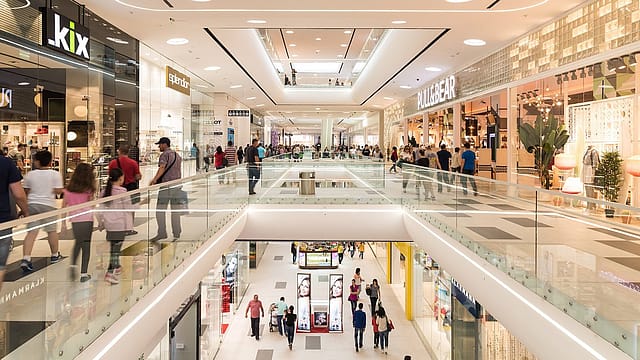
India's organised retail real estate market maintained strong growth momentum in the first half of 2026, with gross leasing rising 10.5% year-on-year to a four-year high of 6.27 million square feet, even as new shopping mall supply shrank sharply amid supply constraints, according to a report by JLL India.
Gross leasing across the country's top seven cities increased from 5.68 million sq. ft. in H1 2025 to 6.27 million sq. ft, in H1 2026, marking the highest half-yearly leasing volume recorded in the past four years. The report said resilient retailer expansion, led largely by domestic brands, helped offset a 64% year-on-year decline in fresh mall supply during the period.
Domestic retailers dominate as premium malls attract stronger demand
According to JLL, domestic retailers accounted for 79.1% of total leasing activity during the January-June period, underlining sustained confidence in India's consumption story. Shopping mall leasing rose 22.4% year-on-year, increasing malls' share in overall gross leasing from 38.9% in H1 2025 to 43.1% in H1 2026 as retailers increasingly preferred premium organised retail destinations. Healthy occupier demand also pushed mall vacancy levels down by 45 basis points to 11.15% from 11.60% a year earlier.
Commenting on the findings, Saket Amrit, Head – Retail Services, India, JLL, said, "India's retail real estate sector has entered a resilient growth phase, with demand reaching record levels despite global headwinds and elevated retail inflation." He added that developers and occupiers are increasingly prioritising technology-enabled, experience-led retail destinations, while a strong development pipeline is expected to support the sector's next phase of expansion.
The three largest retail markets—Mumbai (29%), Delhi NCR (24%) and Bengaluru (23%)—collectively contributed more than 75% of total leasing activity in H1 2026. Kolkata emerged as the fastest-growing market, with leasing volumes soaring 87.3% year-on-year following the completion of a new shopping mall, while Delhi NCR and Mumbai posted growth of 75.9% and 69.6%, respectively.
Fashion leads leasing as entertainment gains ground
Fashion & Apparel remained the largest occupier segment, accounting for 33% of total leasing, followed by Food & Beverage (18%) and Entertainment (16%). The entertainment category witnessed a 41.5% jump in space take-up, driven by family entertainment centres such as gaming zones and bowling alleys. In contrast, leasing by the daily needs and grocery segment declined 39%, reflecting the rapid expansion of quick commerce and dark-store networks.
Looking ahead, JLL said around 45.5 million sq. ft. of shopping mall space is under development across the top seven cities and is expected to become operational by 2030, providing a significant boost to India's organised retail ecosystem.