
Tier-2 cities see 63% rise in home prices in 5 years, outpace top 8 metros: CII-Knight Frank India
ADVERTISEMENT
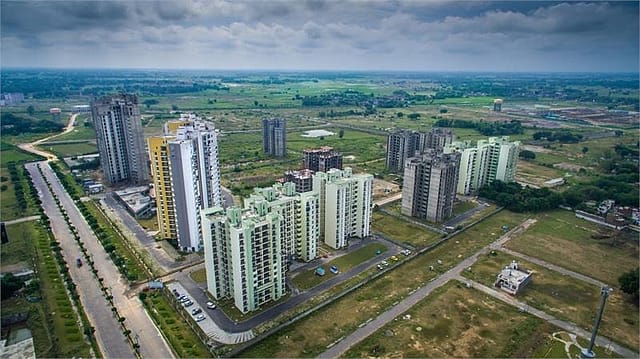
Residential property prices across 11 emerging Tier-2 markets rose 63% between 2021 and 2026, significantly ahead of the 42% increase across India’s top eight cities, according to a joint report by the Confederation of Indian Industry (CII) and Knight Frank India. The report, India’s Next Real Estate Markets, identifies Bhopal, Bhubaneswar, Chandigarh Tricity, Goa, Indore, Jaipur, Kochi, Lucknow, Nagpur, Visakhapatnam and Coimbatore as potential growth markets.
The 11 markets recorded an average 8% compound annual growth rate (CAGR) in residential prices between 2016 and 2026, twice the 4% CAGR across Mumbai, Bengaluru, Delhi-NCR, Hyderabad, Chennai, Pune, Ahmedabad and Kolkata. The report said improving infrastructure, connectivity and consumption are strengthening the economic fundamentals of these markets.
Goa leads residential price range
Among the identified markets, Goa has the highest residential price range at ₹11,500-13,500 per sq ft, followed by Chandigarh Tricity at ₹7,500-10,500 per sq ft. Jaipur and Kochi are at ₹7,000-9,000 per sq ft, while Bhubaneswar is at ₹6,550-8,550 per sq ft and Lucknow at ₹6,500-8,500 per sq ft. Nagpur and Visakhapatnam have the lowest range at ₹4,500-6,500 per sq ft.
Infrastructure spending has also increased over the past decade. Its share in total government capital expenditure rose from 39% in FY2015 to 55% in FY2026. The government's three-year public-private partnership pipeline comprises 852 projects with a combined cost of ₹17 lakh crore, which the report said could have a long-term impact on Tier-2 and Tier-3 markets.
Warehousing, retail footprint expands beyond metros
Commercial real estate activity is expanding alongside housing. Key Tier-2 markets recorded 11.2 million sq. ft. of warehousing lease transactions in 2025, broadly stable from 11.4 million sq. ft. in 2024. Lucknow, Jaipur, Nagpur, Indore, Coimbatore and Bhubaneswar together accounted for 5.3 million sq., ft., or nearly half of transactions across key Tier-2 cities.
India had 134 million sq ft of organised shopping-centre stock across 32 cities in 2025, of which 36 million sq. ft. was located across 24 Tier-2 cities. Ten of the 11 identified markets accounted for around 60% of the total Tier-2 shopping-centre stock.
Population growth to widen real estate demand base
Shishir Baijal, chairman and managing director, Knight Frank India, said real estate growth is increasingly broadening beyond traditional metropolitan centres. The opportunity across Tier-2 and Tier-3 cities, he said, will depend not just on infrastructure creation but on converting connectivity into sustained economic activity.
“Cities that bring together employment, enterprise, population growth, consumption and urban capacity will be better placed to build deeper and more diversified real estate markets,” Baijal said, adding that investors and developers would need greater selectivity and a sharper understanding of individual markets' economic drivers.
The report projects 28.2% population growth in cities beyond the top eight metros, compared with 8.7% in the largest eight cities. India’s urban population is projected to reach around 740 million by 2050, pointing to a widening geographic base for future residential, retail, logistics and commercial real estate demand.