
Feedback from Indian users across languages has directly shaped product development at OpenAI: Sam Altman on Nikhil Kamath’s WTF podcast
ADVERTISEMENT
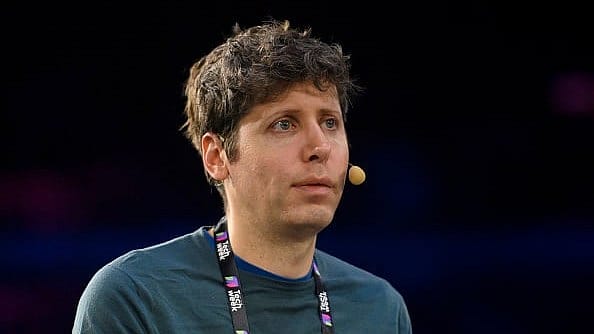
India is one of the largest—the second-largest, to be precise—markets for OpenAI, the bellwether generative AI company, and it too will have a role to play in the future course that will be taken by OpenAI, Sam Altman, the CEO of OpenAI, told Nikhil Kamath on his People by WTF podcast.
Speaking to Kamath, Altman emphasised how feedback from Indian users, across language support, affordability, and access, has directly shaped product development at OpenAI. In their freewheeling conversation, Altman also reflected on the potential of AI in India. “If there is one large society in the world that seems most enthusiastic to transform with AI right now, it’s India. The excitement, the embrace of AI… the energy is incredible,” he said.
Altman also added that this transformation is not just theoretical; it is already underway. “The entrepreneurial energy around building with AI in India is quite amazing, and we hope to see much more of it,” highlighted Altman. For India, he says, the real opportunity lies in moving from consumption to global creation, building tools, platforms, and companies the rest of the world will use. “The energy (in India) is incredible. I’m looking forward to visiting soon, and it’s really quite amazing to watch, and I think the sort of momentum is unmatched anywhere in the world,” he added.
Kamath and Altman also discussed GPT-5, the latest version of OpenAI’s chatbot, ChatGPT. “I think you could build an entire startup way more efficiently than you ever could before now,” said Altman. He said that as a 25-year-old in India, or anywhere else, with friends or solo, one could use GPT-5 to help write the software for a product much more efficiently. GPT-5 can also help one handle customer support, help write marketing and communications plans, and even help in reviewing legal documents. “All of these things would have taken a lot of people and a lot of expertise, and you now have GPT-5 to help you do all of this; that’s pretty amazing,” said Altman.