
“X is not just a platform — it’s infrastructure”: Elon Musk outlines his blueprint for an AI-era internet
ADVERTISEMENT
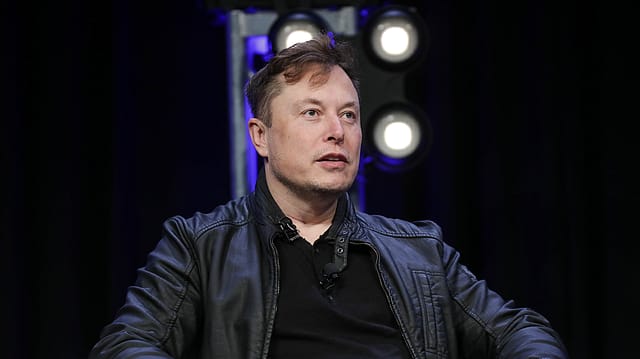
Elon Musk is done calling X a social media platform.
In a detailed conversation with Zerodha co-founder and People by WTF host Nikhil Kamath, the world’s most watched entrepreneur tried to reframe the product formerly known as Twitter as something far more ambitious: a multilingual “global town square” and, eventually, a kind of “collective consciousness” for humanity.
The pitch is clear: where other platforms optimise for time spent and dopamine hits, X, Musk insists, is being rebuilt for readers, writers and people who “think a lot and read a lot” — and for a future where AI, video and payments converge inside a single app.
From social feed to “global brain”
Early in the conversation, Kamath presses Musk on raw scale: how big is X, really?
“We have like about 600 million monthly users,” Musk says, adding that the number can swell to 800 million or even a billion when major world events unfold.
But Musk is less interested in MAUs than in who is on the platform.
“It tends to be readers, you know, people that read words,” he says. “Where the X network is strongest is among people who think a lot and read a lot… among readers, writers, and thinkers, I think X is number one in the world.”
The bigger narrative is about information flows, not follower counts. Musk tells Kamath he wants X to bring together what people say “in many different languages”, with automatic translation, so that users eventually experience a “collective consciousness” that spans every language group — not just those dominant in Silicon Valley.
For global brands, policymakers and markets, that’s a revealing signal: Musk doesn’t only see X as a distribution channel. He wants it to be an always-on sentiment engine for what the world is thinking — in every language at once.
Why buy Twitter? Musk’s “centrist” reset
Kamath then goes straight to the deal that still defines Musk’s media image: buying Twitter.
“I used to be a shareholder of X, a very small one… Happy decision? Glad you did it?” he asks.
Musk replies not with synergy talk but with a diagnosis.
“I felt like Twitter had gone in a direction that had more of a negative influence on the world,” he says, arguing that the platform had been amplifying a “fairly pretty far left ideology” shaped by its San Francisco roots. “They actually suspended a lot of people on the right. If you're far left, anyone in the center is far right.”
His explanation for the acquisition is framed almost as a governance intervention, not a business play.
“What I've tried to do is just restore it to be balanced and centrist,” he says. “There haven't been any left-wing voices that have been suspended or banned or de-amplified or anything like that.”
Musk also lays out, in unusually simple terms, his operating principle for content governance: X will adhere to the laws of each country, but “not… go beyond the laws of the country.”
For Indian regulators and policymakers, that positioning matters. Musk wants X to be seen as compliant — but not ideological, not evangelising, and not imposing a Silicon Valley value system over sovereign regulatory frameworks.
Not an engagement machine: Musk’s attack on “brain rot”
Asked how he would rebuild social media from scratch, Musk’s answer is pointed.
“I don't think that much about social media,” he tells Kamath. “I mostly just want to have something where… there’s… a global town square where people can say what they want… words, pictures, video… a secure messaging system… audio and video calls.”
In other words, messaging, calls, media, payments — the WeChat-style “everything app” architecture — but with a different philosophy underneath.
Musk draws a sharp contrast between X and algorithmic feeds tuned for addiction.
“That’s… different from just saying what is the most dopamine-generating video stream… which I think can be a little bit of brain rot,” he says. “If you're just watching videos that just cause dopamine hits… but lack substance… it becomes like a drug.”
That framing places X in quiet opposition to TikTok, Instagram Reels, and the wider attention economy. Instead of fighting for seconds of thumb-scroll time, Musk wants the platform to cultivate slower consumption — long-form text, livestreams, and direct conversations — even if that doesn’t maximise screen time.
Whether that trade-off translates to revenue upside is still unclear. But strategically, it explains X’s sudden tilt toward creator subscriptions, long posts, and tools that look more like Substack and podcasting than a short-form video platform.
Text vs video: the next content battleground
Musk is not blind to where user behaviour is moving. When Kamath asks how X will evolve as interaction shifts from text to new formats, Musk predicts “most interaction is going to be video in the future… real-time video with AI… real-time video comprehension, real-time video generation.”
Yet he defends text with almost engineer-like precision.
“Text tends to be higher value generally,” he says. “It’s more densely compressed information.”
The tension is structural. If the future of content is AI-powered video, but text remains the most efficient signal format for ideas, X must operate across both — without losing its identity.
If Musk succeeds in integrating real-time video without diluting the platform’s intellectual density, X could remain the world’s default public square — even as rivals chase entertainment-first ecosystems.
The long game behind the letter X
Then comes the question many users have wondered about but few have asked Musk directly: Why the obsession with the letter X?
“It's a good question, honestly, sometimes I wonder what's wrong with me,” Musk jokes.
He traces it back to 1999.
“It started off… in 99. The pre-cambrian era when there were only sponges,” he says, recalling that there were only three one-letter domain names available — and he grabbed X.com.
His early intent was to build “a more efficient money database,” a “financial crossroads” built on real-time, secure monetary infrastructure. The original idea, he says, was essentially an early blueprint of today’s fintech platforms — but unified.
“I'm just kind of slowly building revisiting this idea that I had 25 years ago,” he says. Buying Twitter “was also an opportunity to revisit the original plan of X.com… to create this clearinghouse of financial transactions.”
SpaceX fits the pattern too. “Space exploration technologies is the full name of the company — SpaceX,” he notes, adding that the stylised capital X “just looks better.”
The branding even extends into his personal life. “We got a kid, he's called X2,” Musk laughs, before quickly clarifying: “It’s somewhat of a coincidence… there’s no X in Tesla.”
The business bet: the everything-layer for identity, communication, and money
Strip away the humour and quotable moments, and Musk’s roadmap emerges clearly. X isn’t just a rebranded Twitter — it’s a positioning shift.
It is a pitch to creators, regulators, institutions, and nations: a centrist, compliance-bound public square; an AI-native, multi-language platform for global discourse; and, eventually, Musk’s original fintech dream — messaging, identity, content, and payments in the same ecosystem.
For India’s founders, regulators, and capital allocators, the Kamath–Musk exchange offers more than a viral episode. It is a working draft of how one of the world’s most influential product architects thinks about information, authority, incentives, and computation in the AI age.
If Musk is right, X won’t just be where conversations happen — it will be where value moves.
And if that future arrives, X won’t be competing with Facebook or TikTok.
It’ll be competing with language, banking, search, and identity itself.