
India AI Impact Summit 2026: Sunil Mittal, Shantanu Narayen affirm AI will transform healthcare, education, and digital infra
ADVERTISEMENT
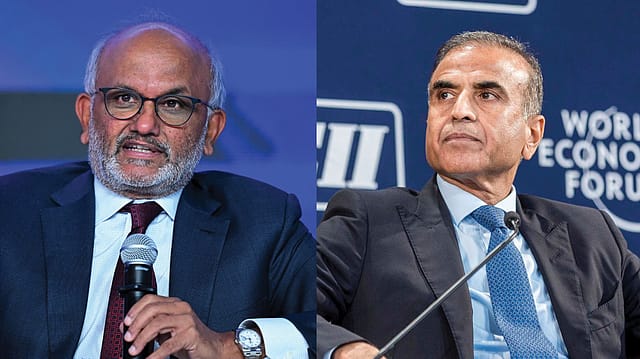
Artificial intelligence (AI) will fundamentally reshape healthcare, education and core digital infrastructure, with India uniquely positioned to lead its responsible deployment, industry leaders said during a fireside chat at the India AI Impact Summit 2026.
The discussion between Sunil Bharti Mittal, Founder and Chairman of Bharti Enterprises, and Shantanu Narayen, Chairman and CEO of Adobe, focused on AI’s sectoral impact, governance challenges and India’s global role.
AI as operational backbone, not experiment
Mittal said AI is moving rapidly from experimentation to operational backbone. “Healthcare, education, deep research, medical sciences — all those areas will flourish on the back of this,” he said. For Bharti Group, AI is already embedded across operations. “From our company’s standpoint, AI is becoming a really integral part of how we operate, serve our customers, build our networks and manage our networks.”
He added that AI would play a crucial role in securing citizens and strengthening digital infrastructure, but cautioned against concentration of power. “AI should benefit humanity through sharing, not hoarding,” Mittal said, noting that balancing commercial interests with public good would remain an ongoing challenge.
India’s scale makes AI impact systemic
Narayen echoed the transformative potential, particularly in personalised medicine and education. “Every student in India can have access to the world’s information on their devices,” he said, pointing to AI-enabled learning at scale.
Given India’s population and digital adoption, he argued that the implications of AI adoption in India could be “greater than anywhere in the world over the next few years.”
Data, privacy and trust at the core
India, Narayen said, is better positioned than most countries to democratise AI. Its scale of users and engineering talent create both opportunity and responsibility. “The leadership India can play is not just in what these models mean, but how you think about data, privacy, security and trust,” he said.
He highlighted “content authenticity” and open standards as critical areas for collaboration, stressing that trust frameworks must evolve alongside model capability. While commercial enterprises may seek proprietary advantages, he suggested India’s policy approach and ecosystem could help balance innovation with public good.
The session followed Prime Minister Narendra Modi’s call to democratise AI and make it a tool for inclusion and empowerment. Against that backdrop, both leaders projected confidence that India’s combination of scale, talent and frugal innovation could help shape a more inclusive global AI architecture.