
Microsoft joins the forward-deployed engineering race with $2.5 billion Frontier Company
ADVERTISEMENT
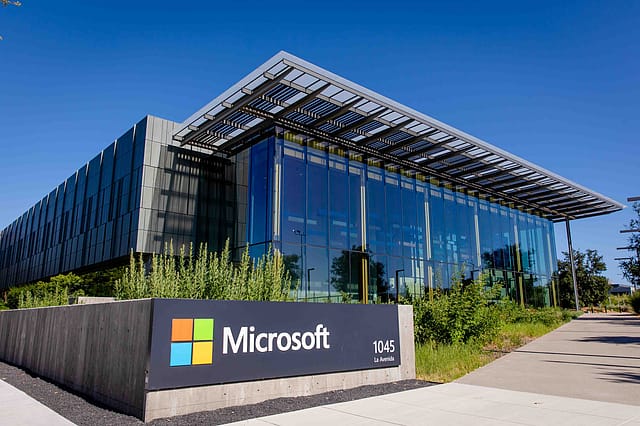
Microsoft on Thursday unveiled Microsoft Frontier Company, a new enterprise AI business backed by a $2.5 billion investment that will deploy 6,000 engineers and industry specialists to help customers build and scale artificial intelligence systems, marking the software giant’s push beyond selling AI tools to implementing them.
The announcement comes two days after Amazon Web Services committed $1 billion to its own Forward Deployed Engineering initiative, which similarly embeds engineers with enterprise customers to accelerate AI adoption. OpenAI and Anthropic have both stood up comparable ventures in recent months, backed by outside capital rather than their own balance sheets.
Unlike AWS, which built its initiative explicitly around the FDE label, Microsoft has pushed back on that framing. Commercial Business CEO Judson Althoff wrote in the company’s announcement that Frontier Company would be the largest, most capable, outcome-driven engineering organization in the industry. "To achieve scale, we will work closely with our partner ecosystem to extend this unique value to our customers across all markets and segments globally. We have robust FDE partnerships with our Global SI partners, including Accenture, Capgemini, EY, KPMG, PwC and others," he wrote.
Microsoft describes the unit as combining industry knowledge, change-management experience and enterprise AI engineering, embedding 6,000 industry and engineering experts at customers to co-design, co-innovate, deploy and continuously improve AI systems at scale.
"Central to this approach is a principle that is non-negotiable: a customer’s IQ is protected. Their data, their IP, their competitive advantage — none of it is used to train models in ways that commoditize what differentiates them in their industry. Satya [Nadella] put it clearly recently: there is no societal permission for an AI future that eats the intelligence of the companies it’s deployed inside. We built Microsoft Frontier Company to make sure that does not happen," Althoff wrote.
The venture will be led by Rodrigo Kede Lima, formerly president of Microsoft Asia. Microsoft says customers will be able to build on OpenAI, Anthropic, Microsoft’s own models, or open-source alternatives, rather than being locked into a single provider. Early customer engagements named by Microsoft include LSEG, Land O’Lakes, Unilever and Novo Nordisk.
AWS, meanwhile, has structured its version differently: engagements run in roughly 45-day cycles, with pods of five to six engineers embedded per customer. Francessca Vasquez, AWS’s vice president of frontier AI engineering and services, described the aim as getting everybody together in one business unit with a common rubric of deployment. AWS has named the Allen Institute, Cox Automotive, the NBA, the NFL, Ricoh and Southwest Airlines as early customers. NFL Chief Information Officer Gary Brantley said the league got engineers building alongside our team to launch into production in just weeks, pointing to products like NFL Fantasy AI as results of the partnership.
A new segment, and new money chasing it
Microsoft and AWS are the first two hyperscalers to formalize the forward-deployed model, but OpenAI and Anthropic got there first, both launching their own ventures roughly two months earlier, and both structured as outside-capital plays rather than internal investments.
OpenAI’s version, called Deployment Company, closed with roughly $10 billion in capital from TPG, Advent International, Bain Capital and Brookfield Asset Management, and is reported to run about 150 engineers on-site at customer locations. Anthropic’s venture, backed by Blackstone, Goldman Sachs and Hellman & Friedman at $1.5 billion, is aimed specifically at mid-sized companies, starting with its investors’ own private equity portfolio businesses.
AWS and Microsoft are funding their units from their own balance sheets, betting they already have the customer relationships and infrastructure to make deployment a retention play. OpenAI and Anthropic, without that existing enterprise footprint or cloud infrastructure, have instead brought in private equity money and are treating deployment as a standalone business with its own investors and return expectations.