
Embedding AI, agentic tech across our IP, products, and platforms, says Mohammed Rafee Tarafdar of Infosys
ADVERTISEMENT
Embarking on its AI-first approach in 2023, India’s second-largest IT company, Infosys, is now delivering more than 2,500 Generative AI and AI projects and over 200 agentic AI projects for clients. Internally, the use of AI, such as the multi-agent invoice automation solution, has helped the company improve its free cash flow conversion by nearly $50 million. In its compliance process, AI has demonstrated an overall end-to-end process productivity increase of 40% to 50%. Infosys, which has built four small language models for banking, IT operations, cyber, and enterprises, is also offering these models as services to clients for developing their own custom AI models.
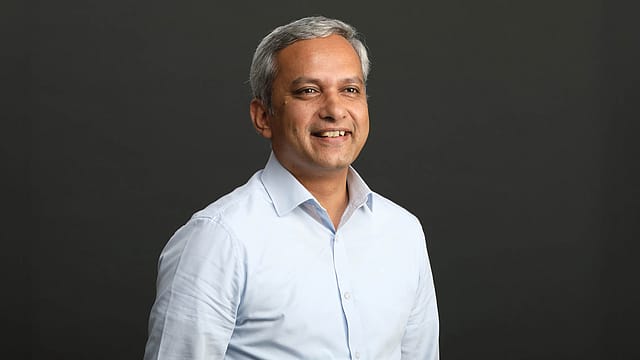
Mohammed Rafee Tarafdar, EVP and Chief Technology Officer of Infosys, who leads the strategic technology group focused on building next-generation platforms, capabilities, and solutions, outlines the company's overall AI and agentic strategy.
Edited excerpts
Fortune India: What is the current approach towards deploying AI agents in your newer deals as well as existing multi-year long-term deals?
Rafee Tarafdar: An AI-first approach is integral to all our large deal propositions for clients. We take a holistic approach by using Digital Agents, Autonomous Agents, and human-in-the-loop or on-the-loop AI Agents to drive process re-engineering or automation for IT operations, business operations, and core business processes.
Fortune India: Which functions are the company actively using AI agents in, and what is the long-term roadmap?
Rafee Tarafdar: We recently launched an AI Foundry with AI agents that we are also using for internal purposes. Currently, we are utilising AI agents in the Finance & Administration, HR, Education, Training & Assessment, and IT Operations areas. We will continue to scale the implementation and adoption of agents across all business functions.
Fortune India: What is your view on the effectiveness of small language models vs large language models in business use cases, and what do you see would have a larger industry adoption in the long run?
Rafee Tarafdar: In the long run, we expect industries to use both large and small language models. Large language models will primarily be used for linguistic tasks, generalised knowledge, coding, multi-modality, and reasoning use cases. Small language models will be utilised for domain-specific, narrow use cases and for AI inferencing on mobile and edge devices.
Fortune India: Could you explain and elaborate if Infosys is currently doing any work on an agentic platform development that can be used across industries, or could be an As-a-Service model in future?
Rafee Tarafdar: Infosys has a Poly AI strategy, as our clients have a diverse IT and platform landscape. Hence, we are developing agents as accelerators across Hyperscaler (AWS, Azure, GCP) Agentic Platforms, SAAS (Salesforce, SAP, ServiceNow, Oracle) Platforms, and Open Source, Niche Agentic stack for enterprise horizontal functions and industry-specific functions. We are using these as accelerators to jump-start Agentic programs for our clients. In addition, we are embedding AI and Agentic tech across all our IP, products, and platforms to drive greater automation across our IT and business services.
Fortune India: What do you see as some of the aspects, especially when it comes to AI infusion into projects, that help in delivering better results and give a competitive advantage to vendors?
Rafee Tarafdar: For most enterprise and industry use cases, AI models, agents, and apps need to be contextualised and fine-tuned with client-specific data. Therefore, having a deeper understanding of the enterprise IT landscape, data landscape, and business is critical for contextualising AI solutions and rolling them out faster with higher accuracy and adoption.
Fortune India: When it comes to safety and security, what are some of the clients' concerns that exist, and what is your approach to safe AI?
Rafee Tarafdar: Many enterprises lack an agile Responsible AI (RAI) process, which delays the rollout of AI tools and projects, ultimately impacting AI scaling. At Infosys, we have a dedicated Responsible AI (RAI) office that works closely with regulators, industry bodies, and our clients to implement Responsible AI practices and codified guardrails. Our RAI office collaborates with clients to help them adopt agile RAI practices and use automation to drive efficiency and speed.