The FAQs are AI-generated, and Fortune India is not responsible for its content or any associated copyright issues.
E20 fuel hits older vehicles: 5 in 10 petrol vehicle owners report mileage drop, 30% flag higher wear and tear
/ 3 min read
A LocalCircles survey of over 50,000 petrol vehicle owners suggests growing consumer discomfort with India’s ethanol-blending push, even as the government prepares for higher E22-E30 fuel blends
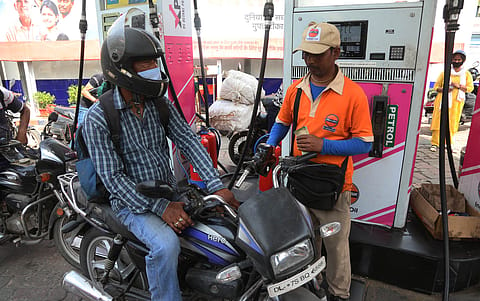
The findings come at a time when the Centre is accelerating its ethanol roadmap beyond E20. | Credits: Sanjay Rawat
India’s aggressive ethanol-blending programme is beginning to trigger concerns among owners of older petrol vehicles, with a new survey showing that nearly half of respondents have experienced a decline in mileage after the nationwide rollout of E20 petrol.
The survey, conducted by LocalCircles, found that “1 in 2 petrol vehicle owners with a vehicle that was purchased in 2022 or earlier say their vehicle’s fuel efficiency/mileage has reduced in the last 9 months”, while 29% reported “unusual levels of wear & tear or repair requirements involving engines, fuel lines and carburettors.”
The findings come at a time when the Centre is accelerating its ethanol roadmap beyond E20. India achieved its 20% ethanol-blending target in April 2025, six years ahead of schedule, and has already moved to notify standards for higher blends ranging from E22 to E30.
Older Vehicles Under Stress
According to the report, many owners of vehicles originally designed for E5 or E10 petrol say the transition has translated into lower fuel efficiency, rough idling, engine heating and higher maintenance expenses.
“Concerns among owners of older petrol vehicles around reduced mileage, harder cold starts and unusual engine wear and tear have only intensified,” the report stated. It added that the “gap between official assurances and on-ground consumer experience continues to widen.”
The survey received over 50,000 responses from vehicle owners across 301 districts. Of the 24,710 respondents who answered questions on mileage impact, 25% claimed fuel efficiency had fallen by more than 20%, while another 20% reported a drop of between 10% and 20%. Only 27% said they experienced no impact.
Mileage Concerns Exceed Official Estimates
The report noted that official estimates by the Automotive Research Association of India (ARAI) pegged the reduction in fuel efficiency from E20 petrol at around 1-6%, but several users believe real-world losses are significantly higher, especially in congested urban driving conditions.
Apart from mileage concerns, respondents also flagged rising wear and tear. Of the 25,686 respondents to this question, 29% said they had “definitely” experienced unusual repairs or deterioration in components such as fuel tanks, injectors and fuel lines since early 2025.
The report attributed part of the issue to ethanol’s chemical properties, noting that ethanol absorbs moisture more readily and has lower energy density than conventional petrol. It warned that ethanol-rich fuel blends could gradually degrade rubber and plastic components in vehicles not specifically engineered for such fuel.
Government pushes ahead with higher blends
The concerns emerge even as policymakers position ethanol blending as a strategic tool to cut crude oil imports and strengthen energy security. India currently imports nearly 87% of its crude oil requirement and is producing more than 1,000 crore litres of ethanol annually, with maize increasingly emerging as a key feedstock.
To support the next phase of blending, the government has mandated that all E20 petrol sold from April 1, 2026, must meet a minimum Research Octane Number (RON) of 95, aimed at improving combustion stability and reducing engine knocking.
{{#most-powerful-women-snapshot-individual.slug}} {{/most-powerful-women-snapshot-individual.slug}} {{^most-powerful-women-snapshot-individual.slug}} {{/most-powerful-women-snapshot-individual.slug}} {{#showRanking}} {{current-rank}} {{/showRanking}} {{#photo.0.url}}
{{name}}
Still, the survey urged policymakers to reconsider the pace of transition for older vehicles.
“If the higher-octane ethanol-blended fuel does not address the issues being faced by owners of older petrol vehicles, the government needs to relook at its fuel policy to allow the sale of lower ethanol-mix fuel for older petrol vehicles,” the report said.
It added, “Not all are able to switch vehicles at will, as funds remain a big concern in most households in India.”
Frequently Asked Questions
NEXT STORY