The FAQs are AI-generated, and Fortune India is not responsible for its content or any associated copyright issues.
Ola Electric eyes up to ₹2,000 crore via stake sale in battery arm Ola Cell Technologies
/ 2 min read
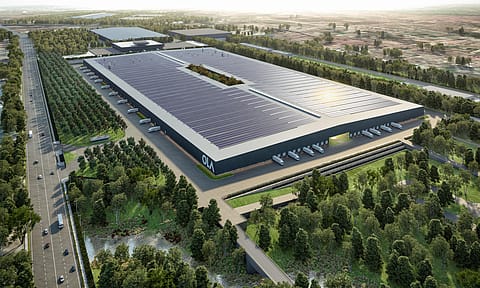
Ola Electric's factory in Krishnagiri, Tamil Nadu. | Credits: Ola Electric
Ola Electric eyes up to ₹2,000 crore via stake sale in battery arm Ola Cell Technologies
Ola Electric is set to raise up to ₹2,000 crore by selling a stake in its battery arm, Ola Cell Technologies, to enhance its balance sheet and restructure operations. The Tamil Nadu-based plant aims to expand its capacity to 6 GWh, attracting interest from financial investors. This move supports India's goal to localize battery manufacturing and reduce import dependence.
This summary is AI-generated, and Fortune India is not responsible for its content or any associated copyright issues.
Fundraising exercise for the gigafactory unit—run by Avendus and Motilal Oswal—comes as the EV maker seeks to strengthen its balance sheet and scale domestic lithium-ion cell manufacturing capacity
Ola Electric's factory in Krishnagiri, Tamil Nadu. | Credits: Ola Electric
Ola Electric has kicked off a plan to raise up to Rs 2,000 crore by selling a stake in its battery arm, Ola Cell Technologies (OCT), according to the sources.
OCT owns the Tamil Nadu-based lithium-ion cell manufacturing plant with 1.5 GWh of operational capacity and plans to scale to 6 GWh by the end of this financial year.
Investment bank Avendus and Motilal Oswal are mandated to run the fundraising process, sources said.
The development comes amid Ola Electric's efforts to restructure operations and shore up its balance sheet as it works towards its business turnaround.
The stake dilution plans will also determine the market valuation of a crucial battery infrastructure asset that has not yet been ascertained, sources said, adding that the asset's unique nature has attracted inbound interest from financial investors, including some leading sovereign wealth funds.
The gigafactory, with an upfront investment of Rs 3,500 crore, marks a significant step toward localising battery cell manufacturing in India, a critical capability as the country seeks to reduce dependence on imported cells while building a domestic EV supply chain.
The plant will support energy storage products and systems across industries beyond the two-wheeler market.
Recommended Stories
Ola's Battery Innovation Centre, a part of OCT, houses over 200 executives drawn from global corporations and has built a portfolio of close to 400 patents, with work spanning multiple cell chemistries including NMC, LFP, LMFP and LMR, as well as different form factors such as cylindrical, prismatic and solid-state cells.
As India pushes toward 50 per cent renewables by 2030, the mismatch between electricity generation and consumption means storage has to be somewhere in between.
A large share of renewable electricity will pass through storage before reaching users.
Ola has already launched residential BESS systems and has plans to enter commercial energy storage systems, as most of the electricity generated (from coal, solar, wind, hydro) flows straight to consumption, hurting optimal usage.
RANK
COMPANY NAME
REVENUE
(INR CR)
(INR CR)
{{#current-rank}} {{current-rank}} {{/current-rank}} {{^current-rank}} {{rank}} {{/current-rank}} {{name}} {{#revenue}} {{revenue}} {{/revenue}} {{^revenue}} {{noi}} {{/revenue}}
Ola has also developed dry electrode manufacturing technology, considered one of the most significant innovations in lithium-ion battery production.
Using this process, the company has developed the 4680-format Bharat Cell, which is now being commercially manufactured at the gigafactory and has been deployed in Ola Electric vehicles for more than six months.